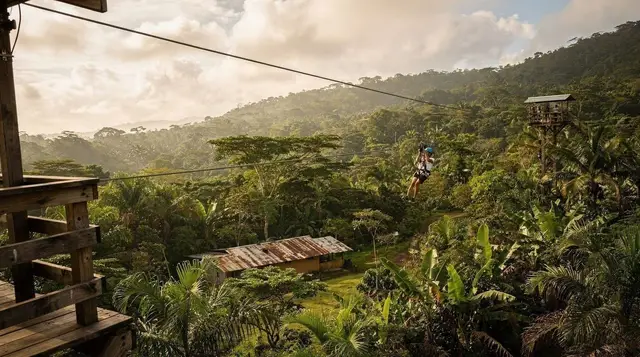
Zipline Safety in La Fortuna: What to Actually Expect
Is there one weight limit for ziplining in La Fortuna?
No. Each park sets its own minimum and maximum, usually somewhere between 30 kg and 120-150 kg, and some raise the ceiling for tandem or automatic-brake lines. Always confirm the number with the specific operator you're booking, not with what a different park requires.
Why the rules change depending on which park you book
Ask three different zipline operators around La Fortuna the same question — what’s the maximum weight, is braking automatic, do I need closed shoes — and you’ll likely get three different answers. That’s not sloppiness. Each park designs, insures, and maintains its own cable system, and each sets its own operating limits accordingly. A gravity-brake line engineered for higher speeds might accept heavier riders than a manual-brake line next door.
This guide exists because so many of the individual park write-ups on this site — the ziplining overview for La Fortuna, the Sky Trek zipline guide, and the pages covering combo parks around El Castillo — get asked the same practical questions again and again. Rather than repeat the answer six times with six sets of numbers, we’re covering the general rules here and pointing you back to the specific park pages for cable lengths, platform counts, and pricing.
If you’re choosing between operators, start with things to do: ziplining or the broader things to do in La Fortuna hub, then come back here before you book to check whether you or anyone in your group might run into a restriction.
Weight limits: there is no single number that applies everywhere
This is the single most common source of frustration at zipline platforms in this region, and it’s worth being blunt about: no operator-wide weight limit exists. What you’ll typically encounter across the La Fortuna area falls into a rough range, but treat every figure below as illustrative, not a promise about any specific park.
| Rider category | Typical range seen locally | Notes |
|---|---|---|
| Minimum solo weight | 25-35 kg | Below this, cable speed and trolley friction may not work correctly |
| Standard maximum | 120-150 kg | Most common ceiling across mid-size canopy parks |
| Automatic/gravity-brake maximum | Sometimes higher | Some systems are engineered for greater rider weight |
| Tandem (child with guide) | Combined weight limit applies | Not offered at every park |
The reasons for variation are mechanical, not arbitrary. Cable tension, trolley design, and braking method all affect how much weight a line can safely carry at speed. A park that upgraded its braking system in the last few years may post a higher ceiling than one running older manual-brake equipment.
This is also why the specific park guides on this site — Sky Trek, the combo zipline and canopy parks comparison — list numbers only where they’ve been confirmed for that operator, and why this page won’t repeat a figure as if it were universal. If your weight is close to a typical ceiling, or well under a typical minimum, contact the park directly before you show up. Being turned away at the platform after arriving with a tour group is a worse outcome than a two-minute email the day before.
Height, age, and health restrictions
Weight gets the most attention, but it isn’t the only gate. Minimum age is loosely tied to minimum weight — a child under roughly six to eight years old often won’t meet the weight floor for a solo line, though several parks offer a tandem option where a child rides clipped to a guide’s harness. If you’re travelling with young kids, this is worth checking before you commit to a full-day combo, and it’s covered in more general terms in La Fortuna with kids.
Health exclusions are fairly consistent across operators, even though the wording on waivers differs: pregnancy, significant heart conditions, recent surgery, and serious back, neck, or joint problems are the recurring categories. None of these are usually checked physically — you self-declare on the waiver — but that doesn’t make the restriction optional. A fall or hard stop under these conditions carries real risk, and operators exclude them for that reason, not as a formality.
What gear is provided, and what you’re expected to bring
Every established zipline operator in the La Fortuna area supplies the core safety equipment: harness, helmet, gloves, and the trolley or pulley system that rides the cable. You are not expected to own or rent any of this separately, and most parks won’t let you substitute your own gear even if you have it, for liability reasons.
What you bring yourself is more about practicality than safety hardware:
| Item | Why it matters |
|---|---|
| Closed-toe shoes, secured heel | Flip-flops and sandals are commonly refused at the platform |
| Trousers or knee-length shorts | Harness straps sit across the thighs and can chafe bare skin |
| Hair tied back | Loose hair can catch on the trolley mechanism |
| No dangling jewellery or loose scarves | Same catching risk as hair |
| Small dry bag or zipped pocket for a phone | Most parks won’t let you hold a phone freely during a run |
A camera or phone on a wrist strap is sometimes allowed on slower lines and prohibited on faster ones — again, ask the specific park rather than assuming a blanket rule.
Braking systems: manual, automatic, and gravity brake
This is where the mechanical differences between parks matter most for how a run actually feels.
Manual braking relies on you or a guide applying pressure to the cable with a gloved hand, slowing the trolley before the platform. It’s the older, more traditional system, and it gives an experienced rider more control over speed, but it also means the pace of the ride depends partly on rider technique, which is why briefings for manual-brake lines tend to run longer.
Automatic and gravity-brake systems slow the trolley mechanically as it nears the platform, without requiring rider input. These are generally the newer installations, and they remove one variable that makes some travellers anxious — the fear of braking wrong or too late. They tend to also be the systems that permit somewhat higher weight limits, since the braking mechanism is engineered rather than dependent on grip strength.
Neither system is objectively safer than the other when properly maintained; they’re just different engineering choices. If you’re nervous about controlling your own speed, ask specifically whether a park uses automatic braking before booking — it’s a fair and common question for guides to answer.
What a safety briefing actually covers
Every reputable operator runs a briefing before the first platform, and it’s worth paying attention rather than treating it as a formality to get through. A typical briefing covers: how to sit in the harness correctly, hand position (and which system — manual or automatic — applies), what to do if you stop mid-cable (rare, but guides are trained to retrieve riders), and the signal system used between platforms. Guides at both ends of each line are in radio or visual contact, and lines are checked at the start of each operating day. If a briefing feels rushed or a guide seems inattentive, that’s a legitimate reason to raise it before your run, not just endure it.
Cancellations, weather holds, and no-shows
Zipline tours around La Fortuna generally run in the rain — the tree canopy offers some cover, and light rain doesn’t meaningfully affect the cable or trolley system. What does pause or cancel a tour is lightning, sustained high wind, or genuinely severe weather, which is more likely in the wetter months from May to November than in the December-to-April dry season. If a park calls a hold, it’s usually temporary rather than a full cancellation; check the specific operator’s policy on rebooking or refunds if you’re booking during green season, when a hold is somewhat more likely.
Zipline vs. canopy combo vs. canyoning: how they compare physically
Travellers weighing zipline safety often end up comparing it against the other high-adrenaline options clustered around La Fortuna and El Castillo. Ziplining itself demands very little physical exertion — you’re clipped in and the cable does the work — which is part of why weight and health restrictions, not fitness, are the real gatekeepers.
Canyoning, by contrast, involves rappelling down waterfalls and requires more upper-body control and comfort with heights up close; see canyoning levels and what to expect if you’re weighing the two. Many visitors combine a zipline run with a hanging bridges walk or a wildlife stop in the same morning — the logic behind that pairing is covered in combo tours in La Fortuna explained and best combo tour for one day.
a canopy zipline combined with a bungee jump platform is one of the higher-adrenaline pairings available locally, and it’s worth checking that specific tour’s weight and health restrictions separately from a standard zipline run, since bungee platforms often set their own stricter limits.
If you’d rather mix ziplining with wildlife or a slower pace, some travellers pair it with a horseback ride to the volcano followed by a zipline circuit, which spreads the day across two very different kinds of activity rather than back-to-back adrenaline. For groups where one person doesn’t meet a zipline’s weight or age minimum, an alternative that keeps everyone together is an ATV tour past the volcano and hot springs, which has its own separate set of restrictions worth checking but tends to be more flexible on age.
Which La Fortuna zipline parks this covers
This page deliberately doesn’t redescribe any single park’s circuit, platform count, or pricing — that detail lives in the dedicated guides for Sky Trek and the broader ziplining in La Fortuna overview, plus the destination pages for Sky Adventures Arenal, El Castillo, and the Mistico Hanging Bridges park, which also runs a shorter zipline alongside its bridge circuit.
Use those pages for the specifics of a given cable network; use this one to check the general safety and eligibility questions before you commit to any of them. If you’re building a full adventure day around ziplining, La Fortuna for adventure travellers sequences it against rafting, canyoning, and hot springs so you’re not doing three exhausting activities back to back.
Zipline safety FAQ: weight limits, gear, and braking
What is the maximum weight for ziplining near La Fortuna?
There isn’t a single figure that applies across every park. Most operators cap participants somewhere between 120 kg and 150 kg, though a few automatic-brake systems allow more. Check the specific park’s policy before booking, since exceeding the posted limit usually means being turned away at the platform, not a refund.
What is the minimum weight or age to zipline?
Minimum weights typically sit around 25-35 kg, which usually rules out zip lines for children under roughly six to eight years old unless the park offers a tandem line where a child rides attached to an adult guide. Age limits are less standardised than weight limits, so ask directly if travelling with young kids.
Do I need my own harness or helmet?
No. Every zipline park in the La Fortuna area supplies harness, helmet, gloves, and the trolley or pulley that clips onto the cable. You don’t need to own or rent any of this separately, and bringing your own gear is neither expected nor usually allowed for liability reasons.
How does braking work on a zipline?
Two main systems operate in this region: manual braking, where you or a guide slow the trolley by hand using a gloved grip on the cable, and automatic or gravity braking, where a mechanical system slows the rider before the platform without any action needed. Ask which system a park uses if you’re nervous about controlling your own speed.
Can pregnant travellers or people with heart conditions zipline?
Most operators exclude pregnant travellers and anyone with a heart condition, recent surgery, or serious back or neck problems, stated on their waiver rather than checked physically. If in doubt, contact the specific park in advance rather than assuming a blanket policy across the region.
What should I wear for ziplining?
Closed-toe shoes with a secured heel, trousers or knee-length shorts, and hair tied back. Loose scarves, dangling jewellery, and flip-flops are commonly refused at the platform because they can catch on the cable or trolley.
Do zipline tours run in the rain?
Usually yes, since the canopy provides some cover and the cables themselves aren’t much affected by light rain. Parks pause or cancel only for lightning, high wind, or genuinely severe conditions, which is more common in the wetter months from May to November.
Is ziplining safe in Costa Rica?
The established parks around La Fortuna operate under regular equipment inspection and use professional-grade cable and braking systems, and serious incidents are rare relative to visitor numbers. The real safety variable is choosing an operator that maintains its equipment and briefs riders properly, which is worth more than comparing prices alone.
Ziplining on GetYourGuide
Verified deep-linked GetYourGuide tours. Book through these links and we earn a small commission at no cost to you.
GetYourGuide does not provide a product photo for this activity — the image shows the meeting point, photographed by us.