Canyoning Levels at El Castillo: Discovery vs Sport Routes
What's the difference between discovery and sport canyoning at El Castillo?
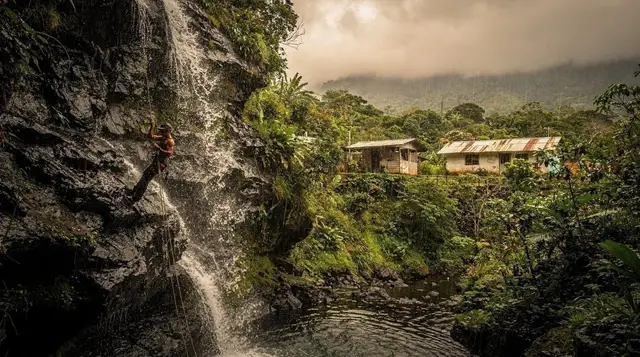
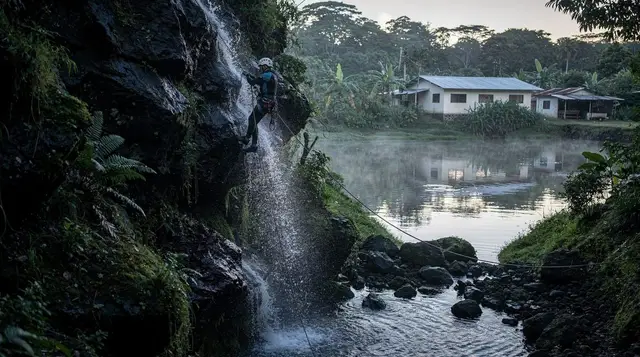
Discovery routes involve 2 to 4 short rappels of up to about 25 m, walking sections between them, and little or no jumping - most operators accept ages 8 to 10 and up with no experience required. Sport routes add taller rappels of up to 45-50 m, natural waterslides, and optional jumps of 2-5 m, and typically set a minimum age of 12-14 with a real fitness bar to clear.
Not every canyoning trip is the same trip
Ask three people who went canyoning near El Castillo what it was like, and you can get three different answers - because “canyoning” covers routes that have almost nothing in common except a harness and a waterfall. One traveller did four short rappels of a few metres each, walked between them, and was back at the van in two hours. Another did seven drops including a 45 m free rappel down an open cliff face, slid down a natural rock chute into a plunge pool, and jumped off a ledge twice because the guide said it was optional and she wanted to. Both will tell you they went canyoning. Only one of them did something that belongs in the same sentence as “extreme.”
This guide sorts the two ends of that range apart - what a discovery-level route actually involves, what a sport-level route adds on top, and which one fits your group, your fitness, and your nerve. For where these routes actually run and how to get there, see the canyoning overview guide; this page picks up from there and stays on the difficulty question.
What “discovery” canyoning means in practice
Discovery routes - sometimes marketed as “family,” “classic,” or simply “canyoning tour” without a difficulty label attached - are built to let someone with zero experience finish the day smiling rather than shaking. The typical shape:
- 2 to 4 rappels, none taller than about 20-25 m, usually down a rock face beside a waterfall rather than through the falling water itself
- Walking sections between drops on marked trails, giving everyone a breather and the guide time to reset ropes at the next station
- No mandatory jumps, and often no jumps offered at all - the emphasis is on the rappel technique itself, not on optional extras
- A guide-controlled brake at each rappel, meaning the guide on the ground can slow or stop your descent from below if you freeze halfway down - you are never solely responsible for your own speed
- A briefing that takes as long as the first rappel, covering how to sit back into the harness, how to hold the rope, and what to do if you spin
Duration runs roughly two to two and a half hours including transport from the meeting point, briefing, and gear-up. Most operators accept children from around 8 to 10 years old, subject to a minimum weight for the harness to sit correctly, and it’s genuinely common to see a grandparent and a ten-year-old on the same rope line within the same morning group.
This is the level that suits: first-time canyoners, families with children old enough to follow instructions, anyone recovering from a minor injury who still wants the experience, and travellers who are more curious than adrenaline-seeking. It is not a watered-down version of the sport route with the good parts removed - it’s a different product, designed for a different appetite.
What sport-level canyoning adds
Sport routes near El Castillo - sometimes labelled “extreme,” “adventure,” or given no qualifier at all beyond a taller price tag - keep the same core mechanics (harness, rope, guide, waterfall) but raise every variable:
- 4 to 7 rappels, with at least one commonly in the 35-50 m range - long enough that you lose sight of the guide at the bottom for part of the descent
- Rappels through or directly beside falling water, meaning spray in your face and a genuinely different sensation from a dry rock-face descent
- Natural rock slides, where a smooth, water-polished chute drops you a few metres into a plunge pool - not built, just naturally worn stone
- Optional jumps of 2 to 5 m into deep pools, offered at specific features rather than everywhere
- A faster overall pace, less standing around, and more distance covered on foot between stations, often over slicker terrain
Duration typically runs three to four hours. Minimum age is usually set at 12 to 14, and some operators add a maximum age, a basic health declaration, or a swim-competence check before the tallest rappel. None of this is theatre - the taller drops and moving water genuinely require more arm strength to control your descent speed, more comfort with exposure, and a cooler head if a rope spins you mid-drop.
The mistake worth naming directly: a discovery route and a sport route are not the same activity with a different name. A blog post or a tour listing that describes them interchangeably, or that shows sport-route photos - the 45 m free rappel, the rock slide - to sell a discovery-level booking, is misrepresenting what you’ll actually do. If a listing doesn’t specify rappel heights, ask before booking; “canyoning” alone tells you almost nothing about the day you’re about to have.
Side-by-side: what actually changes
| Discovery route | Sport route | |
|---|---|---|
| Number of rappels | 2 to 4 | 4 to 7 |
| Tallest rappel | up to ~25 m | up to ~45-50 m |
| Rappel through the waterfall itself | rarely | usually, at least once |
| Natural slides | rare or none | typically 1 to 3 |
| Optional jumps | none, or 1-2 m | 2 to 5 m, several offered |
| Typical duration | 2 to 2.5 hours | 3 to 4 hours |
| Typical minimum age | 8 to 10 | 12 to 14 |
| Fitness needed | low | moderate to good |
| Typical price (USD) | roughly 65-85 | roughly 85-120 |
Prices and exact age minimums vary by operator and season, so treat the ranges above as a starting point for comparison rather than a quote - always check the specific figures on the booking page before paying.
Age and fitness, in plain terms
“Fitness required” on a tour listing rarely says what it actually means, so here’s the practical version. For a discovery route, you need to be able to walk for 20-30 minutes on uneven, sometimes wet trail, climb in and out of a harness, and sit your full weight back into the rope without panicking - that’s genuinely the ceiling of physical demand. Anyone who can manage a moderate nature walk can manage a discovery canyoning route.
For a sport route, add: enough grip and forearm strength to hold your own brake hand steady through a 40+ m descent, the leg control to walk backward down a rock face without over-relying on the rope, comfort putting your face through falling water without instinctively grabbing for something, and enough stamina to keep that composure across six or seven consecutive stations rather than just one. None of this requires being an athlete, but it does rule out anyone who struggles with a flight of stairs, has a fear of heights that a discovery route wouldn’t already have tested, or has a shoulder or wrist injury that limits grip strength.
Pregnancy, recent surgery, uncontrolled heart conditions, and epilepsy are near-universal exclusions for both levels - check with the specific operator, since policies differ and some require a doctor’s note.
What the gear and briefing look like at each level
Both levels supply a climbing harness, helmet, gloves, and either a wetsuit or a splash jacket depending on water temperature and operator. What differs is the briefing depth and the guide-to-guest ratio: discovery groups typically run one guide per 4-6 guests with a second guide stationed at the base of each rappel, while sport groups often thin that ratio slightly given the smaller, more experience-filtered group size, but compensate with a longer technical briefing - specifically on how to control descent speed with your brake hand, since guide-controlled braking from below becomes harder or impossible on the tallest drops.
Bring closed-toe shoes you don’t mind getting soaked - old trainers, not sandals or water shoes with open backs - quick-dry shorts or leggings, and a swimsuit underneath everything. Leave phones, wallets, and anything not fully waterproofed at your hotel or in the tour vehicle; almost no canyoning operator offers dry storage on the route itself.
Combining canyoning with other activities
El Castillo’s canyoning routes sit close enough to other adventure activities that combo days are common and often better value than booking separately. A rafting-plus-rappelling combo pairs a discovery-level rappel sequence with a stretch of moving-water rafting on the same morning:
this Arenal raft-and-rappel combo bundles both into a single day if you’d rather not choose.
For travellers who want the canyoning experience without water at all, a hanging-bridges-style rappel sequence through forest canopy is the gentler cousin of true canyoning:
this canyoning and hanging bridges outing keeps the rappelling but trades waterfalls for treetop views.
And for the fuller sport-level rainforest descent with waterfalls, slides, and taller drops:
this rainforest waterfall canyoning route is closer to the sport end of the scale described above - check its listed rappel heights and minimum age before booking if you’re choosing it specifically for that reason.
If you’d rather build a full day around El Castillo’s mix of activities instead of canyoning alone, the combo tours guide walks through how operators bundle zipline, hot springs, and river activities together, and the things to do at El Castillo page lists everything else within a short drive of the put-in points.
Booking notes
Book canyoning at least a day ahead in high season (December to April) since group sizes are capped for safety reasons and popular morning slots fill first. Confirm three things before paying, regardless of level: the number and maximum height of rappels, the minimum age and any weight limits, and whether jumps are mandatory or optional - a route billed as “family-friendly” that turns out to require a mandatory jump is a bad surprise to discover at the top of a waterfall.
Morning departures generally see calmer water and better light for photos; afternoon slots run into the daily rain more often, especially in green season (May to November), when routes can be shortened or postponed if water levels rise too fast for safety. For the broader picture of what canyoning covers as an activity - history, typical routes, and how it compares to rafting - see the canyoning near La Fortuna overview and the canyoning safety guide.
Travelling with children who are too young for even the discovery minimum, or a mixed group where not everyone wants to rappel? The La Fortuna with kids guide and the river tubing near La Fortuna guide both cover gentler water-based alternatives that don’t involve a harness at all.
For balancing an adventure day against everything else the area offers, the first-timer’s guide to La Fortuna and the adventure-focused itinerary both help fit a canyoning morning into a wider trip. And before booking anything specifically because a photo showed a dramatic jump or slide, the travel mistakes to avoid guide is worth a skim - mismatched expectations between what a tour looked like online and what it actually delivers is one of the more common regrets travellers report from this area.
If rafting rather than rappelling turns out to be the better fit for your group’s fitness and nerve, the rafting near La Fortuna guide, the Balsa River rafting guide, and the rafting versus safari float comparison lay out that alternative in the same level of detail. And for the zipline side of El Castillo’s adventure lineup, the ziplining in La Fortuna guide covers the other activity most often paired with a canyoning morning.
If birdlife or a calmer lake outing sounds like a better start to an adventure-heavy day, this morning bird-watching walk near El Castillo and a paddle session both make a gentler warm-up before an afternoon rappel.
Canyoning on GetYourGuide
Verified deep-linked GetYourGuide tours. Book through these links and we earn a small commission at no cost to you.
GetYourGuide does not provide a product photo for this activity — the image shows the meeting point, photographed by us.