Rainy Afternoons in La Fortuna: How to Plan Your Day
How should I plan around La Fortuna's afternoon rain?
Put outdoor activities like waterfalls, bridges and volcano viewpoints in the morning, when skies are clearer, and shift covered or short activities such as hot springs and night walks to the afternoon and evening. This isn't a rare weather event to work around once — it's the daily pattern in La Fortuna for most of the year.
Working with the rain instead of around it
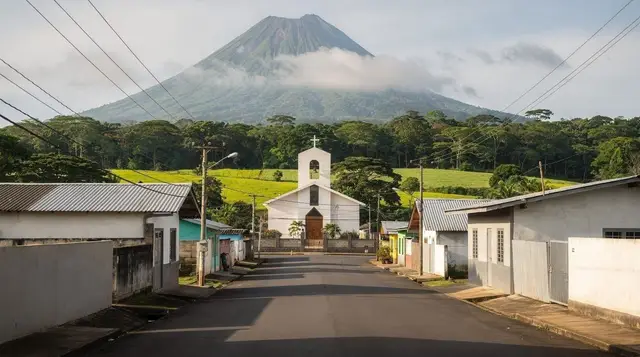
Nobody plans a trip to La Fortuna around rain on purpose, but the rain plans your afternoons whether you like it or not. This is not a once-in-a-while inconvenience you might get unlucky with. It’s the shape of a normal day here, in January as much as in September. La Fortuna sits low on the windward side of the Arenal volcano, facing the moist air pushing in from the Caribbean lowlands, and that air reliably stacks up into cloud and rain through the day and breaks by mid to late afternoon. The mountains that make the scenery so good are the same mountains that squeeze the rain out of the sky right over the town.
The good news is that once you accept this as the default, planning around it is simple. Mornings are your clear window. Afternoons are for anything that doesn’t mind getting wet, doesn’t take all day, or happens partly under a roof. Get that ordering right and the rain barely registers as a problem — it just becomes the reason you’re relaxing in a hot spring at 3pm instead of standing on a viewpoint hoping for a gap in the clouds.
For which months bring the heaviest version of this pattern, our guide to La Fortuna in green season breaks it down month by month — this page is about the daily rhythm, not the yearly one, and it holds regardless of which month you’re reading it in.
Why afternoons, specifically
The mechanism is straightforward. Mornings in La Fortuna start warm and often genuinely bright, sometimes with the volcano’s cone visible for an hour or two before cloud swallows it — worth knowing before you plan a viewpoint stop, and our guide on what to expect when Arenal is cloudy covers that separately. Through the late morning, humidity builds as the sun heats the ground and pushes moist air upward. By early afternoon that moisture has usually condensed into cloud thick enough to let go, and it does, sometimes as a short tropical downpour that clears in twenty minutes, sometimes as a steadier rain that settles in for the rest of the day.
This is true across the whole year, which is the part visitors reading a “dry season / green season” split tend to miss. Dry season, roughly December through April, means less total rain and more days where the afternoon shower is brief or skipped entirely. It does not mean dry afternoons are guaranteed. Green season, May through November, means the same daily pattern but with more days where the rain is heavier and lasts longer into the evening. Either way, the afternoon is the part of the day carrying the risk, every month, and treating it as an exception you got unlucky with is the wrong mental model to travel here with.
The basic rule: outside in the morning, cover in the afternoon
Once the pattern is clear, the itinerary logic writes itself. Anything you’re doing mainly for the view, or anything you’d genuinely be unhappy about doing soaked, belongs in the morning:
- The La Fortuna waterfall and its 500-step canyon walk
- Hanging bridges and canopy walks, where the view is the point
- Volcano-facing viewpoints and photo stops
- Hiking on open or exposed trails
- Anything involving a boat on open water, like a float or a lake crossing
Afternoons are the right slot for anything that is short, partly sheltered, indifferent to being wet, or better in the rain than in the sun:
- Hot springs, where warm water in a rain shower is arguably an upgrade
- Short guided walks under dense forest canopy
- Workshops, tastings, and cooking demonstrations with a roof
- Spa treatments
- Night walks, timed for dusk regardless of what the sky did that afternoon
| Time slot | Best fit | Why |
|---|---|---|
| 7am – 11am | Waterfalls, hanging bridges, viewpoints | Clearest skies of the day, volcano most likely visible |
| 11am – 1pm | Transitional — book flexible or covered options | Cloud building, rain increasingly likely |
| 1pm – 5pm | Hot springs, workshops, spa, short canopy walks | Rain most likely; warm water and cover neutralize it |
| Dusk onward | Night walks, dinner | Rain often eases into the evening; canopy shelters the trail |
This isn’t a rigid schedule to defend against the weather. It’s just an ordering that means the rain, when it arrives, lands on something that doesn’t mind.
What actually holds up well in the rain
Hot springs are the obvious afternoon anchor, and they’re worth building a day around rather than squeezing in as an afterthought. Warm, mineral-fed water heated by the volcano’s geothermal activity doesn’t care what the sky is doing, and a rain shower over an open-air pool is, if anything, a better atmosphere than full sun. Our hot springs comparison guide lines up the main options, and if you’re deciding between a paid complex and the free option, which hot springs to choose walks through the trade-offs.
Budget travellers should also know about the free river at El Choyín, covered in full in our free hot springs guide — it has no changing rooms or lockers and bag theft is a real risk, but it’s a legitimate rainy-afternoon option at zero cost, right alongside paid complexes like Tabacón.
Shorter guided experiences under canopy also work well once the rain sets in, because tree cover absorbs a good part of a passing shower before it reaches the trail. A medicinal plant walk that ends with a tea-making session is a good example — most of it happens under garden cover, it runs a couple of hours rather than a full day, and it’s unaffected by a shower that would have washed out an exposed viewpoint.
The same logic applies to a guided sloth-and-monkey spotting walk through dense forest — the canopy does real work keeping a light rain off the trail, and wildlife tends to keep moving through drizzle in a way it doesn’t through full sun.
If you’d rather pair wildlife with something indoors, a sloth walk combined with a tortilla-making stop gives you a covered second half once the rain picks up, which is a useful structure for an afternoon you can’t fully predict. A goat yoga class with volcano views is another short option that runs under an open-sided pavilion — light rain is genuinely part of the charm here, though check ahead in heavier downpours, since very hard rain can still cancel an outdoor session even with a roof over the mats.
Spa and wellness treatments round this out nicely for a full-cover option. If a wet afternoon has you thinking about volcanic mud or a massage rather than another activity booking, spa and wellness in La Fortuna and volcanic mud and hot spring treatments both cover what’s on offer.
Night walks: the evening payoff of a rainy afternoon
One quirk works in your favor here: rain that soaks the afternoon often eases by dusk, and even when it doesn’t, a night walk is one of the few activities that’s genuinely improved by recent rain rather than hurt by it. Damp conditions bring frogs, insects and other nocturnal wildlife closer to the surface and out onto leaves and trails, which is exactly what a guide is looking for.
Our night walks guide and the dedicated Arenal Natura night tour guide cover what to expect, and what to bring on a night walk is worth a quick read regardless of the day’s weather — rubber boots and a decent flashlight matter more on a wet trail than on a dry one.
Scheduling a night walk as your evening activity is a natural bookend to a day built around this rain pattern: exposed activity in the morning, covered or water-based activity in the afternoon, forest walk after dark. It also means that even a genuinely wet, low-visibility afternoon doesn’t cost you the day — you’ve already had your clear morning, and the evening still delivers.
A sample day built around the pattern
Here’s how this looks stitched into an actual day, rather than as separate rules:
| Time | Activity | Note |
|---|---|---|
| 6:30am | Breakfast | Skies usually clearest right now |
| 7:30am – 11am | La Fortuna waterfall or hanging bridges | Best light and lowest rain risk of the day |
| 11:30am | Lunch in town | Buffer before the afternoon shift |
| 1pm – 4pm | Hot springs or a covered workshop tour | Matches the daily rain window rather than fighting it |
| 5pm | Rest, dry off, change | Rain often eases around now |
| 6:30pm – 8:30pm | Night walk | Damp trails work in your favor here |
Two days is enough to see this pattern hold, which is roughly the minimum stay we’d recommend for La Fortuna itself — see two days in La Fortuna for a fuller version of this structure stretched across more activities.
What this doesn’t mean
It’s worth being clear about what this guide isn’t saying. It isn’t saying afternoon rain is rare enough to gamble on, or that a particular week will dodge it, or that dry season means dry afternoons. It’s the opposite: the rain is reliable enough that it’s worth designing around as a fixed part of every day, the same way you’d plan around the sun setting at a certain time. Visitors who treat one rained-out afternoon as bad luck often make the same mistake the next day, and the one after that, because they’re waiting for an exception that isn’t coming. Visitors who treat it as the baseline stop noticing it as a problem within a day or two.
The one adjustment worth making by season is intensity, not structure. In dry season, an afternoon shower might be twenty minutes and barely worth changing plans for. In green season, it can run for hours and genuinely close out the day’s outdoor options — which is exactly why the morning slot for anything weather-sensitive matters more, not less, the wetter the season gets. For the specifics of which months tip further toward the heavier end, best time to visit La Fortuna and the green season guide both go into the detail this page deliberately leaves out.
Packing notes for the pattern
A few small choices make the rainy-afternoon rhythm easier to live with day to day. A light, packable rain jacket earns its space more than an umbrella does — umbrellas are awkward on a canopy trail, a zip line platform, or a crowded shuttle, while a jacket works everywhere and doubles as an extra layer once the temperature drops slightly with the rain.
Quick-dry clothing and shoes that don’t mind getting wet matter more here than almost anywhere else in Costa Rica, since you’re not avoiding water, you’re planning your day around when you’ll be near it. A dry bag or a resealable plastic sleeve for a phone or camera is worth carrying even on activities that look fully covered on paper, since a sudden shift in wind can carry rain further under a canopy or pavilion than expected.
None of this is about bracing for bad weather. It’s closer to packing for a beach trip where you expect to get wet on purpose — the difference is that here, the wet part of the day is scheduled by the mountains rather than by you, and the trick is simply making sure something enjoyable is already booked for when it arrives.
Rainy afternoon FAQ for La Fortuna
Does it really rain every afternoon in La Fortuna?
Not literally every day, but afternoon rain is the dominant pattern, not an exception. La Fortuna sits on the windward side of the Arenal volcano, so cloud and moisture from the Caribbean side pile up against the mountains through the day and let go by mid to late afternoon, in every month of the year.
What time of day does the rain usually start?
Most days it builds from around midday and breaks between 1pm and 4pm, sometimes as a short burst, sometimes as a steadier soak into the evening. Mornings, especially before 10am, are consistently the driest window.
Should I book outdoor tours for the morning only?
For anything you’d be disappointed to do in the rain — the waterfall, hanging bridges, volcano-view activities — yes, aim for a morning slot. Afternoons work better for activities that are short, partly covered, or simply more enjoyable wet, like hot springs.
Is the rain worse in green season than dry season?
It’s heavier and more frequent in green season, but dry season afternoons in La Fortuna are rarely rain-free either, because of the town’s position facing the wet Caribbean slope. See our green season guide for which months bring the heaviest rain.
What can I do in La Fortuna when it’s raining hard?
Hot springs are the obvious answer, since warm water in the rain is no hardship at all. Covered activities like a plant and tea tour, a cooking demonstration, or a spa treatment also hold up well, and a night walk later on barely notices a drizzle under tree cover.
Are hanging bridges tours cancelled in rain?
Usually not — the bridges and trails stay open in light to moderate rain, and forest canopy shelters a good part of the walk. Heavy downpours make the boardwalks slippery and views disappear into cloud, which is the real reason to front-load this one in the morning.
Is the Río Celeste day trip affected by afternoon rain in La Fortuna?
Río Celeste is roughly ninety minutes from La Fortuna and has its own weather pattern; the bigger risk there is heavy rain upstream clouding the turquoise color, not the La Fortuna afternoon shower. Departing early still helps, since the trail there closes to new entries in the afternoon regardless of weather.
What should I pack for a rainy afternoon?
A light rain jacket, a dry bag or plastic sleeve for your phone, and shoes that can get wet and dry out overnight cover most of it. Umbrellas are of limited use under a moving canopy or on a zip line platform, so a jacket does more work here.
Seasonal experiences on GetYourGuide
Verified deep-linked GetYourGuide tours. Book through these links and we earn a small commission at no cost to you.
GetYourGuide does not provide a product photo for this activity — the image shows the meeting point, photographed by us.