Best Time to Visit La Fortuna: A Season-by-Season Guide
When is the best time to visit La Fortuna?
December to April is the dry season and the most popular window, but La Fortuna still gets regular afternoon rain even then because it sits on the windward side of the Arenal volcano. May to November is greener, cheaper, and quieter, with June and July offering a short lull called the veranillo.
Two Seasons, and a Third Thing Nobody Mentions
Costa Rica’s tourism calendar gets simplified into two blocks: a dry season from December to April and a green season from May to November. That split is real, and it matters for prices, crowd sizes, and which activities are at their best. But it was written for the Pacific coast, and applying it to La Fortuna without adjustment is where a lot of trip planning goes wrong.
La Fortuna sits at the base of the Arenal volcano, on the northern plains, on what meteorologists call the windward side of Costa Rica’s central mountain spine. Moist air rolling in from the Caribbean hits those mountains and dumps rain on the way up, year-round. The result: La Fortuna does not have a true dry season in the way Guanacaste or the central Pacific coast does. It has a less wet season and a wetter season, and the difference is smaller than the calendar implies.
That is the single most useful thing to understand before booking anything. It changes what you pack, how you schedule your days, and which claims in other guides you should be skeptical of.
Dry Season (December to April): Sunnier, Not Dry
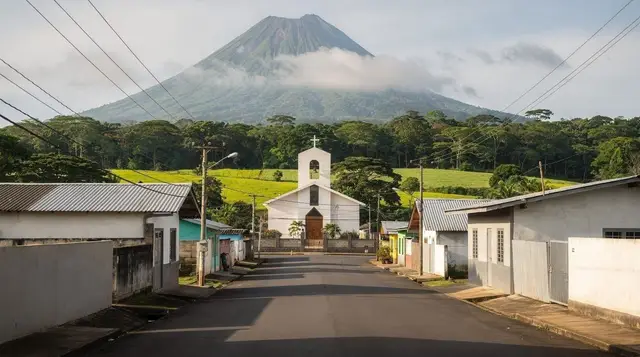
December through April is Costa Rica’s high season, and for good reason. Rainfall drops, sunny mornings become more reliable, and the roads around the lake and toward Monteverde are easier going. This is the best window for a clear look at the volcano’s 1,670 m cone, for hiking the solidified 1968 lava trail without mud, and for outdoor activities that depend on visibility, like the hanging bridges.
It is also the busiest and most expensive window. Hotel rates near La Fortuna climb, popular time slots for parks and reserves fill earlier, and the queue for a table at a well-reviewed soda in the town centre gets longer.
Here is the part that catches first-time visitors off guard: December to April in La Fortuna still means rain. Afternoon showers are common in every one of those months, just shorter and less frequent than in the green season. A guide, blog, or itinerary that describes La Fortuna’s dry season as rainless is describing Guanacaste, not this district. Pack a light rain jacket for a February trip exactly as you would for a June one — you will likely need it less often, but you will still need it.
| Month | What to expect at La Fortuna |
|---|---|
| December | Transitional; rain decreasing, crowds building toward the holidays |
| January | Driest stretch of the year, still with occasional afternoon showers |
| February | Best odds for a clear volcano view; peak crowds |
| March | Similar to February, warm and comparatively dry |
| April | Rain starting to build again by late month; still busy |
Green Season (May to November): Lush, Cheaper, and More Complicated
From May through November, rainfall increases across the whole country, and La Fortuna follows that pattern with its own local flavour. Waterfalls run fuller, the forest turns a deeper green, hotel prices soften, and popular attractions are noticeably quieter. It is a legitimate, and often underrated, time to visit.
It also brings the trade-offs you would expect: more frequent and heavier afternoon rain, muddier approach trails, a higher chance the summit stays clouded in for days at a stretch, and river-dependent activities like the Peñas Blancas safari float or Balsa rafting that get cancelled or rerouted when water levels spike. This guide keeps that part general on purpose — the month-by-month detail of what green season actually looks like on the ground, including how to plan a day around the rain, lives in a dedicated page: see La Fortuna in green season for the specifics, rather than repeating them here.
One green-season detail that is easy to get backwards: September and October, the wettest months in the northern lowlands around La Fortuna, are close to the driest months of the year on Costa Rica’s Pacific coast, including the beaches most visitors picture when they think “dry season.” A single national dry/green split cannot capture that, and treating La Fortuna and the Pacific coast as interchangeable on a multi-stop itinerary is one of the more common planning mistakes.
The Veranillo: A Short Break Inside Green Season
Costa Ricans have a name for a real, if unreliable, dip in rainfall that often shows up in June and July, right in the middle of green season: the veranillo, or “little summer.” It is not marked on any official calendar and does not happen with total consistency every year, but in years when it does, it offers something close to the best of both worlds — green-season prices and thinner crowds, with a better-than-average run of drier afternoons.
If your travel dates are flexible and you are drawn to green-season rates but wary of the wettest months, late June into July is a reasonable middle path. It is not a guarantee, and a trip built entirely around hitting the veranillo exactly is a trip built on a pattern, not a promise.
What the Season Does — and Does Not — Change
It is worth being precise about which parts of a La Fortuna trip a season actually affects, because several of the district’s headline draws are far less weather-dependent than visitors assume.
Barely affected by season. The hot springs are geothermally heated groundwater, so Tabacón, Baldí, and the free river at El Choyín work the same in January and in September — rain or shine, the water stays warm. Night walks looking for frogs and sleeping birds run year-round and, if anything, are more productive with a bit of humidity in the air.
Moderately affected. The La Fortuna waterfall looks more dramatic with more water behind it, which favours green season, though the 500 steps down and back up are steeper and slicker after rain. The hanging bridges and canopy tours run in both seasons but pause for lightning, which is more common in the wettest months.
Strongly affected. A clear look at the Arenal cone, river-level activities like rafting and the safari float, and the colour of the Río Celeste all swing more with season and with the preceding few days’ weather than with the calendar month alone. On the río Celeste specifically: the turquoise colour is an optical effect from suspended mineral particles, and heavy rain upstream clouds the water and dulls the colour regardless of what month the calendar says — a risk that exists in both seasons, though it is more frequent in the wettest ones.
Choosing Your Trip Around What You Actually Want
| If your priority is… | Lean toward |
|---|---|
| The clearest odds of seeing the volcano’s cone | December–April, especially February–March |
| Lower prices and thinner crowds | May–November, or the June–July veranillo |
| Fullest waterfalls and rivers | May–November |
| Best chance of a vivid Río Celeste | Either season, but check recent rainfall — avoid the days right after a heavy storm |
| A quieter Monteverde add-on | May, June, or November, at the shoulders of each season |
| Wildlife spotting (sloths, frogs, birds) | Year-round, with green season slightly favouring activity levels |
For most first-time visitors trying to balance weather, cost, and crowds, the shoulder months — late April into May, or November — tend to offer the best mix: rain still building or already tapering off, prices closer to green-season levels, and attractions not yet at peak capacity.
Practical Tactics for Any Season
Build your day around the rain, not against it. Across almost every month, rain in La Fortuna is more likely in the afternoon than the morning. Schedule outdoor activities — the ATV routes, zip lines, hiking on the lava trail — for the morning, and save hot springs, a spa afternoon, or a slower town-centre lunch for when the clouds roll in. A short guide on structuring a single day this way, including which combination of activities holds up best if rain arrives early, is here: best combo tour for one day.
Do not schedule your only volcano-viewing window for late in the trip. If seeing the cone matters to you, try for it on your first clear morning rather than saving it for a final day that might arrive clouded in. Early morning, before the day heats up and clouds build, is consistently the best window in every month.
Check road conditions before a Monteverde add-on in the wettest months. The route by road is unpaved for a long stretch and can be slow after heavy rain; the jeep-boat-jeep crossing across the lake is often the more reliable option in September and October specifically.
Book weather-dependent activities with some slack in your schedule. A rafting trip or a safari float can be rescheduled a day if river levels spike; a rigid one-day layover between destinations removes that option.
A Two-Activity Way to Hedge Your Bets
Because the volcano’s summit is unpredictable in any season, a trip that pairs one weather-proof activity with one weather-dependent one tends to hold up best. A soak with a view — even a partial one — plus a wildlife walk covers both outcomes: if the cone clears, you see it; if it does not, the hot springs and the forest deliver regardless. An Arenal park visit paired with hot springs and a meal is built around exactly that logic, combining a look at the park’s trails with a guaranteed-warm soak afterward.
For a green-season trip where you want a rain-resistant plan, a gentle river safari float combined with the hanging bridges and lunch keeps you moving between a covered canopy walk and a low-key boat ride, both of which tolerate a passing shower better than an open zip-line platform does.
If your dates land in the drier months and you want the clearest shot at wildlife alongside good visibility, an zip line and sloth-watching outing takes advantage of the better morning light typical of December through April.
And for a day built specifically around the Río Celeste’s colour, checking recent rainfall before you go matters more than checking the season: a La Fortuna town, Río Celeste, and Tenorio National Park day tour is worth timing for a stretch without recent heavy storms upstream, in either half of the year.
How Many Days to Allow, Whatever Season You Pick
Because no season guarantees a clear volcano or a rain-free day, building in an extra day of slack matters more here than the exact month you choose. A trip of three to four days gives you room to shift an activity if a storm rolls through, without losing a full day of the itinerary. For a longer look at how to structure that time, see how many days in La Fortuna, and if this is your first visit to the area, first time in La Fortuna covers the basics this page assumes.
Frequently Asked Questions About La Fortuna’s Seasons
What is the best month to visit La Fortuna?
February and March are the driest, sunniest months and give the best odds of a clear volcano view. If lower prices and thinner crowds matter more to you than maximizing dry days, late June or July, during the veranillo, is a strong alternative.
Does it rain in La Fortuna during the dry season?
Yes. La Fortuna sits on the windward, Caribbean-facing side of the mountains, so it gets rain in every month, including the December-to-April dry season. Showers are shorter and less frequent then, but a week without any rain at all would be unusual.
What is the wettest month in La Fortuna?
September and October are typically the wettest months in the northern lowlands around La Fortuna. That is the opposite of the Pacific coast, where those same two months are often the driest of the year — a mismatch worth knowing if your trip includes both regions.
Is La Fortuna’s weather the same as Guanacaste’s?
No. Guanacaste has a genuine dry season with long rainless stretches from December to April. La Fortuna, on the other side of the mountains, stays humid and rain-prone year-round, with less rain in those same months rather than none.
What is the veranillo?
The veranillo, or “little summer,” is an informal, not-guaranteed dip in rainfall that often occurs in June and July, in the middle of green season. Many travellers use it to get green-season prices with better-than-average odds of dry afternoons.
Should I choose green season for lower prices?
Green season, May through November, generally brings lower accommodation rates and thinner crowds at popular attractions. The trade-off is more frequent rain, muddier trails, and a higher chance of a clouded Río Celeste after heavy storms.
Does rain affect views of the Arenal volcano?
Clouds affect the summit more than rain affects the town. The 1,670 m cone is often wrapped in cloud regardless of season and is usually most visible early in the morning, before afternoon cloud builds. No month guarantees a clear view.
What should I pack no matter when I visit?
A light rain jacket, quick-dry clothing, and closed shoes for trails belong in every packing list for La Fortuna, in any month. Treating rain as a likely event rather than an exception is the more useful mindset here, whichever season you choose.
Seasonal experiences on GetYourGuide
Verified deep-linked GetYourGuide tours. Book through these links and we earn a small commission at no cost to you.
GetYourGuide does not provide a product photo for this activity — the image shows the meeting point, photographed by us.