First Time in La Fortuna: The Complete Orientation Guide
What should a first-time visitor to La Fortuna know before arriving?
La Fortuna is an inland district in Costa Rica's northern plains, built around the base of Arenal Volcano. The volcano has not erupted or produced visible lava since October 2010 — it is dormant, not extinct. There is no beach here; the nearest Pacific coast is roughly 3 hours away by road.
If this is your first time reading about La Fortuna, three things are worth settling before anything else: where it actually is, what its volcano is and isn’t doing, and what kind of landscape you’re flying or driving into. Get those three straight and the rest of the planning — hot springs, waterfalls, day trips — falls into place much faster.
Where La Fortuna actually sits
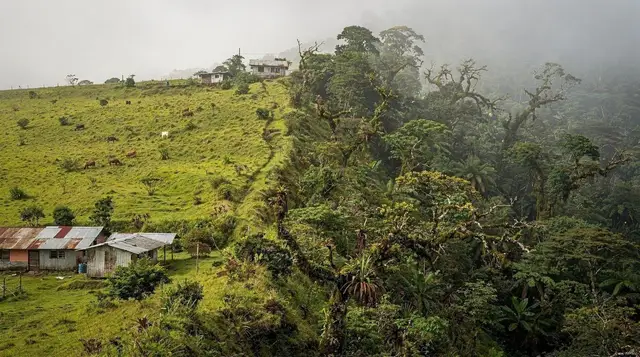
La Fortuna is a district of the San Carlos canton, in Alajuela province, tucked into Costa Rica’s northern plains at around 250 metres of elevation. It’s not a resort strip and it’s not a national park itself — it’s a small town of roughly 15,000 people that grew up specifically to serve visitors coming to see Arenal Volcano, which rises just north of town to 1,670 metres.
The town centre is compact and walkable, with most hotels clustered along the roads leading out toward the volcano and the lake. From here, the La Fortuna waterfall, the Mistico hanging bridges, and a cluster of hot spring resorts are all within a 20-minute drive. This concentration is exactly why La Fortuna became the country’s busiest adventure base: an unusual density of things to do, packed into a small radius, all reachable from one town.
It also means La Fortuna makes a natural first stop for a wider northern loop. From here, Lake Arenal and Monteverde sit to the west, Río Celeste and the Tenorio volcano area sit roughly 90 minutes north, and the Central Valley — San José and the Juan Santamaría airport — is about 3 hours south.
The one thing to get straight before you book anything: the volcano doesn’t erupt anymore
This is the single most common source of disappointment for first-time visitors, so it’s worth stating plainly. Arenal Volcano erupted catastrophically on 29 July 1968, destroying the villages of Tabacón, Pueblo Nuevo and San Luis and killing an estimated 87 people. What followed was 42 years of near-continuous strombolian activity — the glowing lava flows and nighttime fireworks that made Arenal internationally famous.
That activity stopped in October 2010. Arenal has been dormant ever since. There is no visible lava, no incandescent flow, no nighttime glow, no rumbling. Any tour, hotel photo, or blog post that implies you’ll see lava at Arenal today is either outdated or misleading — see our full breakdown in the lava lie about Arenal if you want the longer version of this history.
What you can see, weather permitting, is the volcano’s near-perfect cone — often free of cloud in the early morning and clouded over by afternoon — plus the solidified black lava flows from 1968 and 1992, which you can actually walk across on marked trails. The geothermal heat from decades of activity is also still very real: it’s what warms the region’s hot springs, from luxury resorts to the free river everyone eventually finds out about.
For a fuller picture of what to expect on a cloudy day (which is often), our guide on what to expect when Arenal is cloudy is worth reading before you build your itinerary around a “volcano view” that may not happen on your schedule.
And no, there’s no beach here
The second thing to settle: La Fortuna is an inland destination. It sits in the forested northern lowlands, not on the coast, and there is no beach within a short drive. The nearest Pacific beaches, around Guanacaste, are roughly 3 hours away by road; the Caribbean coast is further still, around 4.5 hours. If a beach afternoon is part of your Costa Rica trip, it needs to be a separate stop — most itineraries pair La Fortuna with either Guanacaste or the central Pacific coast rather than trying to squeeze both into the same base.
What La Fortuna trades the coast for is density of activity: rivers, waterfalls, cloud forest, hot springs and wildlife, all within a compact area, without the driving distances that most of the rest of the country requires.
What people actually come to La Fortuna for
Rather than repeat what’s covered in depth elsewhere on this site, here’s the shortlist, each linked to the guide that goes deeper.
Hot springs. The region’s biggest single draw. Options range from large resort complexes to a free public river. If you’re deciding between them, start with our hot springs comparison guide rather than picking blind — the price range alone runs from free to well over a hundred dollars for the same basic experience of warm, mineral-rich water.
Waterfalls. The La Fortuna waterfall is the headline attraction: a roughly 70-metre drop reached by a staircase of about 500 steps, which you descend and then have to climb back up. It’s genuinely worth the effort, but it’s not the only waterfall in the area — see waterfalls near La Fortuna compared for the full list.
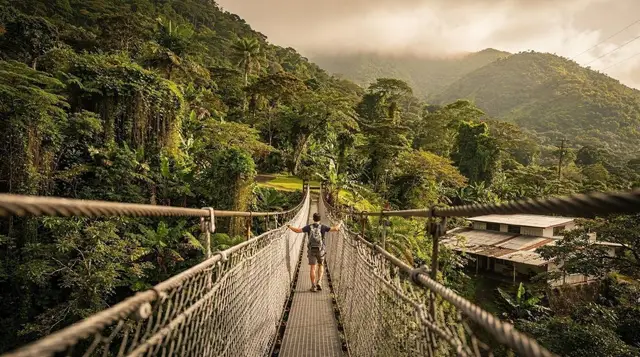
Hanging bridges. Three different parks offer suspended bridge walks through the rainforest canopy, and their names get mixed up constantly. Mistico Hanging Bridges, Sky Adventures, and the Arenal Hanging Bridges near El Castillo are not the same park — our hanging bridge parks compared guide sorts out which is which before you book.
Wildlife. Sloths, toucans and, further afield in Monteverde, resplendent quetzals draw a steady stream of nature-focused visitors. Sightings are never guaranteed on any tour, but odds improve significantly with a trained guide — our wildlife spotting guide explains why. A well-run guided sloth and monkey walk with a local naturalist consistently outperforms wandering a trail alone.
Río Celeste. The turquoise river inside Tenorio Volcano National Park, about 90 minutes north, is one of the most photographed spots in the country — and one of the most weather-dependent. Heavy rain clouds the water and strips the colour, which is worth knowing before you commit a whole day to it. A guided Río Celeste and Tenorio National Park day tour handles the timing and permits for you.
Adventure activities. Rafting, ATV routes, canyoning and zip-lining round out the more physical end of the region’s offering, most of them centred on the rivers and forest just outside town.
What La Fortuna is not
It’s worth being equally clear about what a first-time visitor shouldn’t expect:
- No lava, no glow, no rumble. Covered above, but it bears repeating because it’s the number-one disappointment.
- No summiting Cerro Chato. The crater lake hike was closed to visitors in 2018 due to erosion and safety concerns, and it remains closed — despite what some outdated guides and blogs still suggest. See Cerro Chato closed: what to know for the current situation.
- No guaranteed clear volcano view. Arenal’s summit spends much of its time in cloud, especially in the afternoon. Early morning is your best shot.
- No beach. Already covered, but it’s the question we get most from people building their first Costa Rica itinerary.
Getting your bearings on timing and logistics
Two seasons shape the region: a dry season from December to April and a green season from May to November, with a relative lull in June and July locally called the veranillo. But La Fortuna sits on the windward side of the country, so it rains here in some form nearly year-round — usually in the afternoon — regardless of season. For the honest version of what each season actually looks like on the ground, read best time to visit La Fortuna and La Fortuna in green season.
| From La Fortuna to | Approx. travel time |
|---|---|
| San José (SJO airport) | 3 hours |
| Liberia (LIR airport) | 2.5–3 hours |
| Monteverde, by road | 3.5–4 hours |
| Monteverde, jeep-boat-jeep | ~3 hours |
| Río Celeste / Bijagua | 1.5–2 hours |
| Rincón de la Vieja | 3 hours |
That jeep-boat-jeep option deserves a mention here because it trips up a lot of first-timers: it’s a combined minibus–boat–minibus transfer across Lake Arenal to Monteverde, and it’s usually both faster and cheaper than driving the long way around by road. Our jeep-boat-jeep vs driving guide walks through both options in detail.
Budgeting for your trip
Costs in La Fortuna vary enormously depending on how many paid hot spring resorts and guided tours you stack into a day. A single resort entry can run anywhere from around 40 to well over 100 USD, while the free hot river near Tabacón costs nothing but comes with no facilities and a real risk of theft — worth knowing about even if you don’t use it. For a full daily cost breakdown by travel style, see La Fortuna on a budget.
Prices around town are generally quoted in US dollars for tours, hotels and park entries, though change often comes back in Costa Rican colones — sometimes at a weak rate. Carrying a mix of both currencies, and favouring smaller bills, avoids a few common frustrations.
Building your first itinerary
If you’re short on time, a well-organised day can cover a lot of ground: a morning hanging bridges walk, an afternoon at the waterfall, and an evening hot spring soak is a realistic single-day combination. A guided half-day hanging bridges tour is a good way to fit the bridges in without losing your whole morning to logistics, and a guided eco tour with a biologist is worth prioritising early in your stay — a trained eye finds far more wildlife than most visitors do on their own.
For multi-day planning, our how many days in La Fortuna guide breaks down realistic itineraries from a single overnight stop up to a full week, and our three days in La Fortuna itinerary is a solid default for most first-time visitors. If you’re combining La Fortuna with Monteverde or Río Celeste, see La Fortuna and Monteverde or La Fortuna and Río Celeste for how those pairings typically work.
Before you finalise anything, it’s worth reading La Fortuna travel mistakes to avoid — most of the regrets first-time visitors report are avoidable with a little forewarning, from over-scheduling hot spring visits back to back to underestimating how long the waterfall stairs actually take.
Frequently asked questions about visiting La Fortuna for the first time
Can you still see lava at Arenal Volcano?
No. Arenal’s last eruptive activity was in October 2010, closing a cycle that began with the catastrophic 1968 eruption. What you can see today is the cone itself when clouds allow, the solidified 1968 and 1992 lava flows, and the geothermal heat that still feeds the region’s hot springs.
Is La Fortuna a beach destination?
No. La Fortuna sits inland in the northern lowlands, roughly 3 hours from the nearest Pacific beaches in Guanacaste and about 4.5 hours from the Caribbean coast. It’s a destination built around forest, rivers and volcano, not sand.
Where exactly is La Fortuna located?
La Fortuna is a district of the San Carlos canton, in Alajuela province, in Costa Rica’s northern plains. It sits at roughly 250 metres of elevation at the base of Arenal Volcano and has around 15,000 residents.
How many days should I spend in La Fortuna?
Most first-time visitors find 3 to 4 days enough to cover the main activities without rushing, though it depends on whether you’re also visiting Monteverde or Río Celeste. See our dedicated guide on how many days to plan for a full breakdown by itinerary style.
Do I need a rental car in La Fortuna?
It helps but isn’t essential. Many attractions run their own shuttle pickups from hotels in town, and taxis are common for shorter hops. A 4x4 becomes more useful if you’re driving onward to Monteverde or exploring gravel roads around El Castillo.
What’s the biggest mistake first-time visitors make in La Fortuna?
Booking a tour that implicitly promises lava, a guaranteed clear volcano view, or a sloth sighting. All three are common in marketing and none can be promised — the volcano has been dormant since 2010, its summit is often in cloud, and wildlife sightings are never guaranteed.
Is La Fortuna good for a first trip to Costa Rica?
Yes — it’s the country’s most visited adventure base, with hot springs, waterfalls, hanging bridges and wildlife tours concentrated in a small area, plus straightforward onward routes to Monteverde, Río Celeste and the Guanacaste coast.
Trip-planning essentials on GetYourGuide
Verified deep-linked GetYourGuide tours. Book through these links and we earn a small commission at no cost to you.
GetYourGuide does not provide a product photo for this activity — the image shows the meeting point, photographed by us.