La Fortuna itineraries
Ready-made routes for every kind of La Fortuna trip — from quick two-day stops to week-long trips that add Monteverde and the Guanacaste volcanoes.
By theme
Curated around a specific interest — family travel, adventure sports and wildlife, or a side trip to Monteverde or Río Celeste.

One Day in La Fortuna: Waterfall, Bridges and Hot Springs

Two Days in La Fortuna

Three Days in La Fortuna: Waterfall, Bridges and Hot Springs

Arriving via Liberia: Guanacaste to La Fortuna in 4 Days

La Fortuna on a Budget: 4 Days Without the Resort Prices

4 Days in La Fortuna: A Complete Itinerary

La Fortuna and Río Celeste: Volcano to Turquoise River

La Fortuna Without a Car: A 4-Day Shuttle-and-Foot Itinerary

La Fortuna With Kids: A 5-Day Slow-Paced Family Itinerary

Five Days in La Fortuna

5 Days in La Fortuna in Green Season

La Fortuna and Monteverde: 5 Days of Volcano and Cloud Forest

5 Days of Adventure in La Fortuna: Rafting, Caves and Zip-Lines

A Slow-Paced Honeymoon in La Fortuna, Arenal

La Fortuna for Wildlife: A 6-Day Itinerary

La Fortuna With a Rental Car: A 6-Day Loop

One Week in La Fortuna: The Complete 7-Day Itinerary

San José to Monteverde: The Classic 10-Day Loop
Good to know about La Fortuna itineraries
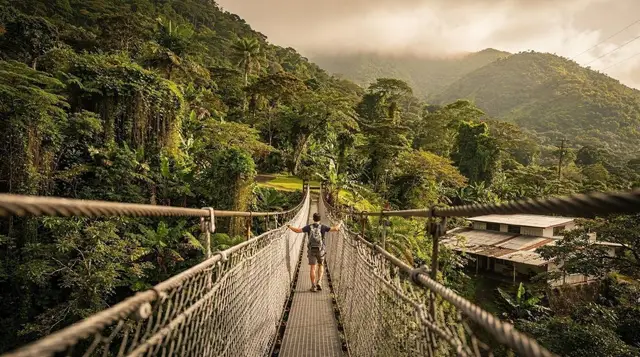
Planning a La Fortuna trip by length rather than by region produces a more realistic result, and this hub covers the durations that come up most often. One day is enough only for the immediate volcano area — a hanging bridges walk, the La Fortuna waterfall's roughly 500 steps, and a hot springs afternoon — with no real chance of reaching Río Celeste or the lake's far shore. Two days adds either a canyoning or rafting morning plus a proper Lake Arenal drive toward Nuevo Arenal, without feeling rushed. Three days is where Río Celeste fits comfortably as a dedicated day trip, given the roughly 1-hour-15-minute drive each way and the trail's mid-afternoon cutoff for new entries.
Five days allows Caño Negro or the Sarapiquí lowlands to be added as a second far excursion, alongside a rest day built around the hot springs. Seven days allows a proper split between the volcano area's activities and one genuinely far region — an overnight in Monteverde, reached by the roughly 3-hour jeep-boat-jeep crossing, or a Poás and San José gateway day, or an overnight near Rincón de la Vieja on the way to the Liberia airport — rather than squeezing any of them in alongside something else. Beyond the standard length-based plans, this hub also covers themed itineraries built around a specific priority rather than a fixed number of days.
A wildlife-focused itinerary anchors the schedule around night walks, Caño Negro's boat-based birding in the wet season and Monteverde's cloud forest, where resplendent quetzals are most reliably seen between February and July. An adventure itinerary stacks canyoning, rafting or tubing, and a zip-line canopy tour across the trip's first days, before the pace eases into hot springs and slower activities. A family itinerary swaps canyoning and the longer hikes for gentler activities — the hanging bridges, a float safari on the Peñas Blancas and a hot springs pool afternoon — since a rappel line or a full-day boat trip rarely suits young children well.
A budget-focused itinerary leans on the free Río Chollín hot springs rather than the 40-to-115-US-dollar resort complexes, public buses where routes allow, and self-catering stays, though it's worth knowing the free pools are unsupervised and bag theft is common there. A no-car itinerary relies on organized shuttles and day-tour operators for Río Celeste, Caño Negro and Poás, useful for travellers who'd rather not tackle the one-lane bridges and the unpaved stretch of Route 702 themselves.
A green-season itinerary, built around the wetter months from May to November, builds in a buffer for the afternoon rain that arrives most days and treats the drier veranillo weeks of June and July as a bonus rather than a guarantee, while planning around September and October, the wettest months in the north, with more flexibility than the rest of the year.
Across every version, the same planning issues resurface — how a trail's mid-afternoon cutoff can disrupt a tight Río Celeste schedule, the true driving time to Monteverde or Rincón de la Vieja, and how much buffer a green-season afternoon really needs — and this hub's itinerary pages work through them day by day rather than leaving them as an afterthought.
Frequently asked questions about La Fortuna itineraries
How many days do I need for a first trip to La Fortuna?
One day covers the volcano area's closest sights and little else. Three days adds Río Celeste as a dedicated day trip, five days fits Caño Negro or Sarapiquí alongside a rest day, and seven days allows an overnight in Monteverde or near Rincón de la Vieja on top of everything closer to town.
How should I plan around Río Celeste's trail closing time?
Leave La Fortuna early rather than in the late morning — the trail stops admitting new visitors in the mid-afternoon and daily entry numbers are capped, so a tight afternoon plan risks being turned away.
What does a green-season itinerary in La Fortuna look like?
It's built around the wetter months from May to November, with a buffer for the afternoon rain that arrives most days, the drier veranillo weeks of June and July treated as a bonus rather than a guarantee, and extra flexibility planned around September and October, the wettest months in the north.
Can I see La Fortuna on a budget?
Yes — the free Río Chollín hot springs cost nothing versus the 40-to-115-US-dollar resort complexes, and public buses and self-catering stays cut costs further, though the free pools are unsupervised and bag theft is a known risk there.
Is it possible to see the area without renting a car?
Yes — a no-car itinerary built around organized shuttles and day-tour operators covers Río Celeste, Caño Negro and Poás well, though Rincón de la Vieja and a same-day Monteverde attempt are considerably easier with a car or a private shuttle.
Day trips on GetYourGuide
Verified deep-linked GetYourGuide tours. Book through these links and we earn a small commission at no cost to you.
GetYourGuide does not provide a product photo for this activity — the image shows the meeting point, photographed by us.