5 Days in La Fortuna in Green Season
Planning Around La Fortuna’s Rainy Half of the Year
Green season in La Fortuna runs from roughly May through November, and it gets an unfair reputation as a washout. It isn’t. What it actually means is a pattern: mornings are usually clear enough to hike, cross a bridge, or catch the volcano’s cone before the clouds close in, and afternoons bring rain — often heavy, often brief, almost always after lunch. This itinerary is built around that pattern rather than against it. Outdoor, weather-dependent plans go in the morning. Hot springs, food, and anything covered go in the afternoon reserve slot. And one day accepts a real trade-off: a trip to Río Celeste, where the famous turquoise colour can disappear entirely after heavy rain upstream.
If your priority is squeezing more out of a smaller budget rather than working around rain, the budget itinerary is a better fit than this one — green season and lower prices tend to travel together, but they are not the same plan. For a deeper look at what “rainy season” actually means here, see the guide to green season and best time to visit.
Day 1: Arrival and the Free Hot River at El Choyín
However you arrive — via SJO or LIR — plan to land in La Fortuna by mid-afternoon and keep the first evening low-key. Roads into town can be slick after a shower, and there is no reason to rush the drive on day one.
Once you’re settled, head to El Choyín, the free public hot river that runs beneath a bridge near Tabacón. It’s warmed by the same geothermal system that feeds the paid resorts, with none of the entrance fee and none of the infrastructure — no lockers, no towels, no lifeguard. Go with a small group, bring only what you can watch, and skip valuables entirely; bag theft is a known issue here. The full picture, including what to expect and what to leave at the hotel, is in the guide to El Choyín and the hot springs comparison guide if you want to see how it stacks up against paid options later in the trip.
Dinner in the town centre — sodas serving casados in colones are both cheaper and, honestly, better value than most tourist-menu restaurants.
Day 2: Waterfall Early, Bridges Late Morning, Rain in Reserve
This is the most weather-sensitive day of the trip, so start early — aim to be at the La Fortuna Waterfall gate at opening. The descent is around 500 steps down into the canyon and the same 500 back up, and the trail gets slippery fast once rain starts, so doing it first thing is not just about crowds. Swim in the pool below the falls, not underneath them — the current at the base is genuinely strong. Full logistics are in the waterfall guide.
By late morning, move to the Mistico Hanging Bridges on the lake’s northwest side — six suspension bridges through rainforest canopy, with a decent chance of spotting sloths or toucans along the trail. Three different parks in this area all sell “hanging bridges” and get confused with each other; the comparison of the hanging bridges parks and the dedicated Mistico guide are worth five minutes before you book.
Keep the afternoon open. If the rain holds off, wander the town centre; if it doesn’t, that’s exactly what it’s there for. For a sense of how to structure a day here without fighting the schedule, see how to plan around rainy afternoons.
Day 3: Volcano Trails at First Light, Hot Springs in the Afternoon
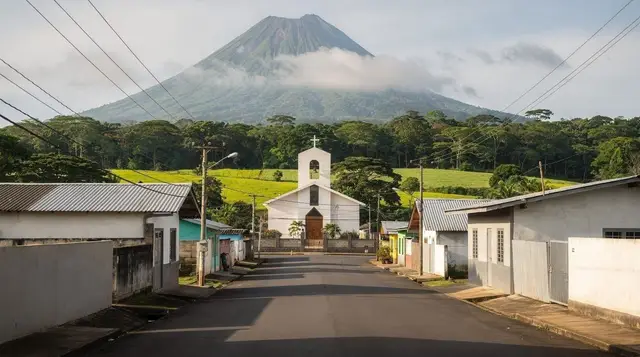
The Arenal volcano has not produced visible lava since October 2010 — it’s been dormant for well over a decade, and no tour will show you flowing lava regardless of what older photos suggest. What you’re chasing instead is the cone itself, which is most often visible in the early morning before cloud builds around the summit.
Get an early start at Arenal Volcano National Park and walk the 1968 lava trail, a walk across the solidified flow from the eruption that reshaped this whole area. The trail is uneven black rock underfoot, so proper shoes matter more than usual. The 1968 lava trail guide and the wider national park guide cover the two separate trail sectors and which entrance ticket you actually need.
a guided walk across the 1968 lava flow with a naturalist is a good option here if you’d rather have someone pointing out what you’re looking at, since a surprising amount of what looks like plain black rock is actually 50-plus years of forest reclaiming a lava field.
Once the afternoon clouds inevitably roll in, retreat to hot springs — this is the day to spend on a paid resort if you want one, since the geothermal water is exactly as good in the rain as in the sun.
a day pass to the Los Lagos hot springs and wildlife trails or the Paradise Hot Springs day pass both work well as a rained-out-afternoon plan. For how the cone behaves under cloud cover generally, see what to expect from a cloudy Arenal.
Day 4: The Río Celeste Gamble
This is the day with a genuine caveat, and it’s worth reading before you commit to it. Río Celeste, inside Tenorio Volcano National Park, owes its striking turquoise colour to an optical effect — fine mineral particles in the water that scatter light a particular way once two rivers merge at a spot called El Teñidero. After heavy rain, that water turns cloudy and loses the colour, sometimes for a day or two. In green season, that’s a real possibility on any given visit, not a rare fluke.
The trade-off is worth making anyway: the hike itself, through dense rainforest to a waterfall viewpoint, is worthwhile with or without the blue water, and mornings after a dry night still deliver the colour reliably. Go early, both for the trail conditions and the best odds.
a guided hike through Río Celeste with wildlife spotting along the trail is a sensible way to do this one, since a guide will also help you actually find the sloths that give the trail its reputation. For the honest version of what can go wrong, read the day Río Celeste turned brown before you go, and the day trip guide for route and timing.
The drive out and back is roughly 1.5 to 2 hours each way on partly unpaved roads — comfortable in a 4x4, manageable but slower in a sedan.
Day 5: A Slow Morning and Departure
Keep the last day light. If your flight or the road ahead allows a few free hours, a low-effort morning on Lake Arenal is a good closer — a boat trip on the lake combined with a hot springs stop covers both the view of the volcano from the water and one last soak before you go. Otherwise, this is simply a buffer: green season driving takes longer than the dry-season estimate, and giving yourself slack for a delayed departure is worth more than one more activity.
What to Actually Expect From the Rain
The single biggest misconception about visiting in green season is that it rains constantly. It doesn’t. La Fortuna sits on the windward side of the mountains, so rain is frequent, but the pattern is consistent enough to plan around: clear or partly clear mornings, building cloud through midday, and rain most afternoons and evenings. June and July often bring a real lull in that pattern — the veranillo, a short relative dry spell inside the green season — but it isn’t guaranteed every year, so treat it as a bonus rather than something to bank on.
The practical upshot for this itinerary: nothing here is scheduled outdoors after roughly 2pm, and nothing depends on a single clear window to work. If a whole day washes out, the hot springs days absorb it without any real loss, since geothermal water doesn’t care about the weather above it.
| Day | Morning (weather priority) | Afternoon (rain reserve) |
|---|---|---|
| 1 | Arrival, settle in | El Choyín free hot river |
| 2 | La Fortuna Waterfall, Mistico bridges | Town centre / open |
| 3 | Arenal 1968 lava trail | Hot springs resort |
| 4 | Río Celeste hike | Drive back, rest |
| 5 | Lake Arenal boat trip | Departure |
For a fuller sense of how many days makes sense for your own trip, see five days in La Fortuna, and browse the hot springs category if you want to swap in a different resort on the wet-afternoon days than the ones listed above.
FAQ: Visiting La Fortuna in Green Season (May–November)
Is green season a bad time to visit La Fortuna?
No. It is the cheaper, quieter, greener version of the same trip. The trade-off is an afternoon rain shower most days, not rain all day, and it is easy to plan around.
Does it rain all day in La Fortuna from May to November?
Usually not. La Fortuna sits on the windward side of the mountains, so rain falls most days, but it typically arrives in the afternoon or evening. Mornings are your best window for anything outdoors.
What is the veranillo?
A relative dry spell in June and July, sometimes called the “little summer”, when rainfall drops noticeably inside the green season. It is not guaranteed, but it is a real and recurring pattern, not a myth.
Will I see the Arenal volcano’s cone in green season?
Sometimes, usually early in the morning before clouds build up. The volcano has not produced visible lava since October 2010 regardless of season — what you are hoping to see is the cone itself, not an eruption.
Is Río Celeste worth the trip if it might not be turquoise?
It is still a good rainforest hike either way, but the colour is genuinely weather-dependent. After heavy rain upstream, the water turns cloudy and grey-brown for a day or more, so treat a bright turquoise river as a bonus, not a guarantee.
Are the free hot springs at El Choyín open in green season?
Yes, year-round, and green season is actually a good time to go — it is less crowded than in the dry months. There is no infrastructure, so bring your own towel and do not leave valuables unattended.
Do I need a 4x4 for this itinerary?
It helps, especially for the road to Río Celeste and El Choyín’s access track, which are unpaved in sections and get slicker in the rain. A regular sedan can manage most of this itinerary carefully, but a 4x4 removes the guesswork.
How is this different from the budget itinerary?
This plan is built around weather timing for green season travellers. If your main goal is stretching a lower budget rather than working around rain, the dedicated budget itinerary is the better starting point.
Seasonal experiences on GetYourGuide
Verified deep-linked GetYourGuide tours. Book through these links and we earn a small commission at no cost to you.
GetYourGuide does not provide a product photo for this activity — the image shows the meeting point, photographed by us.