Why SJO Is Where Most La Fortuna Trips Begin
Juan Santamaría International Airport (SJO) sits just outside Alajuela, about 20 minutes from downtown San José, and it’s the airport almost every international flight into Costa Rica uses. If you’re reading this page, there’s a good chance it’s also the airport your La Fortuna trip is going to start from.
That’s the good news: SJO has more flights, more airlines, and generally lower fares than Liberia’s Daniel Oduber airport on the Guanacaste side. The less convenient news, and the reason this page exists, is the drive that follows. SJO is not close to La Fortuna. It’s not a quick shuttle hop the way some booking sites imply. It’s a genuine three-hour drive through mountain terrain, and treating it as anything shorter is the single most common planning mistake first-time visitors make.
This page covers the airport itself, how to get from it to La Fortuna, what to consider en route, and how SJO compares to the Liberia alternative. For San José the city, see the separate San José guide — this page focuses specifically on the airport as a gateway.
The Drive: Set Your Expectations Correctly
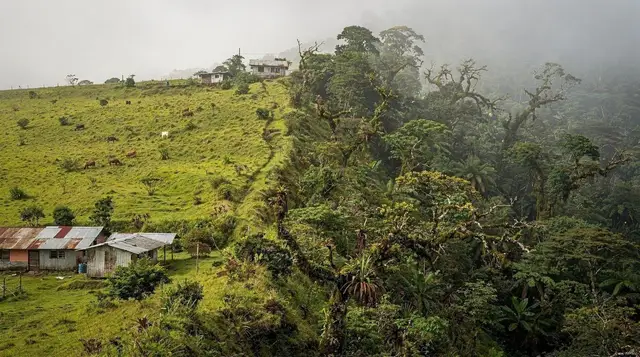
The straight-line distance from SJO to La Fortuna is around 125 km — on a flat highway, that might be 90 minutes. It isn’t flat, and it isn’t a highway for most of the way. The route climbs out of the Central Valley near Alajuela, passes close to Poás Volcano, and winds down through the agricultural hills around Ciudad Quesada before reaching La Fortuna. Realistically, budget about 3 hours, and closer to 3.5 if you hit rain, roadwork, or slow trucks on the two-lane sections.
This isn’t a detail to skim past. It’s the single decision that shapes your entire arrival day:
- Book a flight that lands with daylight to spare. A midday arrival gives you a comfortable margin. A late-afternoon or evening arrival means driving unfamiliar mountain roads after dark, which nobody who’s done it recommends repeating.
- Don’t schedule a tour for your arrival evening. Give yourself the drive, check-in, and dinner — nothing more. See how many days in La Fortuna you’ll actually want before booking activities on top of a travel day.
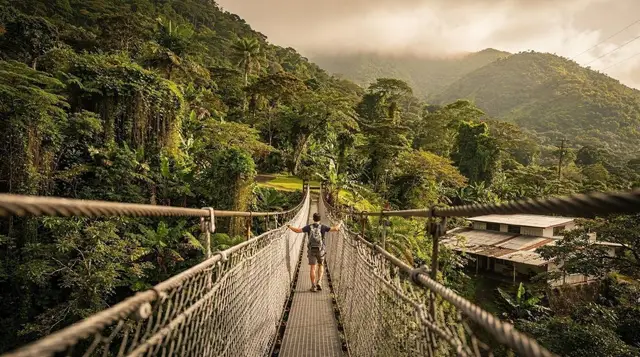
- Treat the drive as part of day one, not a delay before day one starts. Framed that way, it stops feeling like wasted time and starts feeling like the first look at the country — cloud forest, coffee farms, and the northern lowlands opening up as you descend toward the volcano.
For a step-by-step breakdown of the route, stops, and timing, see how to get from SJO to La Fortuna.
How to Get There: Your Options
| Option | Approx. cost (USD) | Time | Best for |
|---|---|---|---|
| Rental car | 40–90/day + fuel | ~3 hours | Flexibility, stops en route, exploring beyond La Fortuna |
| Private transfer | 90–150 per vehicle | ~3 hours | Door-to-door, no driving, good for groups splitting the cost |
| Shared shuttle | 20–45 per person | 3–4 hours (with stops) | Budget travelers, solo trips, no interest in driving |
| Public bus + connections | 8–15 per person | 5+ hours | Only for the most budget-constrained, flexible itineraries |
None of these options meaningfully beat the 3-hour baseline — they mostly trade cost for comfort and directness. A rental car is worth it if you want to detour to Poás or explore independently once you’re in the north; see renting a car for La Fortuna for what that actually involves, including the one-lane bridges and unpaved stretches you’ll encounter. If you’d rather not drive at all, getting around La Fortuna without a car covers how manageable the region is once you’ve arrived, even without a rental.
Stopping En Route: Poás Volcano and La Paz Waterfall Gardens
Because the road from SJO passes close to Poás Volcano, a lot of visitors ask whether they can combine the airport transfer with a stop at the crater or at La Paz Waterfall Gardens. It’s possible, but it changes your day significantly, and it needs to be planned before you land, not decided on the road.
Poás requires a reserved entry time slot through the national park system, booked in advance — you cannot simply show up. Slots fill quickly, especially in dry season, and the crater itself closes without notice when volcanic gas activity increases. If a Poás stop matters to you, build your flight and reservation around it rather than hoping it fits.
a guided day trip from San José that combines Poás Volcano, a coffee farm, and La Paz’s waterfalls in one organized outing is the simplest way to see all three without juggling park reservations and driving logistics yourself on arrival day. If you’d rather keep the volcano crater as the sole focus and go independently later in your trip, a small-group tour pairing the active crater with birdwatching and the waterfall gardens covers the same ground with more time at each stop.
Either way, treat this as a trade-off: a Poás stop adds real hours to an already long day. Full breakdown in the Poás Volcano day trip guide.
SJO vs. Liberia (LIR): Which Airport Should You Fly Into?
This is the other question almost every visitor asks before booking flights, and the honest answer depends on your route.
| SJO (Juan Santamaría) | LIR (Liberia) | |
|---|---|---|
| Flight options | More airlines, more frequency, usually cheaper fares | Fewer direct flights, often pricier |
| Distance to La Fortuna | ~125 km | ~145 km |
| Drive time to La Fortuna | ~3 hours | ~2.5–3 hours |
| Best if you’re also visiting | San José, Central Valley, Poás, Manuel Antonio | Guanacaste beaches, Rincón de la Vieja |
Liberia sits closer to the Pacific beaches and Rincón de la Vieja, so it makes sense if your trip pairs La Fortuna with Guanacaste. For a La Fortuna-and-Monteverde-focused itinerary, or one that includes San José or the Central Valley, SJO is usually the more practical and more affordable entry point. The full comparison, including which one saves you money on a multi-stop itinerary, is in how to get from Liberia to La Fortuna — worth reading even if you’ve already decided on SJO, since it explains why the two airports pull in fairly different types of trips.
For visitors arriving via Liberia instead, see the dedicated arriving via Liberia itinerary.
What the Airport Itself Is Like
SJO is a mid-sized international airport — manageable, but not tiny. A few practical notes for a smooth arrival:
- Immigration and baggage claim can take 30–60 minutes depending on how many flights land around the same time, more during peak season (December–April).
- Car rental counters are mostly located a short shuttle ride from the terminal, not inside it — factor in an extra 20–30 minutes for pickup, plus the standard insurance and inspection walkthrough.
- ATMs and currency exchange are available in the arrivals area, though rates are generally better once you’re in town. Since tours, hotels, and park entrances in the north price everything in USD, you don’t need to exchange a large amount immediately.
- SIM cards and connectivity kiosks are in the arrivals hall if you want data for the drive — useful given how spotty signal gets once you’re in the northern lowlands.
None of this is unusual for an international airport, but combined with the drive ahead, it’s another reason not to schedule anything demanding for your first evening.
Where SJO Fits Into Your Itinerary
If this is your first trip to Costa Rica, SJO is likely also your exit point, which makes it worth thinking about both ends of the trip, not just the arrival. A few common shapes:
- La Fortuna only: Fly into SJO, drive straight to La Fortuna, spend your days there, drive back to SJO on departure day. Simple, and it keeps the 3-hour drive to exactly two trips.
- La Fortuna and Monteverde: Fly into SJO, drive to La Fortuna first, then use the jeep-boat-jeep crossing to reach Monteverde before looping back to SJO. See the La Fortuna and Monteverde itinerary for how the days typically split.
- A wider loop with San José or Manuel Antonio: SJO’s central location makes it a natural pivot point for a longer loop itinerary that extends beyond the north.
Whichever shape your trip takes, the practical rule stays the same: the SJO–La Fortuna leg is a full half-day of travel each way, and it’s worth building your flight times and first/last night plans around that reality rather than around the map distance.
A Realistic First Day
Here’s what a first day that starts at SJO and ends in La Fortuna typically looks like, assuming a late-morning flight arrival:
- Land, clear immigration, collect luggage — allow up to an hour during busy periods.
- Pick up your rental car or meet your driver — another 20–40 minutes.
- Drive toward La Fortuna — about 3 hours, with a coffee or bathroom stop near Ciudad Quesada being the natural halfway point.
- Arrive in the late afternoon, check into your accommodation, and leave the evening for dinner in La Fortuna’s town centre rather than an activity.
If your flight lands in the evening instead, seriously consider a night near the airport or in Alajuela before making the drive the next morning. It costs one hotel night, but it means arriving in La Fortuna alert and in daylight rather than exhausted after a red-eye flight and a mountain drive in the dark. The first time in La Fortuna guide walks through this kind of pacing decision in more detail, and La Fortuna travel mistakes to avoid covers this specific one among others.
Booking Tours That Start From San José
Because SJO and San José are so close together, a number of day tours to the La Fortuna area actually depart from the capital rather than from La Fortuna itself — useful if you have a layover day in the Central Valley before or after your main trip, or if you’re based near the airport for another reason.
A full-day trip from San José covering Arenal Volcano views and an afternoon at Baldi Hot Springs is one of the more popular ways to see the highlights without relocating your whole trip north. A similar option, a San José departure combining the volcano area with hot springs and lunch included, covers much of the same ground for travelers who’d rather not drive at all.
These day-trip options make more sense as an add-on to a San José-based stay than as a replacement for actually basing yourself in La Fortuna — the 3-hour drive each way eats a large share of the day either way, so most visitors are better served by moving their base north for a few nights instead. For deciding between the two approaches, see how many days in La Fortuna.
Getting the Timing Right
The single biggest lever you have over how smooth your SJO arrival feels is flight timing, not transport choice. A morning or early-afternoon landing gives you daylight for the entire drive and a relaxed first evening. A late-afternoon or evening landing compresses everything — car pickup, a long mountain drive, and check-in — into the hours after sunset, on roads with the one-lane bridges and unlit sections typical of Costa Rica’s rural highways.
If your only available flight lands late, the better move isn’t to rush the drive — it’s to break the trip into two days, with a first night near San José or Alajuela. It adds a hotel cost but removes the worst-case version of arrival day entirely.