A park built to protect water, not visitors
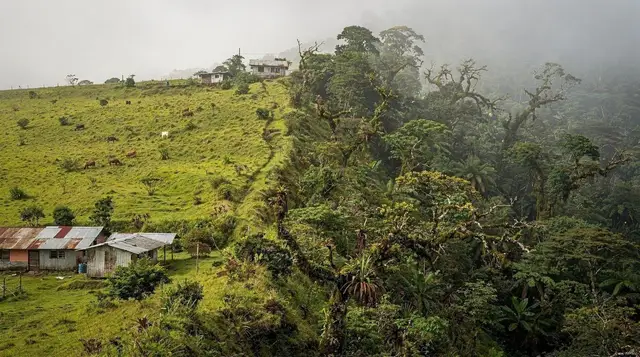
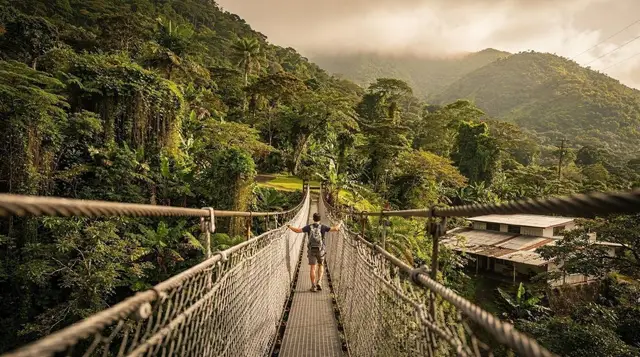
Most of what draws people to the La Fortuna area was built with tourists in mind: paved paths to a waterfall viewpoint, a ticket booth at a hot spring, a suspension bridge with handrails every few metres. Juan Castro Blanco National Park is the opposite case. It was created in the early 1990s specifically to protect the upper watersheds of the region — the ridges and cloud forest south of Ciudad Quesada where dozens of rivers begin, feeding aqueducts, irrigation systems, and hydroelectric projects across San Carlos and beyond. Tourism was never the point, and it shows the moment you leave the paved road.
That doesn’t make it unworthy of a visit. It makes it a different kind of visit than the one most people plan for their La Fortuna trip. If you’ve already ticked off Arenal Volcano National Park and the Tenorio volcano’s turquoise river, and you want to see cloud forest that isn’t shared with three tour buses, Juan Castro Blanco is worth the extra effort. If you’re looking for a tidy half-day excursion with a gift shop at the end, this isn’t it.
Where it is and how you get there
The park sits on the volcanic highlands directly south of Ciudad Quesada, straddling the boundary between Alajuela province’s northern lowlands and the central highlands. From La Fortuna, the drive to Ciudad Quesada itself takes roughly 45 minutes on paved road. From there, reaching the park’s access points means turning onto unpaved, often rutted roads that climb steadily into the hills — expect another 45 minutes to an hour and a quarter, depending on which entrance you’re aiming for and how recently the road has been graded.
This is not a drive to attempt in a compact rental sedan after heavy rain. A high-clearance vehicle, ideally 4x4, is the practical minimum for the green season (May to November); even in the dry months a sedan will bottom out on some stretches. Public transport doesn’t serve the park directly, which is one reason most visitors either drive themselves from Ciudad Quesada or book a tour that includes transport from La Fortuna. If you don’t already have a car, our guide to renting a car for La Fortuna covers what kind of vehicle actually makes sense for trips like this one.
What’s actually inside the park
Juan Castro Blanco protects a band of premontane and cloud forest running up the flanks of two extinct volcanic peaks, with terrain ranging from mid-elevation rainforest near the lower boundary to cooler, mossier, wind-stunted forest higher up — the kind of dwarf, epiphyte-draped vegetation typical of Costa Rica’s higher cloud forest reserves, just without the crowds of Monteverde. The defining feature isn’t a single waterfall or crater; it’s the sheer number of rivers that originate within the park’s boundaries, more than anywhere else in the country. Streams here feed systems as far-flung as the Sarapiquí drainage on the Caribbean slope.
Trail infrastructure is limited and can change from year to year — there’s no single, permanently maintained loop trail comparable to what you’d find at Arenal, and some routes exist mainly because a local guide or lodge maintains them informally. This is the single most important thing to understand before you go: this is not a park equipped for mass tourism. There’s no visitor centre with a café, no boardwalk network, no gift shop, and in many sections no cell signal. Rangers and access points are limited, trail markers can be sparse, and weather at altitude turns quickly. Anyone who describes this as an easy, well-signed walk hasn’t been recently, or hasn’t been at all.
That’s precisely the appeal for a certain kind of traveller — and precisely the reason to go with a local guide rather than improvising. A guided visit, ideally arranged through an operator based in Ciudad Quesada or through a tour that already includes the access logistics, is by far the more reliable way to actually see the forest rather than spend your day negotiating a washed-out road.
a guided sloth-spotting walk inside Juan Castro Blanco National Park is currently the most direct way to visit the park itself with an operator who handles the access road and knows the trails, rather than trying to find your own way in.
Wildlife: quieter forest, real sightings, no guarantees
Because the park sees a fraction of the visitors that Monteverde or the Arenal sector do, wildlife here tends to be less habituated to people, which cuts both ways: sightings can be harder to predict, but they also don’t come with a crowd of twenty people and ten guides all pointing at the same branch. Sloths, various hummingbird species, and a good range of highland and mid-elevation birds are realistic targets on a guided walk, though — as with anywhere in Costa Rica — nothing is guaranteed on a single visit.
If birdwatching specifically is your priority, it’s worth being honest about where the marquee species live: resplendent quetzals are a Monteverde speciality, seen mainly between February and July, not a Juan Castro Blanco one. What you get here instead is quieter forest, fewer viewing platforms competing for the same bird, and a real sense of a working watershed rather than a curated nature park. Our broader guide to birdwatching around Monteverde and the highlands is a useful companion if birding is the main draw of your northern Costa Rica itinerary.
Nearby towns worth combining with a visit
Because the park itself has so little built infrastructure, most of a day trip here ends up centred on the towns around it rather than inside the park boundary.
Ciudad Quesada (the seat of San Carlos canton) is the practical gateway — banks, pharmacies, a real market, and the last reliable fuel stop before the access roads. It’s also where the Hobbit-themed gardens and waterfall walk near Quesada makes an easy, low-effort add-on if you want a guaranteed, manicured stop to pair with a rougher park visit.
Zarcero, a short drive further south along the same highland route, is known for its topiary gardens in the central park — sculpted cypress hedges shaped into animals and figures, a genuinely odd and charming small-town sight that has nothing to do with volcanoes or rivers and is worth the detour on its own terms.
If you’d rather stay on horseback than in a car for part of the day, a horseback ride through the Naranjo highlands with a picnic stop covers similar high-elevation countryside at a slower, more scenic pace.
Hot springs as the comfortable counterpoint
A day spent on rough roads and unmarked trails pairs well, practically and psychologically, with a hot spring in the evening back near La Fortuna. Unlike the park, the area’s hot spring complexes are exactly the polished, well-staffed experience Juan Castro Blanco is not — comparing them side by side is actually a useful way to understand what “developed for tourism” looks like versus what it doesn’t.
Baldi Hot Springs and Los Lagos Hot Springs are both reasonable options for that end-of-day soak, with multiple pools, changing facilities, and food service — a deliberate contrast to the morning’s forest.
Independent visit vs. guided tour
| Independent (self-drive) | Guided day tour | |
|---|---|---|
| Vehicle needed | Yes, 4x4 recommended | Usually included |
| Trail navigation | On you — markers are inconsistent | Guide handles routing |
| Wildlife spotting odds | Lower without local knowledge | Higher, guide knows current activity |
| Cost | $15-30 USD (fuel, park fee) | $60-95 USD per person |
| Best for | Confident, self-sufficient travellers with a rental | Most first-time visitors |
Given the state of the access roads and the limited signage, we’d steer most travellers — even ones comfortable driving elsewhere in Costa Rica — toward a guided visit for a first trip into the park. It removes the two biggest risks: getting stuck on a bad road, and spending your limited time on the wrong trail.
Where this fits in a La Fortuna itinerary
Juan Castro Blanco is not a first-day activity. It works best once you’ve already settled into the region, ideally as a change of pace after the more built-up stops around La Fortuna itself, or as a wildlife-focused addition for travellers building an itinerary specifically for wildlife rather than volcanoes and adrenaline.
If you’re weighing how many days to give the wider area, our guide on how many days to spend in La Fortuna is a good starting point before adding a detour like this one; it’s also worth reading common La Fortuna travel mistakes, since underestimating the access road here is one of the recurring ones.
Budget-conscious travellers should also know this park is one of the cheaper things to do in the region precisely because it isn’t built out — no elaborate ticketed attraction, no zipline add-on. Our La Fortuna on a budget guide has more on where the region’s real savings are, and this park is one of them, provided you already have transport sorted.
Combine it, if you like, with the wider Caño Negro and Sarapiquí side of the northern lowlands for a multi-day loop focused on rivers and wetlands rather than volcanoes — three destinations that share a watershed even though they look nothing alike on the ground. For more structured half-day and full-day options across the region, our day trips hub lays out how the pieces fit together.
Practical notes before you go
- Permits and fees: entry is managed through Costa Rica’s national park system (SINAC); check current access points and any required permit before setting out, since not every entrance is staffed year-round.
- What to wear: closed hiking shoes with real tread, layers (it’s noticeably cooler at altitude than La Fortuna town), and rain protection regardless of season — cloud forest earns its name.
- Phone signal: patchy to absent in much of the park. Download maps and tell someone your route in advance if driving independently.
- Timing: aim for a morning departure. Afternoon rain and cloud build-up at altitude make both the roads and the views worse later in the day, a pattern that holds across this entire volcanic corridor, not just here.
- Wildlife expectations: come for the forest itself, not a checklist. Guided sightings are realistic; guaranteed sightings are not, here or anywhere else in Costa Rica.
Juan Castro Blanco National Park FAQ
Is Juan Castro Blanco National Park set up for tourists the way Arenal is?
No, and that’s the key thing to understand before visiting. It has minimal trail infrastructure, no visitor centre comparable to the Arenal sector, and limited signage. It was created primarily to protect river headwaters, not to receive large numbers of visitors, so go in expecting a wilder, less organised experience than Arenal Volcano National Park or the Tenorio’s Río Celeste trail.
Can I visit Juan Castro Blanco National Park without a 4x4?
It’s not recommended. The access roads beyond Ciudad Quesada are unpaved and rutted, and a standard sedan will struggle, especially in the May-to-November green season. A high-clearance or 4x4 vehicle, or a guided tour that already includes appropriate transport, is the more reliable option.
How far is Juan Castro Blanco National Park from La Fortuna?
Roughly 45 minutes to Ciudad Quesada on paved road, then another 45 minutes to an hour and a quarter on rougher access roads to reach the park itself, depending on the entrance used and recent road conditions.
Will I see a quetzal at Juan Castro Blanco?
Unlikely to be the highlight here. Resplendent quetzals are far more reliably seen around Monteverde, mainly between February and July. Juan Castro Blanco’s wildlife draw is quieter and more general — sloths, hummingbirds, and a range of highland forest birds, without the crowds.
Is Juan Castro Blanco National Park a good add-on to a Ciudad Quesada or Zarcero day trip?
Yes, this is one of the more natural ways to build a day around it. Ciudad Quesada offers the last services before the access road, and Zarcero’s topiary gardens make an easy, low-effort stop that contrasts nicely with a morning spent in rougher forest terrain.
Should I do Juan Castro Blanco or Monteverde if I only have time for one?
If your priority is famous cloud forest, easier access, and reliable birdwatching including quetzals, choose Monteverde. If you’ve already been to Monteverde, or you specifically want a quieter, less developed reserve and don’t mind a rough access road, Juan Castro Blanco is the better fit.
Do I need to book a guide in advance for Juan Castro Blanco National Park?
It’s strongly recommended given the limited signage and staffing. A pre-booked guided tour, such as a dedicated sloth-spotting walk inside the park, removes the two main risks of an independent visit: getting stuck on a bad access road and losing time on unclear trails.