Where the Rainforest Gets Wetter, and the Crowds Thin Out
Most La Fortuna itineraries stay inside a tight loop around the volcano: the waterfall, the hanging bridges, the hot springs, maybe a morning at /destinations/lake-arenal/. Sarapiquí sits outside that loop entirely. It’s a lowland rainforest region roughly two hours east, spanning the transition zone between the northern plains and the Caribbean slope of the Cordillera Central. The forest here is denser, wetter, and quieter than anything close to La Fortuna itself — and it draws a different crowd: birders with spotting scopes, photographers chasing dawn light through the canopy, and travelers who’ve already done the volcano-and-hot-springs circuit and want something that doesn’t feel like it.
Geographically, Sarapiquí is part of the Alajuela province’s northern lowlands, the same broad region covered by /destinations/cano-negro/ and the /destinations/rio-frio/ wetlands.
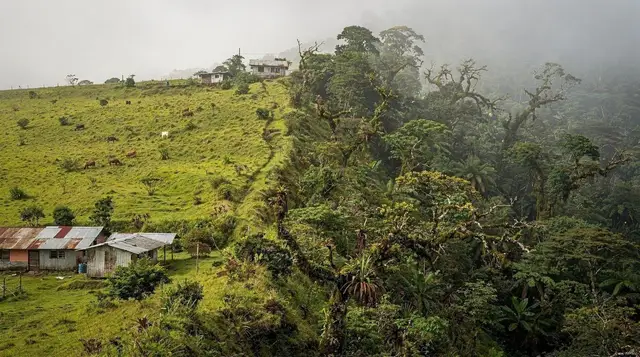
But it sits further east, closer to the Caribbean-facing rainforest belt, and the ecosystem shows it: more rain, more epiphyte-loaded trees, more of the classic tropical wet forest look that postcards use for “Costa Rica jungle.” The region’s main town is Puerto Viejo de Sarapiquí — not to be confused with the Caribbean beach town of the same name near Limón — and it has its own dedicated page on this site with the practical detail of staying there. This page is about the region around it: the rainforest, the river, and why it deserves more than a rushed afternoon.
Getting There from La Fortuna — and Why It Isn’t a Day Trip
The honest travel time from La Fortuna is about 2 hours by car, most commonly routed through /destinations/ciudad-quesada/ and the San Carlos lowlands rather than over the mountains. The roads are mostly paved, so this isn’t the rough 4x4 territory of the Monteverde crossing, but two hours each way is still four hours of driving for a same-day round trip — before any activity gets scheduled in between. In the green season, a slow-moving afternoon downpour can stretch that further.
The bigger reason to treat Sarapiquí as its own stop, rather than a bolt-on to an Arenal-based trip, is the ecosystem shift itself. La Fortuna sits in a tropical premontane zone shaped by the volcano; Sarapiquí is proper tropical wet lowland rainforest, with a different rhythm of rain, a different canopy structure, and different wildlife patterns.
Rushing through it on a same-day itinerary means arriving tired from the drive, running one activity, and turning around — which is exactly the kind of visit that produces the “it was fine but I didn’t really see anything” reviews. Travelers who instead build in a night nearby consistently report more sightings and less of a rushed feeling, because dawn and dusk — when the forest is most active — actually fall inside their visit rather than on the drive home.
If you don’t have a rental car, /guides/renting-a-car-for-la-fortuna/ is worth reading before committing to Sarapiquí specifically, since the region’s lodges and trailheads are spread out enough that having your own wheels — or a private transfer — matters more here than it does inside La Fortuna’s compact town centre.
What Fills the Forest Here
Sarapiquí’s landscape is a working mix of primary rainforest remnants, secondary forest regrowth, and agricultural land — pineapple and banana plantations border stretches of protected forest along the river corridors. That mix is part of what makes the region interesting rather than a drawback: edge habitats where forest meets farmland tend to concentrate certain birds and mammals, and several of the region’s best-known reserves and biological stations sit precisely at that boundary.
The area is loosely organized around the Sarapiquí and Puerto Viejo rivers, both of which drain north toward the Caribbean via the wider Río San Juan system. Boat trips on these rivers form the backbone of most visits, alongside forest trails through reserve land and guided night walks that specialize in the region’s frog and reptile diversity. None of this competes directly with what La Fortuna offers — it complements it, covering ecosystems and species the Arenal side simply doesn’t have.
Boat Safaris on the Rivers
Slow-moving river safaris are Sarapiquí’s signature activity, and they work on the same logic as the float trips on the /destinations/penas-blancas-river/ near La Fortuna, just in a wetter, denser setting. A flat-bottomed boat moves quietly along the riverbank while a guide reads the water’s edge for herons, kingfishers, anhingas drying their wings on branches, basking caimans, and — with real luck — a sloth or a troop of howler or spider monkeys in the overhanging trees.
Compared with the /guides/cano-negro-boat-safari-guide/ experience further west, Sarapiquí’s river runs year-round rather than shrinking to a seasonal lagoon, which means the boat trips here aren’t as dependent on the dry-season timing that shapes a Caño Negro visit. The /guides/rio-frio-wildlife-cruise-guide/ covers a similar format on the neighboring Río Frío if you want to compare the two before deciding which fits your itinerary.
Night Walks and What They’re Actually Good At
Sarapiquí’s forests are one of the better places in the northern lowlands for a guided night walk, and the region’s rainforest night walk with a wildlife guide is built specifically around that: a slow, flashlight-led walk through the forest after dark, when a completely different set of animals becomes active. Red-eyed tree frogs, poison dart frogs, sleeping birds tucked into low branches, tarantulas at their burrow entrances, and the occasional snake are realistic sightings — not a guarantee, but a strong likelihood with an experienced local guide who knows where to look.
a guided rainforest night walk built around Sarapiquí’s frog and reptile diversity tends to run smaller and quieter than the equivalent walks around La Fortuna itself, simply because fewer visitors make it out this far. If you’ve already done a /guides/night-walks-in-la-fortuna-guide/ walk near the volcano and enjoyed it, this is a legitimate reason to add a second one here rather than assume you’ve “done” night walks already — the species mix genuinely differs between the two ecosystems.
En Route: Ciudad Quesada and the San Carlos Lowlands
The drive from La Fortuna to Sarapiquí typically passes through or near /destinations/ciudad-quesada/, the working commercial hub of San Carlos canton, and within reach of /destinations/juan-castro-blanco-national-park/, a rarely visited cloud-forest park protecting the headwaters of several rivers that eventually feed the region’s water supply. Few tour itineraries stop here, which is exactly the point for travelers looking to break up the drive with something that isn’t a tourist checkpoint.
One family-oriented detour worth knowing about along this corridor is a whimsically Hobbit-themed garden and waterfall property near Ciudad Quesada — a garden park with waterfalls and Hobbit-style architecture near Ciudad Quesada — which makes a genuinely fun stop for kids on an otherwise long driving day, and breaks the two-hour transit into something less like a straight commute.
For travelers connecting Sarapiquí with a wider Costa Rica trip rather than looping back through La Fortuna, the region also sits within reach of /destinations/san-jose/ and the Central Valley — closer, in fact, than La Fortuna is. That makes Sarapiquí a sensible stop for itineraries arriving via San José rather than via Liberia; see /guides/how-to-get-from-sjo-to-la-fortuna/ if you’re mapping out that side of the routing.
Water Activities Beyond the Boat Safari
The lowland rivers and calmer water bodies around the wider San Carlos-Sarapiquí corridor also support flatter-water activities that don’t fit the volcanic terrain around La Fortuna. A private wakeboarding or waterskiing outing is one of the more surprising options in the area — a private wakeboarding or waterskiing session on calm lowland water — and it’s worth knowing about mainly because so few visitors expect it in a rainforest-and-volcano itinerary. It won’t suit everyone, but it’s a genuine option for travelers who want one adrenaline activity that isn’t a zipline or a river-rafting run.
Puerto Viejo de Sarapiquí, Briefly
The region’s main town, Puerto Viejo de Sarapiquí, sits at the confluence of the Sarapiquí and Puerto Viejo rivers and functions as the practical base for boat launches and forest access. This page deliberately doesn’t go deep on the town itself — lodging options, restaurants, and the layout of the riverfront are covered on /destinations/puerto-viejo-de-sarapiqui/. What’s worth flagging here is simply that most lodges built around river access and forest trails sit a short drive outside the town proper, along the river corridor, rather than clustered in the town centre itself — so don’t assume “staying in Sarapiquí” means staying downtown.
When to Go
There is no dry season here in the way the Pacific side of Costa Rica has one. Sarapiquí sits on the wetter, Caribbean-influenced side of the country, and rain is a feature of the region in every month of the year — the question is how much, not whether. February through April tends to be comparatively calmer, echoing the broader Pacific-slope dry season, though “calmer” here still means regular rain.
June through August and November through December are typically the wettest stretches, when trails can turn muddy and river levels rise. None of this should rule out a visit — it should just shape what you pack and how flexible your plan is. See /guides/la-fortuna-in-green-season/ for the general logic of traveling this part of Costa Rica outside the dry months, since much of it applies here too.
Budgeting a Day in Sarapiquí
| Item | Typical cost (USD) |
|---|---|
| Guided river boat safari (per person) | 40-65 |
| Rainforest night walk (per person) | 35-50 |
| Lunch at a local soda | 8-15 |
| Overnight lodge stay (per person, shared) | 45-90 |
| Private transfer from La Fortuna | 90-150 (whole vehicle) |
These are rough ranges, not fixed prices — book direct with lodges and local operators where possible, and expect tour prices quoted in USD even though small local businesses will happily take colones.
Route Options from La Fortuna
| Route | Distance | Typical time | Road surface |
|---|---|---|---|
| Via Ciudad Quesada (main route) | ~110-130 km | ~2 hours | Mostly paved, some winding sections |
| Via San Miguel / back roads | Slightly shorter | Similar or longer in rain | Mixed, less consistently maintained |
Both routes converge on the same lowland approach into the Sarapiquí valley; a standard rental car handles either in dry conditions.
How Sarapiquí Compares to the Rest of the Northern Lowlands
Sarapiquí, Caño Negro and Río Frío all sit under this site’s broader northern-lowlands region, and it’s worth being clear about what separates them rather than treating the three as interchangeable “wetland tour” options. Caño Negro is a seasonal wetland built around a lagoon that shrinks dramatically by the end of the dry season — its wildlife viewing is genuinely at its best January through April. Río Frío is a year-round river system with strong bird numbers and a shorter, more accessible boat route from the La Fortuna side.
Sarapiquí is the wettest and most forested of the three, with less open water and more closed-canopy rainforest, and it’s the one most likely to reward keen birders and photographers willing to put in a full day — or better, an overnight — rather than a two-hour cruise. If your time is limited to one lowland excursion, /guides/la-fortuna-wildlife-spotting-guide/ walks through how to weigh Sarapiquí against the closer, shorter options.
Frequently Asked Questions About Visiting Sarapiquí
Is Sarapiquí a good day trip from La Fortuna?
Not really. The drive alone runs about two hours each way, and Sarapiquí’s rainforest activities — boat safaris, night walks, canopy trails — reward unhurried mornings and evenings rather than a squeezed round trip. Most visitors who enjoy the region end up glad they stayed at least one night.
How long does it take to get from La Fortuna to Sarapiquí?
Plan on roughly 2 hours by car, usually routed through Ciudad Quesada and the San Carlos lowlands rather than directly through the mountains. Add extra time in the green season, when a heavy afternoon downpour can slow the last stretch.
What’s the difference between Sarapiquí and Caño Negro?
Caño Negro is a seasonal wetland reserve built around a shrinking dry-season lagoon and its wading birds. Sarapiquí is denser, wetter lowland rainforest along a real river system, with year-round water levels and a broader mix of primary and secondary forest wildlife.
Do I need a 4x4 to drive to Sarapiquí?
No — the main routes through Ciudad Quesada are paved. A standard sedan manages fine in dry conditions; a higher-clearance vehicle is only worth it if you plan to detour onto side roads near lodges or the biological station.
What wildlife will I actually see in Sarapiquí?
Realistically: river birds such as herons, kingfishers and anhingas, sloths and monkeys along forest edges, poison dart frogs and caimans on night walks, and a strong chance of toucans. Jaguars and tapirs exist in the region’s forests but are not something a short visit should expect to see.
Is Sarapiquí worth visiting if I’ve already done Caño Negro or Peñas Blancas?
Yes, if you want denser rainforest rather than more wetland. The ecosystem, the river, and the guided night-walk experience are distinct enough from Caño Negro’s open lagoon and Peñas Blancas’ float trip to justify both, especially for keen birders and photographers.
Should I stay in Puerto Viejo de Sarapiquí or elsewhere in the region?
Puerto Viejo de Sarapiquí is the region’s main town and a reasonable base, but it’s covered in detail on its own page rather than here — most lodges built around river access and forest trails sit a short drive outside it.
When is the best time to visit Sarapiquí?
There isn’t a dry season here in the way the Pacific coast has one. February through April is comparatively calmer; expect rain most afternoons regardless of month, and build a flexible plan rather than betting on clear skies.