For most visitors heading to La Fortuna, San José is the first and last place they see in Costa Rica — the Juan Santamaría International Airport sits just outside the capital, in Alajuela, and it’s where nearly every itinerary technically begins. What trips people up is treating that fact as license to skip past San José entirely. The Central Valley isn’t a suburb of La Fortuna; it’s a three-hour mountain drive away, and pretending otherwise is how a relaxed first day turns into a rushed one.
San José as a Gateway, Not a Quick Stop
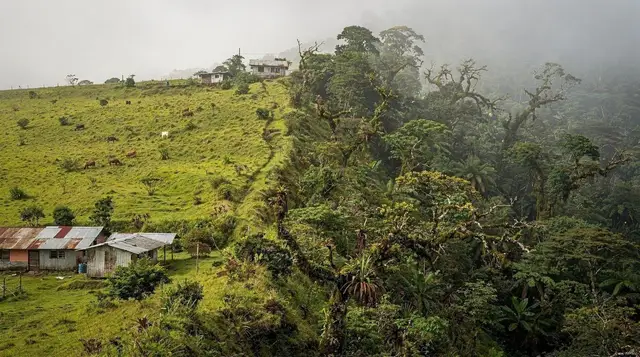
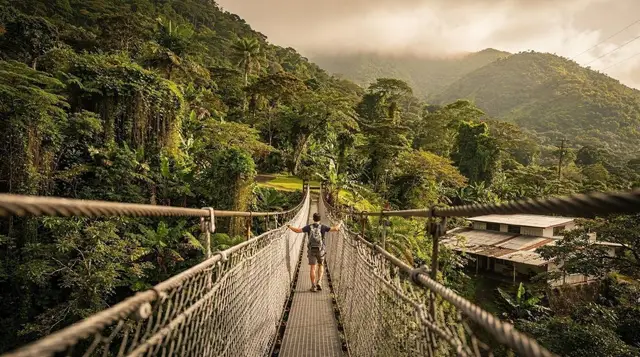
The instinct is understandable. You land, you’ve read that La Fortuna is the reason you came, and the capital looks like dead time between the airport and the volcano. But the road north climbs out of the Central Valley, drops through cloud forest and coffee country, and threads a string of one-lane bridges before it reaches the plains around La Fortuna. That’s not a detour you tack onto an arrival afternoon. Build your first day around it, and San José stops being an obstacle and starts being useful — a place to reset after a long flight, sort out a rental car, and start the trip properly rested rather than jet-lagged and squinting at a GPS on unfamiliar switchbacks after dark.
The same logic applies on the way out. If your flight leaves from San José, plan the last night in or near the capital rather than trying to drive straight from La Fortuna to a morning departure. Arenal traffic, fog on the mountain roads, and the sheer length of the drive make same-day connections unnecessarily tight.
Getting In: Juan Santamaría Airport and Alajuela
Juan Santamaría (SJO) is Costa Rica’s main international gateway, and it sits in Alajuela, a separate town about 20 minutes from downtown San José rather than inside the capital itself. That distinction matters for where you actually book a hotel: staying near the airport in Alajuela cuts out a second transfer if you’re heading north early the next morning, while staying in San José proper puts you closer to museums, restaurants, and the Central Valley’s nightlife.
This page focuses on San José and the wider gateway region as a base — for arrival logistics, security lines, rental car counters, and terminal layout, see the dedicated Juan Santamaría Airport guide. If you’re flying into Liberia via the Daniel Oduber airport instead — a common choice for Guanacaste-first trips — the routing and drive times to La Fortuna are meaningfully different; our guide comparing the two airports and our Liberia arrival guide walk through which one actually saves you time.
The Road North: San José to La Fortuna
There is no way to make San José feel close to La Fortuna, and no shortcut worth taking. The honest numbers:
| Route | Distance | Typical drive time |
|---|---|---|
| San José (SJO) to La Fortuna | ~125 km | About 3 hours |
| San José to Poás Volcano | ~55 km | About 1 hour |
| San José to Alajuela | ~18 km | 20–30 minutes |
| San José to Liberia (LIR) | ~215 km | 3–3.5 hours |
The route to La Fortuna climbs out of the Central Valley on mountain roads, and while it’s mostly paved and well-signed, it’s still a two-lane road through hill country with slow trucks, fog patches near higher elevations, and stretches without much lighting after dark. Shuttle companies and rental car agencies alike quote the same three-hour figure, and it holds up in practice — this isn’t inflated caution, it’s the actual driving time.
Your options for making the crossing:
| Method | Approx. cost (USD) | Time | Notes |
|---|---|---|---|
| Private shuttle | $60–120 per vehicle | ~3 hours | Door to door, most predictable |
| Shared shuttle van | $15–35 per person | 3.5–4.5 hours | Multiple pickup/drop-off stops |
| Self-drive rental | Rental cost + fuel | ~3 hours | Most flexible, needs confidence on mountain roads |
| Public bus | $5–8 per person | 4–4.5 hours | Cheapest, least flexible, one transfer typically required |
For a full breakdown of each option, see how to get from San José to La Fortuna. If a rental car is part of the plan, our guide to renting a car for La Fortuna covers what kind of vehicle actually helps once you’re off the highway and onto the region’s gravel side roads.
What to Do Around San José Before Heading North
If you’re spending a day in the gateway region rather than treating it purely as a layover, the strongest options sit between San José and the start of the northern route — which means they double as a smart way to break up the drive to La Fortuna rather than adding a separate excursion.
Poás Volcano is the headline stop. At 2,708 m, it’s one of the world’s more accessible active craters, but access is controlled by a pre-booked, timed entry slot, and those slots — especially morning ones, when cloud cover is least likely to hide the crater — sell out days in advance. The park also closes on short notice when gas activity increases, so build in flexibility rather than anchoring a tight schedule around it.
We cover this in detail, including how to actually get a slot, in our Poás Volcano day trip guide and the companion day-trip planning guide; our piece on the timed-entry system itself is worth reading before you book anything.
La Paz Waterfall Gardens sits on the same general route north and combines a series of waterfalls with wildlife exhibits — it’s a paid, curated experience rather than a wild hike, which makes it a reliable choice when weather rules out something more exposed. See the La Paz Waterfall Gardens page for what’s included.
Alajuela itself is a low-key, workaday town rather than a tourist showpiece, but it’s worth a wander if you’re staying near the airport — a central park, a cathedral, and enough coffee shops and sodas to fill a few hours without needing a plan.
Several tour operators package Poás, coffee farms, and La Paz into a single day trip from San José, which is a reasonable way to see the Central Valley’s highlights without renting a car for a single day. A San José day tour covering Poás Volcano, a coffee farm, and the Blue Falls hits all three in one outing, while a coffee tour paired with La Paz Waterfall Gardens and the Poás crater leans more toward the waterfall gardens if that’s the priority.
Where San José Fits in a Costa Rica Itinerary
San José rarely anchors a trip on its own — it’s the hinge point other stops connect through. A few patterns come up often:
Arrival and departure bookends. Spend your first night near the airport, drive to La Fortuna the next morning with a stop at Poás or La Paz along the way, then reverse the routing on the way back out. This is the most common shape for a trip and avoids stacking a long flight on top of a long drive in either direction.
The classic loop. San José, La Fortuna, and Monteverde, often extended down to Manuel Antonio on the Pacific coast, form the backbone of the country’s most-travelled circuit. Our San José–La Fortuna–Monteverde–Manuel Antonio loop itinerary lays out a full route and pacing.
Comparing airports. If you’re still deciding whether to fly into San José or Liberia, it usually comes down to what else is on your itinerary — San José suits trips that also touch the Central Valley, the Caribbean side, or the south Pacific coast, while Liberia suits Guanacaste-heavy or La Fortuna-only trips better. Our guide to arriving via Liberia lays out that alternative routing directly.
Whichever shape your trip takes, resist the temptation to treat San José as a single overnight squeezed between two flights. A genuinely tight one-night stop works if you truly have no spare day, but it leaves the Poás/La Paz option off the table entirely and puts real pressure on the mountain drive that follows.
Getting to La Fortuna and Beyond
Once you’re past the gateway region, the same operators that run San José day trips also run direct excursions all the way to Arenal, which is worth knowing if you’d rather not manage the transfer and the sightseeing separately. A day trip from San José combining the Arenal Volcano area with Baldi Hot Springs covers the drive north and a soak in one booking, which suits travellers on a tight overall schedule who still want a taste of the hot springs before committing to a full stay in La Fortuna itself.
If your visit to the north is genuinely just a day rather than an overnight stay, that kind of combined tour removes a layer of logistics — though for anyone spending real time in the region, we’d still point you toward a proper stay; see how many days to plan for La Fortuna before deciding.
Practical Tips for the San José Gateway
Money. ATMs are plentiful at the airport and throughout San José; withdraw colones there rather than waiting until you’re in smaller northern towns where exchange rates and machine availability are less reliable.
SIM cards and connectivity. Airport kiosks sell local SIMs and eSIMs are widely supported — worth sorting before the drive north, since signal thins out in stretches of the mountain route.
Traffic timing. San José’s rush hours (roughly 6–8:30am and 4–7pm) can add real time to any drive through or around the city, including the start of the route north. Leaving mid-morning, after the worst of it clears, is usually the better call than an early dawn departure.
Luggage and layers. The Central Valley sits at a noticeably cooler elevation than the lowlands around La Fortuna — pack a layer for the capital and be ready to shed it once you’re down in Arenal’s warmer, more humid air.
Frequently Asked Questions About San José as Your Costa Rica Gateway
How far is San José from La Fortuna?
About 125 km, which works out to roughly 3 hours of driving each way. The route climbs through the Central Valley and down into the northern lowlands, so it is not a distance you can rush regardless of which map app you trust.
Should I fly into San José or Liberia for La Fortuna?
Both work. San José (SJO) sits closer to the rest of the country — San José, the Central Valley, the Caribbean and Pacific coasts — while Liberia (LIR) is closer to Guanacaste and shaves time off a La Fortuna-only trip. Neither airport is genuinely close to La Fortuna.
Is one night in San José enough?
One night is workable if you arrive late or leave early and just need to sleep near the airport. Two nights let you fit in Poás Volcano or La Paz Waterfall Gardens without stacking a long flight day on top of a long drive day.
Can I visit Poás Volcano on the way to La Fortuna?
Yes, and it is a popular pairing, but Poás requires a pre-booked timed entry slot that can sell out days ahead, and the crater sometimes closes on short notice when gas activity rises. Treat it as a planned day, not a spontaneous detour.
Is San José safe for tourists?
San José is generally safe for the areas visitors use, but it is a working Central American capital, not a resort town. Standard city precautions apply: don’t display valuables, take registered taxis or rideshares at night, and stay alert around the bus terminals.
Do I need a rental car in San José?
Not for the city itself — traffic and one-way streets make a car more hassle than help in downtown San José. Most travellers pick up a rental at the airport in Alajuela right before driving north, or rely on shared shuttles.
What’s the best way to get from San José to La Fortuna?
A private or shared shuttle is the simplest option and takes about 3 hours door to door. Driving yourself gives more flexibility for stops but means navigating unfamiliar mountain roads; public buses run but add transfer time.
Is San José worth exploring, or just a gateway?
It’s honestly more gateway than headline attraction for most La Fortuna-bound travellers. The National Theatre, museums, and Alajuela’s coffee country reward a spare day, but few people build a Costa Rica trip around San José itself.