What Liberia actually is
Liberia is the capital of Guanacaste province and the largest city in Costa Rica’s northwest, a working regional hub of banks, supermarkets, car rental counters and roadside sodas rather than a postcard town. Its old colonial core still earns it the nickname “the white city” (la ciudad blanca), a nod to the whitewashed adobe walls of a handful of surviving buildings near the central park, but most visitors never see them. What actually brings travelers here is Daniel Oduber Quirós International Airport (LIR) on the city’s northern edge, one of the country’s two international gateways alongside Juan Santamaría (SJO) near San José.
If you’re building a La Fortuna itinerary, the honest way to think about Liberia is as a junction, not a destination. It sits at the crossing point where the road north toward Rincón de la Vieja, the road west toward the Pacific beaches of the Nicoya and Papagayo coasts, and the road south toward La Fortuna and Monteverde all meet. People pass through it constantly. Almost nobody plans a day around it.
The trap: don’t treat this as a La Fortuna day trip
Guides and itinerary lists sometimes slot Liberia in as a stop on a La Fortuna sightseeing loop, the same way they’d list Cerro Chato or El Castillo. That’s a mistake worth naming directly. Liberia sits roughly 145 km from La Fortuna, a drive of 2.5 to 3 hours each way on mountain and lowland roads. There is no single attraction inside the city that rewards a 5-to-6-hour round trip. The old adobe buildings can be seen in under an hour. The city itself has no beach, no volcano crater, no waterfall.
Where Liberia earns its place on your trip is at the edges of your itinerary, not the middle of it:
- You’re flying into or out of LIR and need a place to land before or after driving to La Fortuna.
- You’re extending your Costa Rica trip toward Guanacaste’s Pacific beaches — Tamarindo, Playas del Coco, Papagayo — and Liberia is the natural staging point.
- You’re driving the loop toward Rincón de la Vieja National Park, which sits north of the city and is a genuine day-trip destination in its own right, separate from Liberia proper.
- You’re breaking up a long overland drive between, say, Nicaragua’s border crossing at Peñas Blancas and the central Pacific.
If none of those apply, skip it. A trip built around La Fortuna, Río Celeste and Monteverde has no functional reason to detour through Liberia.
Getting there and through
Two routes connect La Fortuna and Liberia, and which one you take depends on why you’re going.
The direct road runs west and north through Guanacaste’s flatter cattle country, past Cañas and Bagaces, joining the Interamerican Highway (Route 1) before dropping into Liberia. It’s mostly paved, and traffic is lighter than the Monteverde road, but it’s still a 2.5-to-3-hour drive that eats a chunk of a travel day.
If you’re headed to LIR to catch a flight, budget the full 3 hours plus a buffer — Guanacaste’s highway sees agricultural trucks and unpredictable rain-season delays, especially where the road narrows through smaller towns. Departing La Fortuna with less than a 4-hour cushion before an international flight is cutting it close.
If you’re continuing on to Rincón de la Vieja rather than the airport, you’ll branch off before reaching central Liberia itself, adding roughly 30-45 minutes north on a road that turns to gravel closer to the park entrances.
What’s actually in Liberia, if you have a few hours
For travelers with a genuine layover — an evening before a morning flight, or a lunch stop en route to the coast — there’s a modest but real list of things to do.
The historic center. A handful of colonial-era adobe houses survive around Liberia’s central park and the Iglesia La Agonía, a small 18th-century church. It’s a 30-to-45-minute walk, best done in the cooler morning hours given Guanacaste’s heat.
Local restaurants and sodas. Liberia’s food scene runs toward straightforward Guanacaste cuisine — gallo pinto, tamales, and cattle-country beef, a reminder that this is ranching territory. It’s a reasonable place to eat well without tourist markup, unlike some of the pricier operations near La Fortuna’s hot spring resorts.
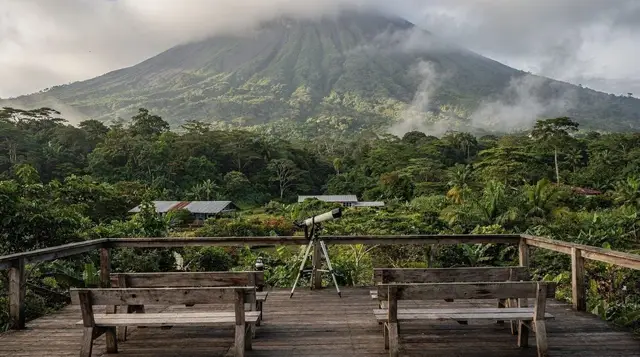
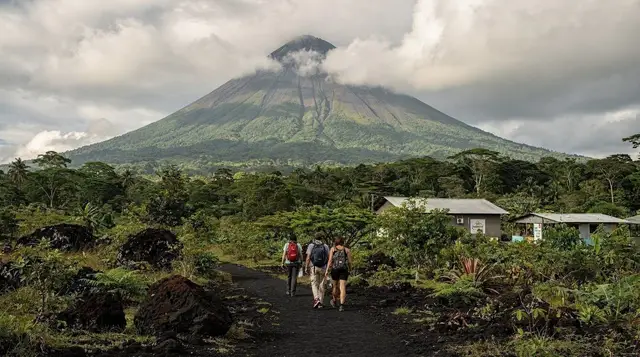
Day access to Rincón de la Vieja. The active volcano’s fumaroles, boiling mud pots and hiking trails sit about 45 minutes to an hour north of the city and are covered in their own guide rather than here — Liberia is the access point, not the attraction. Combined hot-springs-and-rainforest tours run from this side of the region too:
a Rincón de la Vieja rainforest and hot springs day tour covers the volcano’s geothermal features without requiring you to self-drive the gravel access roads.
Onward connections to Río Celeste and the coast. Because Liberia sits roughly equidistant between the Río Celeste area and the Pacific beaches, some tour operators run circuits through this corridor. If you’re staying anywhere in the Bijagua-Guanacaste stretch rather than La Fortuna itself, options like
a Papagayo Gulf combined Río Celeste waterfall and sloth-spotting tour or
a guided day tour to Río Celeste’s turquoise waterfall departing the Liberia area make more geographic sense than they would from La Fortuna, since the drive to Río Celeste is considerably shorter from this side.
Liberia versus staying in La Fortuna: a quick comparison
| Liberia | La Fortuna | |
|---|---|---|
| Distance to nearest volcano | ~45-60 min (Rincón de la Vieja) | Town center adjoins Arenal park |
| Nearest hot springs | Rincón de la Vieja area, less developed | Tabacón, Baldi, Ecotermales, plus the free El Choyin river |
| Waterfalls within a day trip | Limited nearby | La Fortuna Waterfall, Río Celeste |
| Climate | Hot, dry, Pacific-influenced | Rainier year-round, cooler at elevation |
| Airport access | LIR on-site | ~3h from either LIR or SJO |
| Reason to stay | Transit / gateway | Adventure and nature base |
If your trip centers on hot springs, hanging bridges, waterfalls and wildlife, La Fortuna is the base and Liberia is, at most, a place you sleep the night before a flight.
If you’re routing through Liberia toward La Fortuna
Travelers landing at LIR and heading to La Fortuna face the reverse version of the same decision covered above: whether to drive straight through or break the journey. The direct road takes about 2.5-3 hours. Renting a car at the airport is straightforward, with most major agencies represented at LIR, though it’s worth confirming your rental includes coverage for the gravel stretches you’ll hit near El Castillo or if you continue on to Monteverde later. Full details on that drive, including which vehicle to rent and where the road roughens, are covered separately from this destination page.
Some travelers instead build a Guanacaste beach stay of a few days around their Liberia arrival before heading inland to La Fortuna — a reasonable way to use LIR’s location, though it turns a single trip into two distinct legs of Costa Rica rather than a tight La Fortuna-focused itinerary.
Practical notes
Money. As with the rest of the country, USD is widely accepted for tours and hotels, with change given in colones. Liberia’s bank branches and ATMs are more plentiful than in smaller towns like Bijagua or Nuevo Arenal, making it a sensible place to withdraw cash before heading into more rural stretches of Guanacaste.
Heat. Guanacaste is Costa Rica’s hottest and driest province. Liberia regularly sees temperatures in the low-to-mid 30s°C (high 80s to low 90s°F) during the dry season, noticeably hotter and less humid than La Fortuna’s rainier, cooler climate. Pack accordingly if you’re moving between the two.
Where not to base yourself. Liberia has hotels aimed at business travelers and airport layovers, not resort-style tourism — that’s concentrated closer to the beaches west of the city or, for volcano and hot-spring travel, in La Fortuna itself. Don’t expect a scenic stay.
Liberia FAQ: airport, distance, and whether to stop here
How far is Liberia from La Fortuna?
About 145 km by road, which takes roughly 2.5 to 3 hours depending on traffic and conditions. There’s no shorter route between the two.
Should I fly into Liberia (LIR) or San José (SJO) for La Fortuna?
Both airports sit roughly 3 hours from La Fortuna, so the choice usually comes down to flight availability and price rather than driving distance. LIR tends to suit travelers also visiting Guanacaste’s beaches; SJO suits those centering their trip on the Central Valley or San José.
Is Liberia worth visiting as a day trip from La Fortuna?
No. The round-trip drive alone takes 5-6 hours, and Liberia doesn’t have a single attraction that justifies that time against what’s available directly around La Fortuna. It functions as a gateway city, not a day-trip destination.
What is there to do in Liberia itself?
A small historic center with surviving colonial adobe buildings, a handful of good regional restaurants, and proximity to Rincón de la Vieja National Park. Most visitors see the city only in passing, between flights or on the way to the coast.
Is Liberia close to Rincón de la Vieja?
Yes, roughly 45 minutes to an hour north of the city, making Liberia the practical access point for the volcano even though the park itself is a separate destination.
Can I do Río Celeste from Liberia instead of La Fortuna?
Yes, and for travelers already staying in the Liberia or Guanacaste-coast area, it’s often a shorter drive than from La Fortuna. Several tours run the Río Celeste waterfall circuit from this side of the region.
Is Liberia safe?
Yes, it’s a standard regional Costa Rican city with typical urban precautions — keep valuables out of sight in parked rental cars, especially around the airport and hotel parking areas, which see occasional break-ins.
What’s the weather like in Liberia compared to La Fortuna?
Noticeably hotter and drier. Liberia sits in Guanacaste’s Pacific-influenced dry corridor, while La Fortuna, on the windward side of the Arenal volcano, sees rain even in the official dry season.