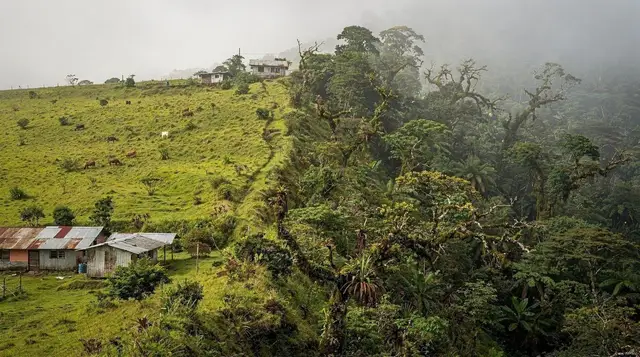
A village on the quiet side of the lake
El Castillo sits on the south-west shore of Lake Arenal, a short but bumpy 45 minutes from central La Fortuna. It’s not a resort town and it doesn’t try to be — a soccer field doubles as the village square, a handful of family-run sodas serve casado lunches, and the pace slows down noticeably compared with the tour-bus rhythm of La Fortuna itself. What draws travellers out here is not the village but what surrounds it: a hanging bridges park through rainforest canopy, short trails that drop toward the water, small farms and gardens open to visitors, and views back across the lake to Arenal’s cone on a clear morning.
Locals sometimes describe El Castillo as “the other side of Arenal” — closer to the volcano’s slopes than to its tourist strip, and organised around agriculture and the lake rather than hot springs and zip lines. That makes it a good half-day counterpoint to a trip built mostly around Arenal Volcano National Park: fewer crowds, a different landscape, and a genuinely rural feel that’s increasingly rare within easy reach of La Fortuna.
Getting there: paved, then not
This is the detail worth getting right before you set off. The road out of La Fortuna toward El Castillo is asphalt for the first stretch, then turns to a maintained gravel and dirt road for the rest of the way to the village and beyond, toward Nuevo Arenal and Tilarán. It is not a rough 4x4-only track — plenty of standard rental cars and even the odd tour minibus make the trip — but it is not the smooth blacktop that connects La Fortuna to San José either, and treating it as a normal paved road is the most common planning mistake for this side trip.
In the dry season, from December to April, the surface is generally firm and a standard car with reasonable clearance handles it without drama. In the green season, from May to November, sections can turn muddy and rutted after heavy rain, and driving after dark on a road you don’t know is best avoided. If you’re renting a vehicle specifically to explore this side of the lake, our car rental guide for La Fortuna covers what kind of clearance actually makes sense here, and it’s worth reading before you book.
There’s no reliable scheduled bus service to El Castillo, so most visitors arrive one of three ways: a self-driven rental car, an ATV or buggy rental (popular precisely because the road rewards a vehicle built for gravel), or a half-day organised tour that includes transfer from your hotel. Taxis from La Fortuna will make the trip too, though it’s worth agreeing a price — including the wait, if you want a round trip — before you set off. Anyone weighing whether a rental car is worth it for the wider trip should also see our roundup of common travel mistakes around La Fortuna, which flags this exact road.
What’s actually in the village
El Castillo functions less as one attraction and more as a loose cluster of them, spread over a few kilometres of gravel road.
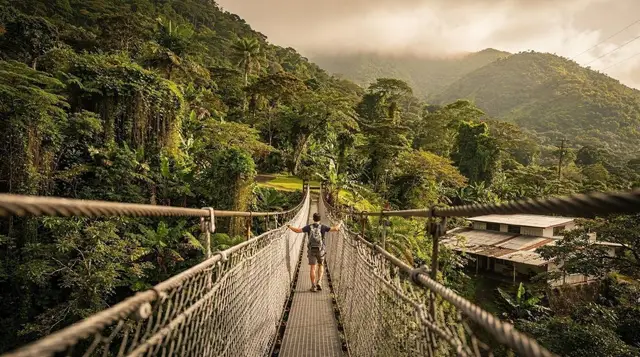
The best-known is a hanging bridges park through rainforest canopy on the volcano’s lower slopes — a shorter, quieter alternative to the bigger Mistico Hanging Bridges park on the lake’s north side, and worth comparing against it if bridges are the priority for your trip; our guide to the different hanging bridges parks lays out how they differ in length, crowds and price, and there’s a dedicated write-up of the El Castillo bridges themselves if that’s the main reason you’re coming out this way.
a guided nature walk across the suspension bridges near El Castillo pairs a naturalist guide with the canopy crossing, which is worth it here specifically because a trained eye spots far more wildlife — sloths, toucans, poison dart frogs — than most visitors manage walking the bridges alone. If your schedule is tight, a half-day hanging bridges tour with transfer included bundles the pickup from La Fortuna with the walk itself, which removes the need to navigate the gravel road on your own.
A short distance further along, Sky Adventures Arenal runs an aerial tram up the volcano’s flank to a viewpoint locals call the “Hand of Arenal,” alongside a zip line circuit. It sits close enough to El Castillo that many visitors combine the two in one outing; the tram ride up to the Hand of Arenal lookout is worth booking ahead in the dry season, when the viewpoint has the best odds of a clear look at the cone.
Beyond the organised attractions, El Castillo is dotted with small, family-run farms and gardens — cacao, coffee, tilapia ponds, orchid nurseries — some open for walk-in visits, others by appointment through a hotel or guide. None of them are large enough to anchor a full itinerary on their own, but strung together with a bridges visit or a stop by the lake, they fill a satisfying half day without ever feeling rushed or crowded.
The Butterfly Conservatory, briefly
The Butterfly Conservatory sits just outside the village and is one of the better-known reasons people come out this way, with covered gardens of native species and, often, a small frog exhibit alongside. It deserves its own visit and its own planning — species, opening hours, how it compares with other butterfly gardens near La Fortuna — which is why we cover it in full on its own page rather than here. Treat it as one stop on an El Castillo loop, not the whole trip.
Lake Arenal from El Castillo’s shore
El Castillo faces directly onto Lake Arenal, Costa Rica’s largest lake and, unlike most lakes travellers picture, an entirely artificial one — created when a dam closed off the valley in 1979. The village’s short lakeside trails give a quieter vantage point than the busier lookouts closer to the dam, and on a clear early morning the water reflects the volcano’s cone well enough to be worth the detour on its own.
We go into the lake’s history, the dam, and the crossing toward Monteverde in detail on the lake’s own page, and separately in our comparison of the jeep-boat-jeep crossing versus driving around by road — a decision that, for many travellers, is the single biggest logistics call of a Costa Rica itinerary that includes both Arenal and Monteverde.
If you’re staying in the area to catch sunrise or sunset over the water, note that El Castillo itself has only a handful of small hotels and lodges, generally simpler and quieter than what’s available in central La Fortuna or over toward Nuevo Arenal, which has a slightly larger selection aimed at longer stays.
Day trip or overnight?
For the great majority of itineraries, El Castillo works best as a half-day or full-day loop out of La Fortuna, not an overnight stop. A typical plan leaves La Fortuna mid-morning, allows 45 minutes each way for the drive, and builds in two or three stops — a hanging bridges walk, a farm visit or the Butterfly Conservatory, and a pause by the lake — before heading back for dinner in town.
The exception is travellers building an evening activity into the day. an evening firefly and night-walk tour near Arenal runs late enough that driving the gravel road back to La Fortuna in the dark becomes a real consideration, and staying overnight nearby — or booking a tour that includes return transfer — is the more comfortable choice. Anyone weighing whether the wider area needs one night or several should see our broader guide to how many days to spend in La Fortuna, which treats El Castillo as one piece of a larger schedule rather than a destination that needs its own multi-night stay.
It’s also worth noting that El Castillo has no direct connection to Cerro Chato — the crater hike closed to visitors since 2018 — despite the two sometimes appearing together on older itineraries; if you see them paired in trip-planning advice, treat that as outdated.
Practical notes
A few things are easy to overlook before setting out. There’s limited fuel available directly in El Castillo, so fill up in La Fortuna before you leave. ATMs are scarce as well — bring cash, since not every small farm stop or soda takes cards, and USD is generally accepted for tours and admission fees but change often comes back in colones. Mobile signal is patchy in stretches of the gravel road, so download offline maps or directions before you set off rather than relying on a live connection.
Timing matters more here than in most of the destinations closer to La Fortuna’s centre. Mornings tend to offer the clearest views of both the lake and, cloud cover allowing, the volcano’s cone; by early afternoon, cloud typically thickens over Arenal and light rain becomes more likely, especially from May through November. Building in a buffer for the drive back — rather than cutting it fine against a dinner reservation — avoids finishing the day with a gravel-road drive in fading light.
For a fuller list of operators and options in the immediate area, see our roundup of things to do around El Castillo.
Questions about visiting El Castillo
Is the road to El Castillo paved the whole way?
No. The stretch out of La Fortuna is paved for the first portion, then turns to a maintained but unsurfaced gravel road for the rest of the way to the village. It’s passable in a standard car in dry weather, but ruts, dust and the occasional pothole are normal, and a 4x4 makes the drive noticeably easier from May to November.
How long does it take to get to El Castillo from La Fortuna?
About 45 minutes by car in good conditions, longer if it has rained recently or you’re driving after dark. There’s no reliable public bus on this route, so most visitors arrive by rental car, ATV, organised tour transfer, or taxi.
What is there to do in El Castillo besides the Butterfly Conservatory?
The village itself is small — a soccer field, a church, a handful of sodas and small hotels — but it’s the access point for a hanging bridges park, short trails that drop toward the lake shore, and a scatter of family-run farms and gardens open to visitors. It works best as a loop of two or three short stops rather than one long visit.
Can I visit El Castillo without a rental car?
It’s possible with an organised half-day tour that includes transfer, or a private taxi from La Fortuna, but there’s no scheduled public transport that makes the village practical to explore independently on foot. Anyone relying on buses is better served staying closer to central La Fortuna.
Is El Castillo worth an overnight stay?
For most itineraries, no — a half-day or full-day trip from La Fortuna covers what the area offers. An overnight only makes sense if you specifically want a quieter lakeside base, are combining it with an early start toward Nuevo Arenal or Monteverde, or are booking an evening activity like a night walk that runs late.
Do I need a 4x4 to reach El Castillo?
Not strictly in the dry season (December to April), when a standard car can usually manage it carefully. In the green season, from May to November, rain turns sections of the gravel road slick and rutted, and a 4x4 or all-wheel-drive rental is worth the extra cost.
Is El Castillo connected to the Monteverde boat crossing?
Not directly. The jeep-boat-jeep crossing to Monteverde departs from docks further along Lake Arenal’s northern and western shore, not from El Castillo itself, though the village sits on the general route drivers take around the south-west side of the lake.