Most waterfalls on this coast of Costa Rica let you park, walk a hundred metres, and take the photo. La Leona doesn’t work that way, and that’s the whole point of going.
A Waterfall You Earn, Not One You Pass By
La Leona Waterfall sits in the volcanic foothills of the Rincón de la Vieja area, in Guanacaste, on the drier, sunnier side of the country from La Fortuna. There is no road that reaches it. The only way in is a trail, on foot, through dry tropical forest that climbs and drops with the terrain and crosses at least one stream along the way. If a blog post or a driver describes La Leona as a five-minute stop, they either mean a different waterfall or they’ve never actually walked the trail.
This page is about that hike, specifically: how long it takes, what the terrain is like, when to go, and how it compares to spending your time elsewhere in the region. It isn’t about Rincón de la Vieja as a whole — the volcano’s fumaroles, mud pots and national park trails are their own destination, covered separately — and it isn’t about La Fortuna’s own waterfall, which is a different hike in a different climate entirely.
Where La Leona Actually Sits
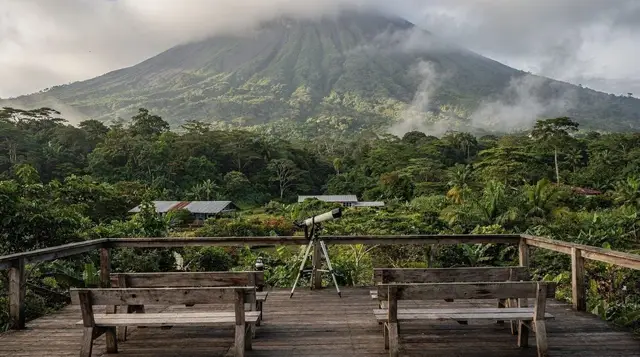
Guanacaste is the northwest of Costa Rica: hotter, drier and considerably less forested overall than the rainy northern lowlands around La Fortuna. Rincón de la Vieja, an active 1,916-metre volcano, dominates the region’s interior, and La Leona Waterfall drops through one of the forested ravines on its lower slopes. The nearest town of any size is Liberia, home to Guanacaste’s international airport, which puts La Leona firmly within reach of travellers based on the Pacific coast or arriving through Liberia rather than San José.
For visitors staying in La Fortuna, La Leona is not a spur-of-the-moment addition to a day already built around the Arenal area. It’s a destination in its own right, roughly three hours away, and it makes far more sense as part of a Guanacaste-focused day, an overnight near Rincón de la Vieja, or a stop on the way in or out through Liberia, than as a bolt-on to an Arenal itinerary.
The Trail: Distance, Time and What It’s Actually Like
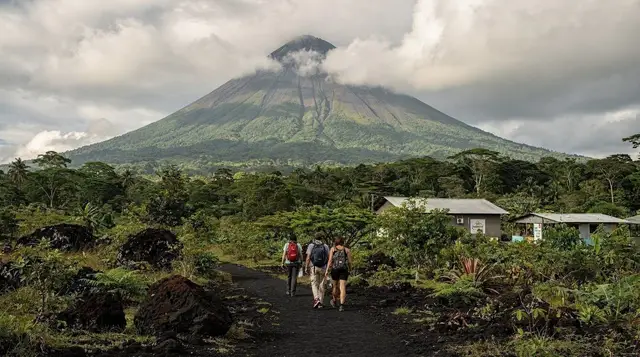
The hike to La Leona is a proper forest trail, not a paved path. Expect uneven volcanic soil, exposed roots, a stream crossing that can run higher after rain, and stretches with little shade once you’re out of the denser tree cover. Plan on roughly two to three hours round trip at a comfortable pace — longer if the group stops often, shorter if you’re moving briskly and skip the swim.
The terrain isn’t technical, but it is real trail walking: closed shoes with grip matter more here than at almost any other stop in this guide, and flip-flops or thin sandals are a genuine mistake. The elevation change is moderate rather than steep, but combined with Guanacaste’s dry-season heat, the walk out — uphill, in full sun for part of it — is usually the part people underestimate.
| Trail factor | What to expect |
|---|---|
| Round-trip hiking time | Roughly 2–3 hours |
| Terrain | Unpaved forest trail, roots, one stream crossing |
| Elevation change | Moderate, more noticeable on the way back |
| Shade | Partial; some open, sun-exposed sections |
| Footwear | Closed hiking shoes, not sandals |
What You’ll See Along the Way
The forest around La Leona is drier and more open than the dense rainforest most visitors associate with Costa Rica, closer to the tropical dry forest that defines much of Guanacaste. It thins and thickens as the trail moves through gullies and ridgelines, with the bulk of Rincón de la Vieja often visible through gaps in the canopy on a clear day. Wildlife sightings here lean toward what dry forest supports: various birds, lizards, and — with patience and quiet — a chance at howler or white-faced monkeys. It is not a guaranteed sloth trail the way Bijagua is; treat any wildlife along the way as a bonus, not the reason you came.
The payoff at the end is the waterfall itself: a forest cascade dropping into a pool at its base, framed by rock and vegetation that feels considerably more remote than most of the accessible falls closer to La Fortuna, simply because so few people are willing to walk this far for it.
At the Waterfall: Swimming, Photos and Crowds
The pool at the base of La Leona is swimmable when conditions allow, and after two-plus hours of hiking in Guanacaste heat, most people go straight in. Water clarity and flow shift with the season — expect a fuller, more forceful waterfall in the green season and a gentler, clearer pool in the dry months, though a fuller flow can also mean a stronger current and a colder swim.
Because the trail keeps casual visitors away, La Leona rarely feels crowded compared with roadside falls. That’s the trade you’re making: more effort to get there, considerably more solitude once you arrive.
a guided La Leona Waterfall hike that handles the trail logistics and timing for you is worth considering if you’d rather not navigate stream crossings and trail junctions on your own, particularly on a first visit.
Getting There From La Fortuna
This is the piece worth being honest about: La Leona is not a natural add-on to a La Fortuna-based trip. It sits on the other side of the country’s volcanic spine, in a different climate zone, and the drive alone runs close to three hours each way.
| From | Approximate drive time | Distance |
|---|---|---|
| La Fortuna | About 3 hours | ~145 km |
| Liberia (LIR airport) | Under 1 hour | Short regional drive |
| Guanacaste beach towns | 45 minutes–1.5 hours | Varies by town |
If you’re staying in La Fortuna for an Arenal-centred trip, La Leona works best as part of a longer loop: either the day you travel toward or away from Liberia, or a dedicated overnight closer to Rincón de la Vieja rather than a there-and-back day trip stacked on top of everything else you’re doing near the volcano. Renting a car gives the most flexibility for this kind of detour; see our notes on renting a car for a La Fortuna-based trip and on getting from LIR to La Fortuna if you’re weighing which airport to fly into in the first place.
Guided Hike or Independent Trail Entry?
Both options exist. A guided small-group hike bundles transport, trail entry and a guide who knows current stream and mud conditions — genuinely useful on a trail with limited signage and a water crossing that changes by the week. Arranging your own transport and entry costs less on paper but leaves you responsible for reading trail conditions and timing yourself against daylight.
| Option | What’s included | Best for |
|---|---|---|
| Guided hike | Transport, entry, guide, timing built in | First-time visitors, no rental car |
| Independent (own car) | Entry only; you navigate and time it yourself | Confident hikers already driving Guanacaste |
a Rincón de la Vieja rainforest and hot springs day is one way to pair the region’s volcanic hot springs with time in the same forested foothills, if you’d rather build a fuller day around the area than a single hike.
When to Go: Dry Season vs Green Season
Guanacaste runs drier and hotter than La Fortuna for most of the year, and that difference matters more on a two-to-three-hour forest hike than it does on a short stroll. December through April is the region’s dry season: firmer trail footing, an easier stream crossing, but full sun and real heat on the exposed stretches — start early and carry more water than you think you need.
May through November brings more rain, a fuller, more dramatic waterfall, and lusher forest, at the cost of a muddier trail and a stream crossing that can run noticeably higher after a storm. Neither season rules out the hike; both change what to pack and when to start.
Combining La Leona with Rincón de la Vieja National Park
Because La Leona sits in the same volcanic range as Rincón de la Vieja National Park, some visitors try to fold both into one day: the park’s fumaroles and mud pots in the morning, La Leona’s trail in the afternoon. It’s possible, but ambitious — each destination alone runs a half day once you count the hike, and the park and the waterfall trail are typically entered separately, sometimes through different gates entirely.
a combined volcano hike, waterfall and hot springs day on Rincón de la Vieja is built to handle that logistics puzzle for you, sequencing the park and a waterfall stop so you’re not guessing at timing on your own. If you’d rather split it over two calmer visits than rush one long day, that’s the more comfortable choice for most travellers.
Practical Notes: Water, Footwear and Tickets
- Footwear: closed hiking shoes, not sandals — the trail includes loose volcanic soil and a stream crossing.
- Water: at least a litre per person; there is no reliable source along the trail.
- Swimwear: worn under your hiking clothes, so you’re ready at the pool without changing on the trail.
- Sun protection: Guanacaste’s dry-season sun is stronger and less shaded than La Fortuna’s; reapply sunscreen after the swim.
- Timing: start early, both to beat the heat and to leave a comfortable margin for the walk out.
- Tickets: entry is typically arranged with a guided hike or bought locally at the trailhead; confirm current access with your tour operator, since it is separate from the national park’s own entrance system.
If you’re weighing this hike against other things to do in the region, our waterfalls near La Fortuna compared guide and La Leona Waterfall guide go deeper on logistics and how it stacks up against closer options. And before locking in a Guanacaste detour on top of an Arenal-based trip, it’s worth a look at common La Fortuna trip-planning mistakes — underestimating drive times between regions is one of the most frequent ones.
a Rincón de la Vieja wildlife night tour is worth considering if you’re staying in the area overnight rather than day-tripping — it makes better use of an extra night than a second daytime hike would.
La Leona Waterfall FAQ: Trail Times, Access and What to Expect
Can you drive to La Leona Waterfall?
No. There is no road to the waterfall itself. Access is on foot, along a marked trail in the Rincón de la Vieja area, and the walk in and back out is part of the visit, not a side errand before it.
How long is the hike to La Leona Waterfall?
Budget roughly two to three hours round trip at an easy pace, more if you stop often for photos or wildlife. The trail is unpaved, with roots, loose volcanic soil and at least one stream crossing, so it takes longer than the distance alone suggests.
Is La Leona Waterfall inside Rincón de la Vieja National Park?
It sits in the same volcanic foothills as the national park, on trail land in the wider Rincón de la Vieja area, and is usually visited and ticketed separately from the park’s main Las Pailas entrance. Confirm access with your guide or tour operator before you go, since it is not the same gate.
Can you swim at La Leona Waterfall?
Yes, in the pool at the base, when water levels allow. Flow and clarity change with the season, and after heavy rain the current can be too strong or the water too silty to swim comfortably.
Is La Leona Waterfall worth it compared to La Fortuna Waterfall?
They are different trips. La Fortuna’s waterfall is a short, busy stairway descent near town; La Leona is a longer, quieter forest hike in Guanacaste’s dry tropical landscape. Choose La Leona if you want trail time and fewer people, not a fast stop.
Do you need a guide for the La Leona trail?
A guide isn’t strictly required, but it helps: the trail crosses private and reserve land with limited signage, guides know current stream and mud conditions, and a small-group hike often costs little more than arranging transport and entry yourself.
What should you bring for the hike?
Closed hiking shoes with grip, a swimsuit under your clothes, a dry bag for your phone and camera, at least a litre of water, sun protection and insect repellent. Guanacaste’s dry season sun is strong and mostly unshaded on the approach.
How far is La Leona Waterfall from La Fortuna?
About three hours by road, roughly 145 km through the Guanacaste lowlands. It’s closer if you’re already based near Liberia or the Rincón de la Vieja area than if you’re day-tripping from La Fortuna itself.