What “sloth sanctuary” actually means in Bijagua
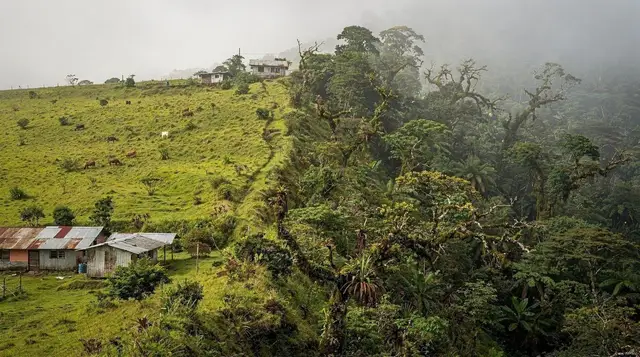
There’s no single, fenced-off sloth zoo here. What people call the Bijagua sloth sanctuary is really a handful of small, privately owned forest reserves scattered around the village of Bijagua, each running short guided walks specifically built around finding sloths. Guides know the trees where individual animals have been resting for weeks, sometimes months, and they carry spotting scopes to bring a sloth thirty metres up a cecropia tree into clear view. That’s the whole pitch: instead of walking a general rainforest trail and hoping, you walk with someone whose job is finding sloths, on land where sloths are known to hang out.
This matters because sloths are genuinely hard to spot on your own. They’re slow, they’re the colour of bark and lichen, and they spend most of the day motionless. A first-time visitor scanning the canopy without help will often see nothing at all. A guide who does this daily will find two or three animals in an hour.
Bijagua sits about 1h30 to 2 hours from La Fortuna by road, past Guatuso and close to the Maleku indigenous reserve. It’s also the closest village to Río Celeste and the Tenorio volcano national park, which is why most visitors see the sloth sanctuary and the turquoise river on the same day rather than as separate trips. This page covers only the sloth-watching side — for the river itself and the national park, see the dedicated Río Celeste and Tenorio pages.
The two sloth species you’ll actually see
Costa Rica has two sloth species, and both turn up around Bijagua:
- Brown-throated three-toed sloth — smaller, with a distinctive dark eye-mask and a near-permanent “smile.” Three-toed sloths are diurnal-ish and move a little more during the day, which makes them somewhat easier for guides to track.
- Hoffmann’s two-toed sloth — larger, shaggier, mostly nocturnal, and usually seen curled into a tight ball rather than stretched out. Two-toed sloths are the ones most often mistaken for a termite nest at first glance.
Guides distinguish the two instantly; most visitors need it pointed out. If a guide tells you which species you’re looking at, that’s a small but real sign of a decent tour rather than a generic nature walk with sloths as a bonus.
What a guided visit involves
A typical sanctuary visit runs 1.5 to 2.5 hours and covers a mix of primary and secondary forest, usually flat and well maintained — this is not a strenuous hike. Groups are kept small, generally under a dozen people, because a crowd makes it harder for a guide to work quietly and spot animals before they’re startled or overwhelmed by cameras.
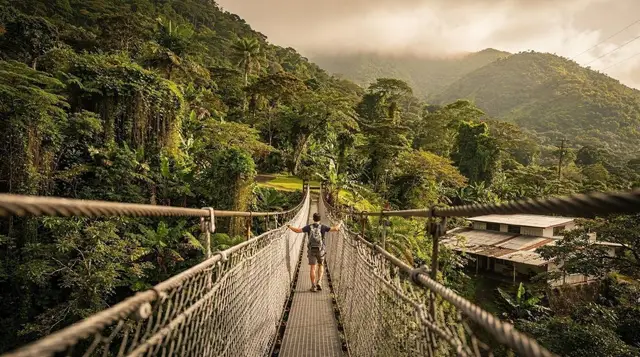
Most tours include or can be paired with a walk across hanging bridges over the forest canopy, which gives a second reason the sanctuary sits below or beside the treeline instead of always looking up from the forest floor. If you also want the region’s larger, more elaborate suspension-bridge circuit, that’s a separate product — see the note on hanging bridges below.
a combined sloth-spotting and hanging bridges walk in Bijagua is the most direct way to book this experience, and it’s the one built specifically around this reserve rather than a general Río Celeste itinerary.
Table: what’s usually included vs. extra
| Item | Usually included | Usually extra |
|---|---|---|
| Guide with spotting scope | Yes | — |
| Entrance fee | Yes | — |
| Hanging bridges access | Sometimes | Sometimes a separate ticket |
| Transport from La Fortuna | No | USD 15–35 round trip |
| Rubber boots | Sometimes provided | Bring closed shoes as backup |
| Binoculars | Rarely | Bring your own if you have them |
Bijagua sanctuary vs. Bogarin Trail: do not confuse these
This is the single most common mix-up for anyone researching sloths in this part of Costa Rica, and it’s worth being blunt about it: the Bijagua sloth sanctuary and La Fortuna’s Bogarin Trail are two different places, in two different parts of this site’s coverage area, roughly 1.5 to 2 hours apart by road.
| Bijagua sloth sanctuary | Bogarin Trail | |
|---|---|---|
| Location | Near Bijagua, Río Celeste & Tenorio area | In La Fortuna town centre |
| Distance from La Fortuna town | 1h30–2h drive | Walking distance |
| Setting | Working forest reserves, guided walks | A shorter riverside trail, also guided |
| Usually combined with | Río Celeste day trip | Nothing — it’s a standalone half-day |
If your plan is “see sloths without leaving La Fortuna,” the Bogarin Trail is the one you want, not this page. If your plan already includes a Río Celeste day, the Bijagua sanctuaries fit naturally into that route and don’t require a separate trip out from La Fortuna. Trip reports and blog posts online sometimes describe the two interchangeably, which leads to travellers arriving at the wrong place expecting the other one’s itinerary — check which name a tour actually uses before booking.
Combining it with Río Celeste and the hanging bridges
Because Bijagua sits directly on the route between La Fortuna and Río Celeste, most visitors don’t treat the sloth sanctuary as a separate day trip — they slot it in on the way to or from the waterfall hike. A common order is: leave La Fortuna early, stop at a sloth sanctuary for 2 hours, then continue to Río Celeste for the afternoon (or reverse it, sloths in the late afternoon after a morning river hike).
The region also has its own hanging-bridges circuit, distinct from the well-known Mistico and Sky Adventures parks over in the Arenal area. the Heliconias hanging bridges walk near the Tenorio side covers a similar mix of canopy bridges and forest trail, sometimes with sloth sightings included, and is a reasonable alternative if a straight sloth tour isn’t running the day you’re there.
For travellers coming from San José rather than La Fortuna, there’s also a transfer option worth flagging: a San José–Upala transfer that stops at the Las Pumas wildcat sanctuary, which is a different animal-focused stop but useful if you’re routing through the north on the way in.
If Río Celeste’s waterfall and forest hike is the main draw of the day, a guided hike through the Río Celeste rainforest to the main waterfall is the standard way to book that half of the day — see the dedicated Río Celeste and Tenorio volcano national park pages for the full detail on the river itself, its colour, and its closing times.
Practical planning
Getting there. Bijagua is roughly 1h30 to 2 hours from La Fortuna by road, and about the same from Upala in the other direction. Most visitors arrive by rental car or as part of an organized tour that includes transport; public transport connections are thin and not really practical for a day trip. If you’re driving yourself, see the general notes on wildlife spotting in the La Fortuna area for what else is worth watching for along the way.
Cost. Straight sanctuary admission with a guide runs roughly USD 25–45 per person depending on the reserve and whether hanging bridges are bundled in. Add transport from La Fortuna if you’re not driving, typically USD 15–35 round trip depending on group size and pickup point.
Best time of day. Sloths are ectothermic and slow-moving regardless of the hour, but guides generally report better luck in the cooler parts of the day — early morning or late afternoon — when animals are more likely to be repositioning rather than balled up motionless in deep shade.
What to bring. Closed shoes (the ground can be muddy even in dry season), a light rain layer — this is the wetter, greener side of the country even outside the official green season — and a zoom lens or binoculars if photography matters to you; a guide’s spotting scope helps you see the animal, but a phone camera alone won’t get a usable photo of something forty metres up a tree.
Set expectations honestly. A guided sanctuary walk dramatically improves your odds of seeing a sloth compared to an unguided trail, but it is still a wild animal in a real forest, not a zoo enclosure. Most groups see at least one sloth; seeing several, or seeing one at close range and active, is a matter of luck on the day.
Where this fits in a wider itinerary
If wildlife is the priority for your whole trip rather than just one afternoon, the sloth sanctuaries pair naturally with other wildlife-focused stops in the region — the boat safari at Caño Negro, the float trip down the Peñas Blancas river, or an evening night walk back near La Fortuna for a completely different set of species. None of those substitute for Bijagua’s sloth focus — they’re complementary, not overlapping.
For travellers building a multi-day route through the north, see Río Celeste day trip from La Fortuna for how a Bijagua stop typically slots into that day, and the broader wildlife-focused itinerary for how it fits against everything else on the wildlife side of a trip.
Bijagua sloth sanctuary: frequently asked questions
Is the Bijagua sloth sanctuary the same as the Bogarin Trail in La Fortuna?
No. They’re different places about 1.5 to 2 hours apart. The Bijagua sanctuaries are near Río Celeste and Tenorio; the Bogarin Trail is a separate, shorter walk within La Fortuna town itself. Tours and blog posts sometimes use the names loosely, so check the location listed on a booking before assuming which one you’re getting.
How far is Bijagua from La Fortuna?
Roughly 1h30 to 2 hours by road, depending on conditions and exactly which route you take. It’s the same general direction as Río Celeste, which is why the two are usually visited on the same day.
Are sloth sightings guaranteed?
No responsible operator guarantees a sighting — these are wild animals, not exhibits. That said, guides who track known resting spots see sloths on the large majority of tours; going with an experienced local guide meaningfully improves your odds compared to an unguided walk.
What’s the difference between the two sloth species I might see?
Three-toed sloths are smaller, have a dark mask around the eyes, and are somewhat more active during daylight. Two-toed sloths are larger, shaggier, mostly nocturnal, and usually seen curled up rather than stretched out. A good guide will identify which one you’re looking at.
Can I visit the sloth sanctuary without also doing Río Celeste?
Yes, but most visitors don’t, simply because Bijagua sits on the direct route to Río Celeste and it’s inefficient to make two separate trips from La Fortuna. If sloths are your only goal and you don’t want to drive that far, the Bogarin Trail in La Fortuna town is a closer, though different, alternative.
Do I need a rental car to get to Bijagua?
Not necessarily. Many visitors book a tour that includes transport from La Fortuna. If you’re driving yourself, the roads are paved for most of the route, though conditions can be slower in green season (May–November) with rain.
Is there hanging-bridges access included with a sloth tour?
Some tours bundle a canopy hanging-bridges walk with the sloth-spotting portion; others sell them separately. Check the specific tour’s inclusions rather than assuming — this varies by operator and by which reserve you’re visiting.
What should I wear or bring?
Closed, comfortable shoes, a light rain jacket, and a camera with some zoom if photography matters — sloths are often high in the canopy, and a wide-angle phone shot won’t capture much detail at that distance.