La Fortuna in Green Season: What Actually Changes From May to November
Is green season a bad time to visit La Fortuna?
No. Green season (May to November) brings denser rainforest, fuller waterfalls, and noticeably lower prices, with afternoon rain to plan around rather than avoid. The main precautions are a repellent for dengue-carrying mosquitoes in the lowlands and a plan for muddier trails, not a reason to reschedule the trip.
The season nobody markets, and why that undersells it
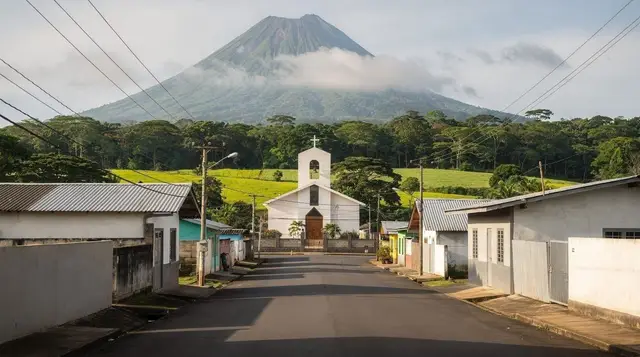
Every brochure photo of La Fortuna is shot in the dry season: hard blue sky behind the volcano, dust on the road to El Castillo, a lake at low ebb. Green season, roughly May through November, doesn’t photograph the same way, so it gets sold as the compromise option — the months you visit if the “good” dates were already booked. That reputation is mostly wrong.
This page covers what specifically changes here between May and November: rain timing, the June–July lull known as the veranillo, mosquito-borne disease risk in the lowlands, trail conditions, and what actually gets better. For the broader question of when to come at all, see best time to visit La Fortuna — this page assumes you’ve already leaned green and want the specifics.
What “green season” means on the ground here
La Fortuna sits on the windward side of the Cordillera Central, which is the blunt reason it rains here in every month of the year, dry season included. What green season adds isn’t rain from nothing — it’s more of it, more often, and more predictably in the afternoon. A typical green-season day starts clear or partly cloudy, builds cloud cover through late morning, and delivers rain from roughly 2pm through the evening.
Mornings are frequently the best window of the whole day, which is why most tour operators here run their departures early regardless of season. If you’ve read about the volcano being wrapped in cloud, that’s a year-round hazard, not a green-season one specifically — see cloudy Arenal, what to expect for how to set expectations on that separately from rain.
The practical shift for a traveler is less about whether it rains and more about planning the day around when. Book outdoor activities — waterfall hikes, the hanging bridges, wildlife float trips — for the morning slot where operators offer one. Reserve the afternoon for hot springs (rain in a thermal pool changes nothing), museums, chocolate or coffee workshops, or simply reading on a covered porch. A companion piece, rainy afternoons, how to plan your day, breaks this rhythm down activity by activity.
The veranillo: a real pause, not a myth
Costa Ricans call it the veranillo, “little summer” — a stretch of noticeably drier weather that typically arrives in late June and runs through July, sitting inside green season rather than marking its start or end. Afternoon storms during the veranillo tend to be shorter and less frequent than in the surrounding months. It isn’t guaranteed and it isn’t a second dry season; some years it barely shows up. But if you have flexibility within the May-to-November window and want the green-season combination of lower prices and thinner crowds with a slightly better rain outlook, late June into July is worth targeting over, say, September.
September and October are the other end of that spectrum: the wettest stretch of the year in the northern lowlands around La Fortuna, Caño Negro, and Sarapiquí. Interestingly, that’s roughly when Costa Rica’s Pacific south coast is at its driest — the country’s two coasts don’t share a rain calendar, which matters if your itinerary combines La Fortuna with a beach stop elsewhere.
Dengue and the lowlands: the one real health precaution
The mosquito that carries dengue, Aedes aegypti, breeds in standing water and is more active during the wetter months. Risk in Costa Rica’s northern lowlands isn’t unique to La Fortuna town itself, but it rises in the flatter, wetter terrain around Caño Negro, the Río Frío basin, and Sarapiquí — places on most green-season itineraries out of La Fortuna. This isn’t a reason to skip those day trips; it’s a reason to pack a real repellent.
Practical steps that cover the actual risk:
- A DEET (20%+) or picaridin repellent, applied daily, reapplied after swimming or heavy sweating
- Long sleeves and long trousers at dawn and dusk, when Aedes mosquitoes are most active — unlike the malaria-carrying species associated with night biting
- Accommodation with screens or air conditioning where possible, since these mosquitoes bite indoors as readily as outdoors
- No standing water left in open containers if you’re staying somewhere self-catered
None of this is specific to green season only — dengue circulates year-round in the tropics — but the risk measurably increases with the rains, so it belongs on a green-season packing list in a way it doesn’t need to dominate a dry-season one.
Trails, mud, and river levels
The unpaved sections around the volcano — notably the 1968 lava trail sector and paths through the private reserves near El Castillo — turn genuinely muddy in green season. Closed-toe hiking shoes with real tread do more work here than they do in December; some operators running rougher routes supply rubber boots on request, and it’s worth asking when you book rather than discovering the answer on the trail.
River-based activities respond to the same rain in the opposite direction: fuller. The safari float on the Peñas Blancas river and the Balsa river rafting routes generally run with more current and more visible whitewater in green season than in the driest months of dry season, when some sections can run thin. That’s mostly a plus for the experience, though it also means operators are more attentive to conditions and occasionally reschedule a specific departure around a heavy storm system rather than run it as booked — build a day of slack into a green-season itinerary if a river trip is a priority, rather than scheduling it for your last morning before a flight.
Río Celeste’s turquoise color is the one green-season wildcard worth flagging directly: it’s an optical effect from mineral particles, and heavy rain upstream can cloud the water to a dull grey-brown for a day or two after a major storm. It isn’t predictable from La Fortuna in advance. For how to hedge against a colorless day, see Río Celeste day trip from La Fortuna.
What actually gets better
This is the part the “avoid green season” framing usually skips. Several things in and around La Fortuna are genuinely better between May and November:
- Waterfalls run fuller. The La Fortuna waterfall and smaller falls throughout the region carry more volume and more visible force than in the driest weeks of dry season. See waterfalls near La Fortuna compared and the dedicated La Fortuna waterfall guide for what that looks like month to month.
- The rainforest is visibly denser. Undergrowth, epiphytes, and canopy cover are thicker; wildlife guides in the region generally report easier spotting of frogs and insects on night walks, since green season’s humidity and standing moisture suit the amphibians the walks are built around.
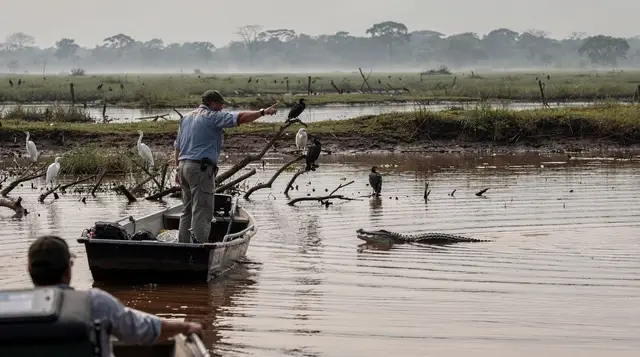
- Wildlife-watching boat trips benefit from higher water. Both Caño Negro’s boat safaris and the Peñas Blancas float access more of the wetland system when water levels are up, compared with the shrunken channels of peak dry season.
- Crowds thin out. Hanging bridges, hot springs, and the town center itself are noticeably less packed outside the December–April peak, with shorter waits and more room to negotiate at smaller tour operators.
- Prices drop. Hotel rates across La Fortuna commonly run 15 to 30 percent below dry-season peak, and multi-day package deals get easier to negotiate. Airfares into San José and Liberia tend to follow the same seasonal curve. The full breakdown of where the savings show up is in La Fortuna on a budget.
Where green season argues for a change of plan
Two things are worth adjusting rather than just enduring:
The route to Monteverde. Even in dry season, the direct road between La Fortuna and Santa Elena runs long and partly unpaved; in green season it gets worse, and the jeep-boat-jeep crossing across Lake Arenal becomes the clearly better option rather than merely the faster one. It’s covered fully in jeep-boat-jeep versus driving to Monteverde.
Self-drive itineraries with tight timing. A rental car is entirely workable in green season, but afternoon storms slow travel on the region’s one-lane bridges and unpaved stretches (El Castillo, parts of the Bijagua road) more than they would in December. Build buffer time into transfers rather than scheduling activities back-to-back with no slack.
Dry season vs. green season, side by side
| Dry season (Dec–Apr) | Green season (May–Nov) | |
|---|---|---|
| Rain pattern | Occasional, brief | Regular, mostly afternoon/evening |
| Mornings | Reliably clear | Usually clear to partly cloudy |
| Waterfalls & rivers | Lower volume | Fuller, more current |
| Forest cover | Drier, browner in patches | Dense, deep green |
| Trail conditions | Firm, dusty | Muddier on unpaved sections |
| Crowds | Peak, especially Dec–Jan | Noticeably thinner |
| Hotel rates | Highest of the year | 15–30% lower on average |
| Dengue-vector activity | Lower | Higher in the lowlands |
| Best sub-window | January–March | Late June–July (veranillo) |
Booking around the rain in practice
A few habits make the season easier without over-engineering the trip:
- Default to morning departures for anything outdoors — waterfall hikes, wildlife float trips, hanging bridges. Most La Fortuna operators already schedule this way.
- Keep afternoons flexible for hot springs, indoor workshops, or a rest block, rather than booking a tight back-to-back outdoor schedule.
- Pack a light rain shell and a dry bag for phones and cameras; a golf umbrella is nearly useless on a jungle trail but fine in town.
- Ask about rescheduling policy when booking river-dependent activities — most operators will move a departure rather than run it into an unsafe water level, and it’s worth knowing the terms up front.
- Build one buffer day into a week-long itinerary, especially if it includes a river safari, a waterfall hike, and the crossing to wildlife tours around Caño Negro — all three benefit from not being stacked into three consecutive rain-dependent mornings.
For a wildlife-forward day that plays to green season’s strengths, a float trip through the wetlands works well: the safari float through the Peñas Blancas river with a walk across the hanging bridges and lunch included pairs a higher-water float with a shaded forest walk, timed to finish before the afternoon rain typically sets in. For a shorter, closer-in option that still gets you into the canopy on foot, the half-day hanging bridges walk on the Peninsula side of the park runs early and wraps by early afternoon.
Green-season packing list
- Repellent (DEET 20%+ or picaridin), applied daily
- Lightweight rain shell, not just an umbrella
- Closed-toe hiking shoes with real tread; sandals for town and hot springs only
- Dry bag or waterproof phone pouch for river and boat activities
- Quick-dry clothing — cotton stays wet for hours in this humidity
- A change of clothes kept dry in the daypack for the return leg of any wet activity
Day trips that suit the season
Two green-season day trips are worth calling out specifically because higher water works in their favor. A wildlife-focused boat outing toward Bijagua and the wetlands near Caño Negro tends to turn up more birdlife when channels are full — the wildlife floating boat tour near Bijagua is built around exactly that.
And for travelers combining the volcano region with Río Celeste, the combined town, Río Celeste, and Tenorio National Park day tour is worth booking for a morning departure to maximize the odds of clear turquoise water before any afternoon storm arrives upstream.
Green season doesn’t erase the volcano’s other rules — it’s still resting, with no visible lava regardless of month, a point covered in full elsewhere on this site — but nothing about the rains changes that baseline. What changes is the forest around it: fuller, greener, quieter, and, for a large share of the year’s visitors, simply more affordable.
Green season FAQ
Is green season a bad time to visit La Fortuna?
No. Rain falls mostly in the afternoon and evening, mornings are often clear, and the payoff is a fuller waterfall, greener forest, and rates that run noticeably below dry-season peak.
What is the veranillo?
The veranillo, or “little summer”, is a short lull in the rains that typically lands in late June and July, when afternoon downpours become shorter and less frequent for a few weeks before green season resumes in earnest.
Do I need to worry about dengue in La Fortuna?
Dengue-carrying mosquitoes are more active in the lowlands during green season, particularly around standing water near Caño Negro and Sarapiquí. A DEET or picaridin repellent applied daily, plus long sleeves at dusk, covers the practical risk.
Are the hiking trails around Arenal muddy in green season?
Yes, particularly the unpaved sections near the 1968 lava trail and forest reserve paths. Closed-toe hiking shoes with real tread matter more than in dry season, and some operators supply rubber boots for muddier routes.
Are hotel and tour prices lower in green season?
Generally yes, often 15 to 30 percent below December-to-April peak rates for hotels, with more room to negotiate multi-day tour packages. Airfare into San José and Liberia tends to follow the same pattern.
Is the rain constant all day in green season?
No. La Fortuna’s typical green-season pattern is a clear or partly cloudy morning followed by clouds building after midday and rain arriving from mid-afternoon into the evening, which is why most tours and hikes start early.
Which months inside green season are wettest?
September and October are usually the wettest months in the northern lowlands around La Fortuna, which is also when the Pacific coast further south tends to be at its driest — the two coasts run on largely opposite rain patterns.
Seasonal experiences on GetYourGuide
Verified deep-linked GetYourGuide tours. Book through these links and we earn a small commission at no cost to you.
GetYourGuide does not provide a product photo for this activity — the image shows the meeting point, photographed by us.