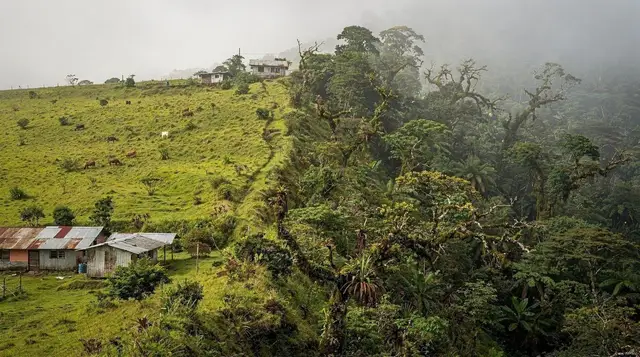
La Fortuna and Río Celeste: Volcano to Turquoise River
Two Bases, Two Very Different Landscapes
This route keeps things simple: two nights around the Arenal volcano, two nights near the turquoise river. It skips Lake Arenal and Monteverde entirely, because both sit on the far side of the lake from Bijagua — worth knowing before you build the trip, not after you’ve booked a hotel in the wrong direction. If the /itineraries/la-fortuna-and-monteverde/ route sounds more like what you want, that’s the one to read instead of this one.
| Day | Base | Focus |
|---|---|---|
| 1 | La Fortuna | Waterfall, town, hot springs |
| 2 | La Fortuna | 1968 lava trail, hanging bridges |
| 3 | Bijagua | Transfer, Río Celeste hike |
| 4 | Bijagua | Sloth walk, drive out |
Day 1: La Fortuna Waterfall and the Town
Start at the /destinations/la-fortuna-waterfall/, a roughly 70-metre drop reached by about 500 steps down into the canyon — and the same 500 back up, so pace yourself. The bathing pool sits downstream of the falls, not underneath them; the current directly below the drop is genuinely dangerous. Entry is managed by ADIFORT, La Fortuna’s community development association, and the site can be busy by mid-morning, so an early start pays off. The full /guides/la-fortuna-waterfall-guide/ covers opening hours and what the steps are actually like.
Spend the rest of the day in La Fortuna itself — a compact town of around 15,000 people that exists almost entirely to serve this valley’s visitors. Walk the centre, eat at a soda for a fraction of a hotel restaurant’s prices, and if you want the geothermal water without the resort price tag, the free public hot river at El Choyin is the honest local alternative to the paid complexes. It has no changing rooms or lifeguards, and bag theft has been reported, so bring only what you can watch. If a proper hot springs evening appeals more, this is the day to book one.
Los Lagos Hot Springs admission ticket is a reasonable entry-level option to end the day, with volcano views over the pools when the cloud lifts. For a full comparison of what’s actually different between the complexes, see /guides/which-hot-springs-to-choose/.
Day 2: The 1968 Trail and the Hanging Bridges
The volcano is the reason this valley has visitors at all, and it deserves a clear-headed introduction: Arenal has not produced visible lava since October 2010. The eruption that shaped the area happened on 29 July 1968, destroying Tabacón, Pueblo Nuevo and San Luis and killing around 87 people, after which the volcano stayed active for another 42 years. What you can see today is the cone itself on a clear morning, the solidified 1968 lava flow underfoot, and the geothermal heat that still feeds every hot spring in the valley — not molten rock.
Walk the /destinations/arenal-1968-trail/ through boulder fields left by that eruption, with the cone often visible above the treeline before the clouds move in later in the day. Full background on the park and its two separate ticketed sectors is in the /guides/arenal-1968-lava-trail-guide/.
Arenal’s 1968 volcano trails experience covers this properly with a guide who can point out wildlife most visitors would otherwise walk past.
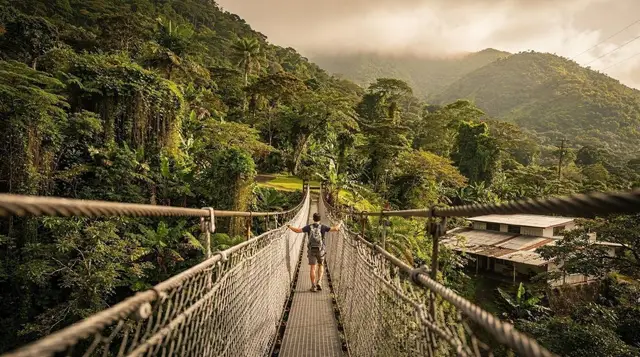
In the afternoon, cross to the /destinations/mistico-hanging-bridges/ — the best-known of three separate hanging bridge parks in the area, easily confused with Sky Adventures and the Arenal Hanging Bridges near El Castillo, which have different routes, prices and durations.
The /guides/mistico-hanging-bridges-guide/ explains which park suits which traveller if you’re weighing options. One important note before you leave the area: Cerro Chato’s crater lake has been closed to hikers since 2018 for erosion and safety reasons, whatever an older blog post might still say — see /guides/cerro-chato-closed-what-to-know/ if it’s on your list.
Day 3: Transfer to Bijagua and the Río Celeste Hike
Check out of La Fortuna and drive to /destinations/bijagua/, a small town at the base of Tenorio Volcano and the closest base for the /destinations/rio-celeste/. The drive is around 1.5 to 2 hours through Guatuso on paved roads — far shorter and easier than the journey to Monteverde, and no 4x4 required. Settle into your accommodation, then head straight for the /destinations/tenorio-volcano-national-park/ entrance while the day is still young.
The colour that makes this river famous is not a dye or a mineral tint in the way people assume — it’s an optical effect. Two clear rivers meet at a point locals call the Teñidero, and aluminosilicate particles in the water grow to a size that scatters blue light. It’s real, it’s striking in person, and it is not guaranteed. After several days of heavy rain the water turns brown or grey and can stay that way for days before it clears again. If your visit follows a stretch of storms, it’s worth asking your accommodation about recent conditions before you commit the day — this is the single most common source of disappointment among visitors who didn’t check first.
a ticket to the Río Celeste waterfall in Tenorio Volcano National Park gets you the entrance sorted in advance, which matters because the park caps daily visitor numbers and closes the trail to new hikers in the mid-afternoon, typically around 2pm, regardless of the park’s overall closing time. Go early. The hike itself is a few hours round trip on a well-marked path to the waterfall viewpoint and back past the Teñidero confluence.
Day 4: Sloths at Bijagua and the Drive Out
Bijagua sits in the shadow of Tenorio and, unlike La Fortuna, is genuinely reliable ground for spotting sloths — both two-toed and three-toed — in the private reserves that dot the hillsides around town. This is also territory close to the Maleku indigenous reserve and the wider Guatuso lowlands, quieter and far less visited than anything around Arenal.
a sloth and hanging bridges tour in Bijagua is the standard way to do this properly, with a local guide who knows where the resident animals tend to sit that week — no sighting is ever guaranteed in the wild, but the hit rate here beats a random forest trail by a wide margin. Travellers with an extra half day sometimes add a coffee and chocolate farm visit before heading out, which slows the pace nicely after two hiking-heavy days.
From Bijagua, onward routing depends on your flight: Liberia’s airport is a more direct exit than backtracking through La Fortuna if your trip ends in Guanacaste, while San José-bound travellers usually retrace the road back past Ciudad Quesada.
If You’d Rather Have Monteverde Than the River
Bijagua and Monteverde sit on opposite sides of Lake Arenal from La Fortuna, and trying to fit both into a short trip usually means too much time in the car and not enough anywhere else. If cloud forest, quetzals and the jeep-boat-jeep crossing appeal more than a turquoise river that might not be turquoise the day you show up, build your trip around /itineraries/la-fortuna-and-monteverde/ instead. For a direct side-by-side comparison of what each destination actually offers, /guides/la-fortuna-vs-rio-celeste/ lays it out plainly.
Getting the Timing Right
Both halves of this trip are outdoors and weather-dependent, so a few planning notes matter more here than on a beach holiday. La Fortuna sits on the windward side of the country and gets rain year-round, usually in the afternoon; September and October are the wettest months in the northern lowlands, which is also when the Pacific coast is at its driest. None of that rules out this itinerary, but it argues for morning starts on both the waterfall and the river hike, before afternoon cloud and rain move in.
The /guides/best-time-to-visit-la-fortuna/ guide breaks down the dry and green seasons in more detail, and one traveller’s account of watching the river turn brown mid-trip, in /blog/the-day-the-rio-celeste-was-brown/, is a useful reality check before you lock in the dates.
For things to do around Bijagua beyond the river and the sloth walk, /things-to-do/bijagua/ rounds up the smaller options worth an hour or two if your schedule has slack.
What to Pack for Both Legs
Closed shoes are non-negotiable on every trail in this itinerary — the fer-de-lance is present in the region, and open sandals have no place on a forest path here. Bring a light rain jacket regardless of season, insect repellent for the lowland stretches around Bijagua and Guatuso, and cash in colones for sodas and small purchases, since tour and park prices quoted in US dollars don’t always convert kindly at the till. A dry bag or plastic sleeve for your phone and camera is worth the small effort on both the waterfall descent and the river hike, where spray and humidity are constant.
Río Celeste and Bijagua Frequently Asked Questions
Is the Río Celeste guaranteed to be turquoise?
No. The colour comes from an optical effect where aluminosilicate particles from two converging rivers scatter blue light at the Teñidero. After a few days of heavy rain the water turns brown or grey and stays that way until it settles, sometimes for several days.
How do you get from La Fortuna to Bijagua?
By car it’s about 1.5 to 2 hours on paved roads through Guatuso, no 4x4 needed. Without a car, look for a shared shuttle connecting La Fortuna to Bijagua, or arrange a private transfer through your accommodation.
Can you do Río Celeste as a day trip from La Fortuna instead of staying in Bijagua?
Yes, plenty of visitors do, but it means roughly 3 to 4 hours of driving in a single day on top of the hike. Staying two nights in Bijagua removes the rush and adds time for the sloth walk, which a day trip usually cuts.
What time does the Río Celeste trail close?
The park limits daily entries and closes the trail to new hikers in the mid-afternoon, typically around 2pm, even if the park itself stays open later. Arrive early, both for the closing time and because the light is better for photos before midday cloud builds.
Are sloths guaranteed on the Bijagua walk?
No sighting in the wild is guaranteed, but Bijagua’s private reserves track resident sloths day to day and have a strong hit rate compared to a random forest trail. Two-toed and three-toed sloths are both present in the area.
Should you add Monteverde instead of Río Celeste?
If cloud forest and quetzals matter more to you than turquoise water, take the La Fortuna and Monteverde route instead — Monteverde sits on the opposite side of the lake from Bijagua, and combining all three in one trip means too much driving for a short stay.
tours.4 days
Verified deep-linked GetYourGuide tours. Book through these links and we earn a small commission at no cost to you.
GetYourGuide does not provide a product photo for this activity — the image shows the meeting point, photographed by us.