Where to See Wildlife Around La Fortuna: A Realistic Guide
Where can you reliably see wildlife around La Fortuna?
The Bogarín Trail in town is the most consistent place to see wild sloths, alongside toucans, caimans and poison dart frogs. Ecocentro Danaus adds a good short night walk for frogs and caimans. Quetzals are a Monteverde bird, best seen there from February to July, not around La Fortuna.
La Fortuna gets sold on volcano photos and hot springs, but for a lot of visitors the wildlife ends up being the part they talk about afterwards — a sloth curled in a cecropia tree, a toucan’s bill catching the light, a chorus of frogs after dark. The catch is that none of it is scheduled. This guide covers where the odds are actually good, where they’re weaker than the brochures suggest, and why one of Costa Rica’s most photographed birds isn’t a realistic goal here at all.
Setting expectations: wildlife here is real, but never guaranteed
Every wildlife guide in the La Fortuna area will tell you the same thing if you ask them directly: nothing is guaranteed. Sloths, monkeys and toucans are wild animals in a working forest, not exhibits. A trail that produced three sloth sightings yesterday can produce zero today. What separates a good wildlife walk from a mediocre one isn’t luck — it’s whether the guide actually knows where animals have been feeding and resting recently, which is exactly what the better operations do.
That distinction matters when you’re choosing where to spend a morning. A general forest hike near Arenal Volcano National Park can turn up wildlife, but it’s designed around the volcano and the 1968 lava trail, not around tracking animals. The spots below are chosen specifically because someone is watching them daily.
The Bogarín Trail: the most reliable sloth sighting in town
The Bogarín Trail sits right at the edge of La Fortuna’s town centre, which is part of why it works so well: it’s a family-run private reserve along a river, and the guides walk it every single day, so they know which sloths are currently in which trees. That daily familiarity is the real advantage over a one-off forest hike — the guides aren’t hoping to spot a sloth, they’re checking on ones they already know about.
The walk itself is short and flat, well under two hours, on a wide gravel path suitable for most fitness levels and for kids — it’s a genuinely good option for families visiting La Fortuna, and there’s a version of this walk built specifically around that, covered in the separate Bogarín Trail family sloth walk guide. Beyond sloths, expect a decent shot at toucans, iguanas, poison dart frogs near the water, and river birds like herons and kingfishers. Morning departures tend to outperform afternoon ones, both because animals are more active and because the light through the canopy is better for spotting movement.
a guided morning sloth walk on the Bogarín Trail is the single most efficient wildlife activity to book in La Fortuna if your time is limited to one outing.
For a broader read on how wild sloth sightings compare to guaranteed rescue-centre viewings elsewhere in Costa Rica, and on managing expectations more generally, the standalone guide on spotting sloths and other wildlife covers the trade-offs — though if you’re reading this page, you’re already there.
Ecocentro Danaus: caimans, a lagoon, and a shorter night walk
Ecocentro Danaus is a smaller private reserve a short drive from town, built around a lagoon rather than a river, and it fills a different niche than Bogarín. The daytime walk is good for caimans basking at the water’s edge, herons, iguanas, and a botanical garden section with medicinal plants and a butterfly enclosure. It’s a reasonable half-day stop on its own, and it also runs its own guided night walk, shorter and more contained than some of the larger night-tour operations, which suits travellers who want a taste of after-dark wildlife without a long outing.
If night wildlife is the priority rather than a side note, it’s worth reading the dedicated night walks in La Fortuna guide rather than treating it as an afterthought here — frogs, tarantulas, snakes and roosting birds are a different set of skills and expectations from daytime sloth-spotting, and that guide goes into the detail this one deliberately doesn’t. The same applies to the larger night-safari operations, covered separately in the Arenal Natura night tour guide.
a guided twilight wildlife safari is the option to book if you want the after-dark side of wildlife-watching covered in the same trip as a daytime walk, without piecing together two separate bookings.
Other places wildlife shows up around La Fortuna
Wildlife isn’t confined to dedicated reserves — it turns up as a byproduct of other activities, sometimes more memorably than on a walk built for it. The table below is a rough guide to what to expect where, not a promise.
| Location | Best for | Typical activity |
|---|---|---|
| Bogarín Trail | Sloths, toucans, iguanas | Guided morning walk |
| Ecocentro Danaus | Caimans, herons, night walk | Reserve visit |
| Peñas Blancas River | Monkeys, iguanas, waterbirds | Float / safari boat |
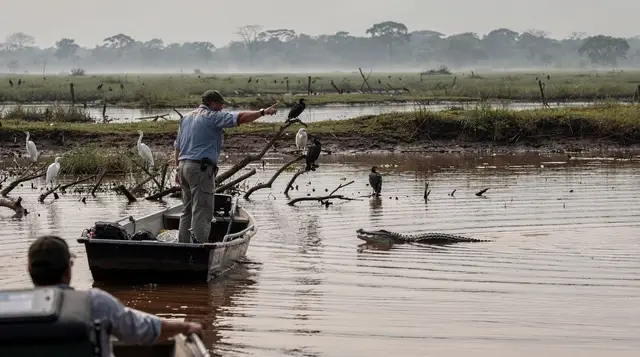
| Caño Negro | Waterbirds, caimans, monkeys | Boat safari |
| Venado Caves | Bats, cave crickets, frogs | Caving |
| Monteverde reserves | Quetzals, hummingbirds | Guided forest walk |
The Peñas Blancas River safari float is a slow, low-effort float through gallery forest that regularly turns up howler and white-faced monkeys, sloths in the riverside trees, iguanas, and a mix of herons and kingfishers — it’s as much a wildlife activity as a boat ride. Further afield, the Caño Negro boat safari covers wetlands rather than river forest, and is the stronger option specifically for waterbirds; the wetland birds of Caño Negro guide goes into which species to expect there and when.
a wildlife floating boat tour near Bijagua covers similar wetland and river terrain closer to the Río Celeste side of the region, which is worth knowing if your itinerary already has you heading that way.
The Venado Caves are an odd inclusion on a wildlife list, but they’re genuinely productive for bats, cave crickets and the occasional frog or snake in the entrance chambers — a different, subterranean kind of wildlife-watching, covered in the Venado Caves guide.
a guided tour of the Venado Caves pairs reasonably well with a wildlife-focused morning if caving interests you as much as sloths do.
Monkeys and sloths also show up unannounced on activities that aren’t marketed as wildlife tours at all — hanging bridge walks and ATV routes both cross forest where howler troops are a common, if unpredictable, bonus.
a guided sloth and monkey tour around Arenal is built specifically around that overlap, tracking both species rather than treating monkeys as an incidental extra.
Why quetzals are not a La Fortuna bird
This is worth stating plainly because it’s a common point of disappointment: the resplendent quetzal, one of the most sought-after birds in Central America, is not realistically found around La Fortuna. Quetzals depend on wild avocado trees that fruit at cloud forest elevation, roughly 1,400 metres and up, which is why they’re associated with Monteverde and Santa Elena rather than La Fortuna’s lowland forest at around 250 metres. No amount of guiding skill changes the habitat.
If seeing a quetzal matters to your trip, the honest answer is to build in a Monteverde day trip from La Fortuna or a longer stay, and to time it for the breeding season, roughly February to July, when males are more visible and vocal. Reserves like the Monteverde Cloud Forest Reserve are the actual habitat to search, and the birdwatching in Monteverde and around guide covers what else to expect on that side of the region, which is a genuinely different bird list from La Fortuna’s lowland species.
None of this means La Fortuna is weak for birds generally — toucans, motmots, oropendolas and a long list of hummingbirds are all realistic here. It’s specifically the quetzal that belongs to a different elevation and a different guide.
Best time of day, and time of year
For daytime wildlife, early morning is consistently the strongest window — animals are more active before the day heats up, and guides on trails like Bogarín often do their first check of known sloth locations before most visitors have had breakfast. Afternoon walks aren’t wasted, but the success rate tends to drop, and La Fortuna’s afternoon rain, which is a near-daily feature regardless of season, adds another reason to front-load wildlife activities into the morning.
Seasonally, wildlife is visible year-round in this part of Costa Rica, which is one advantage of the lowland forest over higher-elevation birding: there’s no long dead season the way there can be for quetzals at Monteverde. Green season, roughly May through November, brings more insects and, by extension, more frogs and the animals that eat them, which can make night walks slightly more productive. Dry season, December through April, trades that for easier trail conditions and marginally better visibility in the canopy.
What to bring and how to behave around wildlife
Closed shoes are non-negotiable on any forest trail in this region — sandals are a genuine liability given the presence of venomous snakes like the fer-de-lance, not just a comfort issue. Insect repellent matters more in green season but is worth carrying year-round. A light rain layer earns its space in the bag on almost any day, given how often La Fortuna’s afternoons turn wet regardless of the official season.
On behaviour: guides here are consistent about not approaching sloths or monkeys closely, not using flash photography on nocturnal animals, and staying on marked trails. Reserves like Bogarín and Danaus are private land run partly as conservation projects, and the daily animal tracking that makes them reliable depends on not stressing the animals they’re tracking. It’s a reasonable ask, and it’s also self-interested for future visitors — a sloth that gets harassed moves further from the trail.
Booking a guided wildlife walk versus going alone
Most of the wildlife spots covered here — Bogarín, Danaus, the river floats — are set up as guided experiences rather than self-guided trails, and that’s not just a monetisation choice. A guide who walks the same stretch of forest daily genuinely knows more about where animals currently are than a first-time visitor scanning the canopy alone would. For sloths in particular, which are camouflaged and motionless for long stretches, the difference between a guided and unguided walk is often the difference between seeing one and walking past three without noticing.
an ATV tour around the Arenal volcano area is worth mentioning here too, not as a dedicated wildlife activity, but because the backroads it covers cross forest edges where howler monkeys and toucans are a realistic, unscripted bonus on an otherwise adventure-focused outing.
If a single wildlife activity has to fit into a broader plan, pairing a morning at Bogarín with an evening night walk covers both the daytime and after-dark side of the region’s wildlife without overloading the schedule — see how many days in La Fortuna for how that fits against the rest of the region’s activities, and the things to do: wildlife tours category page for the fuller list of options, including the night tours that complement this page.
For an itinerary built specifically around wildlife rather than volcanoes or adventure sports, the La Fortuna for wildlife itinerary lays out a fuller sequence across several days.
Wildlife spotting around La Fortuna: FAQ
Is a sloth sighting guaranteed on the Bogarín Trail?
No. Guides there have an unusually high success rate because they track known sloths daily, but wild animals move and hide. Most mornings turn up at least one sloth, some don’t. Treat a sighting as likely, not certain.
What’s the difference between the Bogarín Trail and a guided night walk?
Bogarín is a daytime walk on flat, easy paths focused on sloths, toucans and iguanas. A night walk is a separate after-dark activity, usually along a river or garden trail, aimed at frogs, snakes, tarantulas and roosting birds. They’re complementary, not interchangeable.
Can you see quetzals near La Fortuna?
Realistically, no. Resplendent quetzals are a cloud forest species tied to wild avocado trees at higher elevation, found around Monteverde and Santa Elena, not in La Fortuna’s lowland forest. If quetzals matter to your trip, plan a Monteverde visit, ideally February to July.
Is Ecocentro Danaus worth visiting if you’ve already done the Bogarín Trail?
Yes for different species. Danaus is a private reserve with a lagoon, so it’s a better bet for caimans, herons, iguanas and its own guided night walk, while Bogarín is the stronger daytime sloth trail. Doing both covers more ground than repeating either.
What wildlife might you see at Caño Negro or on the Peñas Blancas float?
Both are wetland and river routes rather than forest trails, so the species mix shifts toward caimans, howler and white-faced monkeys, iguanas, and waterbirds like herons, kingfishers and the occasional roseate spoonbill. Sloths turn up on riverside trees on both routes, but less predictably than at Bogarín.
What should you bring on a wildlife walk?
Closed shoes rather than sandals, light long sleeves, insect repellent, and binoculars if you have them — guides usually carry a spotting scope but a personal pair helps for birds. A rain layer is worth packing regardless of season.
Is it safe to walk trails at night looking for frogs?
On a guided walk, yes — guides know the paths and carry proper lighting, and closed shoes are required precisely because the region has venomous snakes like the fer-de-lance. Wandering an unlit trail alone after dark isn’t a good idea anywhere in this area.
Wildlife tours on GetYourGuide
Verified deep-linked GetYourGuide tours. Book through these links and we earn a small commission at no cost to you.
GetYourGuide does not provide a product photo for this activity — the image shows the meeting point, photographed by us.