Whitewater Rafting Near La Fortuna: The Complete Guide
Where can you go whitewater rafting near La Fortuna?
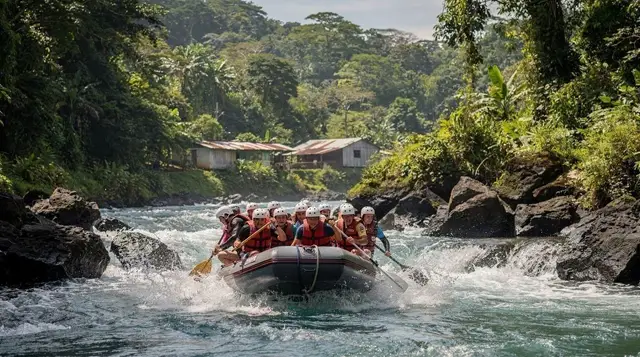
The Balsa River is the main whitewater run near La Fortuna, with Class II-III rapids suited to first-time and intermediate rafters year-round. It's a different trip from the Peñas Blancas safari float, which has no rapids and focuses on wildlife-watching from a calm current.
Rafting is the one river activity in La Fortuna with actual rapids
La Fortuna sits inside a cluster of rivers, and it’s easy to lump them together: rafting, tubing, the safari float, canyoning — all “river stuff.” They’re not the same trip. If what you want is paddling hard through whitewater, the river that matters here is the Balsa River, and the grade that matters is Class II-III: real rapids, but graded for people who have never picked up a paddle before this trip.
This guide covers what that grade actually means, who it’s suited for, how it differs from the flat-water Peñas Blancas River safari float that gets marketed alongside it, and what a day on the water looks like. For the specific put-in, the named rapids, and a stretch-by-stretch breakdown of the run, the dedicated Balsa River rafting guide goes deeper than this overview does.
What Class II-III actually means on the Balsa
Whitewater is graded on an international scale from Class I (moving water, no real rapids) to Class VI (essentially unraftable). Class II-III sits near the accessible end of that scale:
| Grade | What it feels like |
|---|---|
| Class I | Flat, gently moving water, no paddling skill required |
| Class II | Small waves and rock dodges, straightforward lines, minimal risk of flipping |
| Class III | Bigger, faster rapids with some technical moves; you’ll get wet, the boat may bounce hard, and paddling as a team through the line matters |
| Class IV+ | Not run commercially near La Fortuna |
The Balsa sits at the upper end of that beginner-to-intermediate range: enough current and enough named rapids to feel like a real river trip, without the technical, guides-only water of a Class IV run. It’s the grade most commercial operators in Costa Rica build their standard tours around, which is why you’ll see it offered under several different tour names covering essentially the same stretch of river.
That said, “beginner-friendly” is doing real work in that sentence. Class III water can still throw you off balance, dunk the raft, or knock a paddle out of your hands. Guides brief every group before launch and ride in the raft with you, calling out strokes through each rapid, but this is an active sport that asks something of your body — not a scenic float you sit through passively.
Balsa River rafting vs. the Peñas Blancas safari float
This is the confusion this guide exists to clear up. Both are marketed as “river trips near La Fortuna,” both launch from similar meeting points, and both get bundled into the same “adventure day” conversation — but they deliver almost opposite experiences.
| Balsa River rafting | Peñas Blancas safari float | |
|---|---|---|
| Water | Class II-III rapids | Flat to gently moving, no real rapids |
| What you do | Paddle actively as a team through rapids | Sit back, drift, watch the banks |
| Focus | Adrenaline, teamwork, whitewater | Wildlife-spotting: birds, sloths, iguanas, monkeys |
| Physical demand | Moderate to active | Low |
| Typical length on water | About 2 hours | About 2 hours |
| Best for | Travellers wanting an adventure activity | Families, birdwatchers, anyone who wants calm water |
If someone in your group wants to paddle hard and get splashed by real rapids, book the Balsa. If what you actually want is a slow drift past sloths and toucans with a guide pointing out wildlife on the Peñas Blancas River, the safari float guide is the one to read — not this one. Plenty of visitors do both on different days of a La Fortuna itinerary, and the two trips complement each other precisely because they’re so different. The comparison guide walks through the decision in more detail if your group is split on which to book.
Who should raft, and who shouldn’t
This is the trap worth naming directly: rafting near La Fortuna, even at a beginner-friendly Class II-III, is not something to hand to a very young child the way you might a gentle river float. Most Balsa River operators set a minimum age somewhere around 8 to 12 years old, and some set a minimum weight instead, because a life jacket and the physical act of bracing through a rapid both depend on a certain body size. A three- or four-year-old cannot safely be strapped into a raft for a Class II-III run, whatever a tour description implies.
Beyond age, a few practical fitness points matter more than most people expect going in:
- You need to be able to swim, or at minimum be comfortable in moving water with a life vest on. Rafts do occasionally flip or dump a passenger, and guides train for that, but panic in the water is the actual risk, not the swim itself.
- You need reasonable mobility. You’ll be crouched or braced in a raft, paddling continuously, sometimes shifting your weight quickly on a guide’s call. Significant mobility limitations, recent surgery, or a bad back are worth discussing with the operator before booking.
- Pregnancy is a standard exclusion for whitewater trips at any grade, the Balsa included.
- Heart conditions and similar medical concerns should be disclosed at booking; most waivers ask directly.
None of this makes the Balsa an extreme sport — it’s built specifically to be approachable for first-timers — but “approachable” and “suitable for everyone regardless of age or condition” are different claims, and tour marketing sometimes blurs the two. If you’re travelling with young kids and still want a river experience together, the Peñas Blancas safari float or a gentler river tubing trip is the better match; save the Balsa for the members of your group who are old enough and fit enough to paddle it properly.
this half-day Class II-III rafting run on the Balsa River is the standard version most La Fortuna operators run, and it’s the one to book if you just want the straightforward trip without extras.
What a Balsa River rafting day actually looks like
Most operators structure the day the same way, whichever company you book through:
- Hotel pickup, usually early to mid-morning, from anywhere in La Fortuna or the wider La Fortuna–Arenal area.
- Drive to the put-in, roughly 20 to 40 minutes depending on your hotel’s location and which section of the Balsa the operator runs.
- Safety briefing and gear fitting — helmet, life vest, paddle, and a walkthrough of the paddle commands and what to do if you go in the water.
- On the water, typically around two hours, alternating stretches of rapids with calmer sections where guides point out riverside wildlife and scenery.
- Return transfer, with some operators including a stop for photos or a light snack.
Counting pickup and drop-off, budget a half-day for the full experience even though the paddling itself is shorter. Some tours add a meal:
the same Class II-III run with lunch included afterward suits travellers who’d rather not plan a separate stop for food on a day that’s already built around one activity.
Other whitewater options near La Fortuna
You’ll also see tours branded simply as “Arenal whitewater rafting” rather than naming the Balsa River specifically. In practice, these usually run the same river corridor, or a comparable nearby stretch, at the same Class II-III grade — the name is more about how the operator markets the trip than a different river experience. this Arenal-branded Class II-III rafting tour is worth comparing against the Balsa-specific options mainly on logistics: included transport, group size, and whether a meal is bundled, since the water itself won’t differ meaningfully.
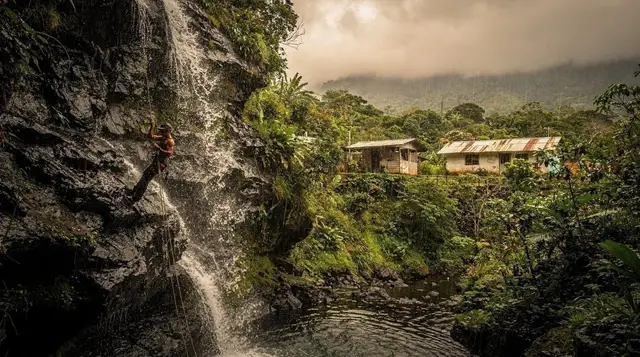
If Class II-III still sounds tamer than you’d like, canyoning — rappelling down waterfalls rather than paddling past them — is the other adrenaline-forward river activity based near La Fortuna, and it draws a different crowd than rafting does. If, on the other hand, you decide the rapids aren’t for you after reading all this, the safari float remains the calmer, wildlife-focused alternative on a nearby river, and nobody should feel talked into whitewater they don’t actually want.
Combining rafting with the rest of a La Fortuna day
Rafting fills a morning or afternoon, not a whole day, which makes it easy to pair with something calmer on either side. A common pattern: rafting in the morning, then an afternoon soak at one of the hot springs to loosen up the muscles the paddling worked, or the free riverside soak at El Choyin if you’d rather not book a second paid activity the same day. Others slot rafting into a broader things-to-do day day alongside a night walk or a visit to the Bogarín sloth trail, since rafting itself only occupies a few hours of daylight.
If you’re still building out your trip and haven’t settled on how much whitewater, wildlife, and waterfall time to balance, how many days in La Fortuna and first time in La Fortuna both cover how rafting typically fits into a first visit.
Rafting depends more on water levels than sunshine, so it’s a reasonable activity to schedule even on a cloudy or rainy-looking morning — check what green season actually looks like if you’re travelling outside the December–April dry season and wondering whether rain will cancel your plans. It usually won’t; the river running a bit higher after rain is often better for rafting, not worse.
Price, season, and what to pack
| Typical range | |
|---|---|
| Balsa River rafting, standard | roughly USD 75–100 per person |
| Balsa River rafting with lunch | roughly USD 90–115 per person |
| Season | Runs year-round; May–November (green season) often gives more consistent water levels |
| Minimum age | Around 8–12, varies by operator; some use a minimum weight instead |
| Duration, door to door | Half-day, roughly 3–4 hours including transport |
| Time actually on the water | About 2 hours |
These are ballpark figures — quoted, like almost everything around La Fortuna, in USD even though the local currency is the colón. Pack quick-dry clothing you don’t mind getting soaked, water shoes or old sneakers with a strap (not flip-flops, which come off in the first rapid), and a swimsuit underneath. Leave phones and cameras at the hotel or in a sealed dry bag; a rapid is not a forgiving place to be holding electronics. Most operators supply the helmet, life vest, and paddle as part of the tour price.
Rafting near La Fortuna: the questions people actually ask
Is rafting near La Fortuna safe for beginners?
Yes, in the sense that Class II-III is the standard entry point for whitewater rafting worldwide. Guides give a safety briefing and paddling instructions before launch, and every trip is led by a certified river guide. It’s still an active river sport, not a float, so a baseline of swimming ability and comfort in moving water is expected.
What’s the difference between the Balsa River and the Peñas Blancas safari float?
The Balsa River has genuine rapids and requires paddling as a team through them. The Peñas Blancas safari float, covered in its own guide, runs on flatter water with little to no whitewater and is built around spotting birds, sloths, and iguanas from a slow-moving raft. Book Balsa for the adrenaline, Peñas Blancas for the wildlife.
Is there a minimum age for whitewater rafting near La Fortuna?
Most Balsa River operators set a minimum age of around 8 to 12 depending on water levels and the specific run, and some set a minimum weight rather than an age. This is not a trip for toddlers or very young children even at Class II-III. Check the age and weight limits when booking, since they vary by outfitter and season.
What should I wear and bring for a rafting trip?
Quick-dry clothing, secured water shoes or old sneakers (not flip-flops), a swimsuit underneath, and sunscreen. Most operators provide the helmet, life vest, and paddle. Bring a dry bag or leave valuables at your hotel, since cameras and phones are easy to lose in a rapid.
Does rafting run in the rainy season?
Yes, and green season (May to November) is often the better window for the Balsa River, because higher water levels make the rapids more consistent. Trips can be cancelled or downgraded after unusually heavy rain if the river runs too high or too silty; your operator makes that call on the day.
How does Balsa River rafting compare to the Arenal whitewater rafting tours?
Arenal whitewater rafting tours typically run the same Balsa River corridor or a comparable nearby stretch at Class II-III; the names differ by operator more than the river does. Compare included transport, group size, and whether lunch is bundled before choosing, since the water experience itself is similar.
Do I need previous rafting experience?
No. Class II-III is designed as an introductory-to-intermediate grade, and most people on a Balsa River trip are rafting for the first time. Guides paddle in the boat with you and call out instructions through each rapid.
How long does a Balsa River rafting trip take?
Figure on a half-day commitment once you count hotel pickup, the drive to the put-in, the safety briefing, roughly two hours on the water, and the return transfer. The time actually paddling is shorter than the total time away from your hotel.
White-water rafting on GetYourGuide
Verified deep-linked GetYourGuide tours. Book through these links and we earn a small commission at no cost to you.
GetYourGuide does not provide a product photo for this activity — the image shows the meeting point, photographed by us.