Rafting vs Safari Float: Which One Should You Choose?
Should I choose white-water rafting or a safari float near La Fortuna?
Choose Class II-III rafting on the Río Balsa if you want a physically active trip with paddling and rapids. Choose a safari float on the Río Peñas Blancas if your priority is spotting sloths, birds and caimans from a calm, guided boat. They are two different activities on two different rivers, not an easy and a hard version of the same thing.
Two river trips near La Fortuna get lumped together constantly, and the confusion costs people a good day out. One runs rapids. The other drifts past wildlife. Neither is a watered-down copy of the other, and picking the wrong one for what you actually want is the most common regret we hear about river activities in this region.
Two rivers, two different goals
The Río Balsa and the Peñas Blancas river sit within a similar drive time of La Fortuna, and both get booked through the same tour operators, on the same booking pages, sometimes on the same day. That proximity is exactly why the two activities blur together in people’s planning. But the rivers themselves are different in character, and the trips built around them are designed around different objectives.
Rafting on the Balsa is a Class II-III white-water trip. You paddle, you follow a guide’s commands, and you go through rapids that genuinely move the boat around. A safari float on the Peñas Blancas is something else entirely: a slow, largely flat stretch of river covered in an inflatable boat that the guide rows, with the entire point being to look for sloths, herons, caimans, monkeys and iguanas along the banks without startling them.
If you go into either trip expecting the other one’s experience, you will be disappointed — not because the trip failed, but because you booked the wrong trip for what you wanted.
Why “safari float = easy rafting” is the wrong mental model
It is tempting to file the safari float as “rafting for people who don’t want rapids,” and a fair number of tour listings do nothing to correct that impression. Resist it. The safari float is not a diluted rafting trip; it is a wildlife-watching float trip that happens to use similar equipment (inflatable boat, life jacket, guide) on a different river.
The clearest way to see the distinction: on the Río Balsa rafting trip, the guide’s commands are about navigating water — “forward,” “back paddle,” “hold on.” On the Peñas Blancas safari float, the guide’s commands are about spotting animals — pointing out a sloth in a cecropia tree, cutting the pace near a heron, pausing so everyone can see a caiman on the bank. The skill the guide is using, and the skill you need as a passenger, is different in kind, not just in degree.
Sail the Peñas Blancas River on a quiet river safari and you’ll notice the boat barely needs paddling at all — the guide does the rowing while you watch the banks.
The real decision: thrill or wildlife
Strip away the marketing and the choice comes down to one question: what do you actually want out of the morning or afternoon?
| If you want… | Choose |
|---|---|
| Rapids, paddling, an adrenaline element | Río Balsa white-water rafting |
| Sloths, birds, caimans, a calm boat ride | Peñas Blancas safari float |
| Photography and steady sightlines | Peñas Blancas safari float |
| An active, physical outing | Río Balsa white-water rafting |
| A trip suitable for younger kids or nervous swimmers | Peñas Blancas safari float |
| Bragging rights about “real” rapids | Río Balsa white-water rafting |
If you’re still unsure, ask yourself what you’d rather look back on: the memory of paddling through a rapid, or the photo of a three-toed sloth six feet from the boat. That answer usually settles it.
Who the Río Balsa rafting trip is for
Book Class II-III whitewater rafting on the Arenal side if you’re after a genuinely active river trip. This suits travellers who:
- Want a physical, adrenaline-driven activity as part of their La Fortuna itinerary
- Have some comfort with moving water, getting splashed, and following quick instructions
- Are travelling with older kids, teens, or other adults rather than young children
- See wildlife-watching as a bonus, not the reason for the trip
For the full picture on what the rapids feel like, how long the run takes, and what to expect on the water, see the dedicated Balsa river rafting guide and the broader rafting near La Fortuna guide. If you’re deciding whether rafting is safe for your group, the rafting safety and what to bring guide covers age minimums, swimming ability and gear.
Who the Peñas Blancas safari float is for
The safari float suits a different traveller entirely:
- Anyone whose main interest in La Fortuna is wildlife, not adventure sports
- Families with younger children, or anyone who would rather not paddle
- Photographers who need a stable platform and slow pace to get a usable shot
- Travellers who want a calmer half-day between two more active days
See the top-rated wildlife safari float experience by raft for a sense of what a well-run trip covers — sloths, toucans, herons and river-edge vegetation viewed from a slow-moving boat with a naturalist guide narrating what you’re seeing. Full detail on the route, wildlife odds by season, and what to bring is in the Peñas Blancas river safari float guide.
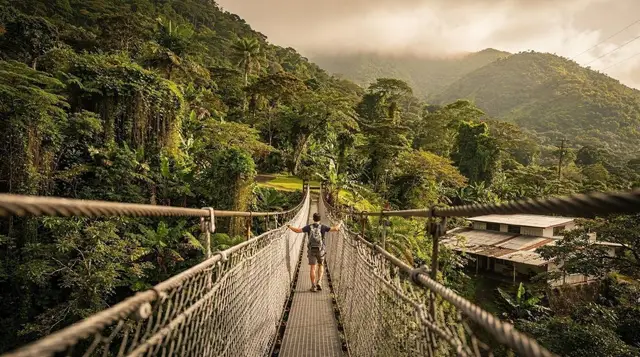
Some operators pair the float with extras: a stop at the Mistico hanging bridges or a lunch add-on. Combine the safari float with hanging bridges and lunch if you’d rather build a fuller half-day around the calm river trip instead of stacking a separate activity afterward.
What you lose by choosing the “wrong” one
Book rafting expecting wildlife, and you’ll be underwhelmed — a few birds at best, no time to look for them properly while you’re paddling through a rapid. Book the safari float expecting an adrenaline rush, and you’ll find it too slow and too calm; nothing about it is meant to get your heart rate up.
Neither trip is a lesser version of the other. A rafter who books the safari float by mistake hasn’t downgraded to “easy rafting” — they’ve booked an entirely different kind of outing, and it will show in how the day feels. The same goes in reverse for a wildlife-focused traveller who ends up on the rapids without meaning to.
A middle option: floating with a slower current
If you want a bit of both — some movement on the water without full white water, and some chance of wildlife without the total calm of the Peñas Blancas — a couple of alternatives sit between the two:
Try a floating picnic experience combining wine and nature on a gentler stretch, which leans toward the relaxed end but adds a social, scenic element that neither the rapids nor the standard safari float are built for.
For a broader comparison of every water-based option near La Fortuna — including river tubing, which sits closer to rafting in feel but without the organised paddling — see rafting vs safari float vs tubing compared.
Practical differences at a glance
| Río Balsa rafting | Peñas Blancas safari float | |
|---|---|---|
| Water | Class II-III rapids | Calm, slow-moving |
| Paddling required | Yes | No (guide rows) |
| Typical duration | Half-day, including transport | Half-day, including transport |
| Best for | Active travellers, teens/adults | Families, wildlife-watchers, photographers |
| Wildlife sightings | Incidental | The main focus |
| Getting wet | Expected, sometimes thoroughly | Minimal, unless it rains |
| Minimum age | Usually higher (operator-dependent) | Usually lower (operator-dependent) |
Prices for both typically sit in a comparable mid-range bracket once round-trip transport from La Fortuna hotels is included; treat any large gap between two listings as a sign to check exactly what’s included (equipment, snacks, photos) rather than a reason to pick the cheaper one on price alone.
Common mistakes when choosing between them
- Assuming the names are interchangeable. “Float” and “safari float” are not the same as “float trip” used loosely for any river outing — confirm which river and which activity a specific tour listing actually describes.
- Booking rafting for young kids because “it sounded fun.” Most Class II-III operators set age or weight minimums for safety reasons; check before booking rather than after arrival.
- Booking the safari float expecting rapids. If the listing mentions calm water, a rowed boat, and wildlife spotting, that is the Peñas Blancas experience — not a lighter rafting trip.
- Ignoring the season. Both rivers run higher in the green season (May to November) and lower in the dry season; ask your operator whether that changes the day’s plan, particularly for rafting.
- Packing a phone you can’t afford to lose on the rapids. Bring a waterproof case or leave electronics behind for the Balsa trip; the safari float is far more forgiving for cameras.
If either activity is part of a longer plan, the rafting near La Fortuna guide and the La Fortuna wildlife spotting guide both fit around a wider things to do in white-water rafting or wildlife tours itinerary, and either pairs well within an adventure-focused or wildlife-focused stay.
Travelling with children changes the calculus too — see La Fortuna with kids for age-appropriate picks, and best combo tour for one day if you’d rather pair one of these river trips with a second activity rather than book it alone. Adrenaline-seekers who find rafting isn’t extreme enough sometimes look at canyoning near La Fortuna as a next step.
Choosing Between Rafting and a Safari Float: Common Questions
Is a safari float just an easier version of rafting?
No. A safari float runs on the slow-moving Río Peñas Blancas in an inflatable boat that a guide rows, with no paddling required and no rapids to navigate. Rafting runs on the Río Balsa, which has genuine Class II-III rapids that you help paddle through. They are built around different goals — wildlife-watching versus white water — not different skill levels of the same trip.
Can I see wildlife while white-water rafting on the Río Balsa?
You will see some birds and riverside vegetation, but the pace and the paddling commands mean wildlife-watching is not the point. Animals near white water tend to keep their distance from noisy rapids and shouted instructions, so sightings are incidental rather than the focus.
Is the Peñas Blancas safari float suitable for young children?
Generally yes, more so than rafting. There is no paddling requirement and the water is calm, though most operators still set a minimum age (commonly around 5 to 8 years) and life jackets are mandatory for everyone. Check the specific tour’s age policy before booking.
Do I need rafting experience for the Río Balsa?
No prior experience is required for Class II-III trips; guides give a safety briefing and paddling instructions before you launch. Reasonable fitness and comfort with getting wet and occasionally splashed by rapids are the main requirements, not prior rafting experience.
Which is better for photography, rafting or the safari float?
The safari float. The boat moves slowly and the guide stops or slows near wildlife, which gives you time to frame a shot. On the Río Balsa, hands are on paddles through the rapids and a phone or camera is a liability unless it is a mounted action camera.
Can I do both the rafting trip and the safari float in the same trip to La Fortuna?
Yes, and many visitors do, usually on different days since both are half-day commitments with transport included. Doing both gives you the adrenaline of the rapids and the slower wildlife-watching experience without having to choose one over the other.
Which one is cheaper?
Prices overlap and vary by operator, but safari floats and rafting trips both typically fall in a similar mid-range bracket once transport and lunch or snacks are included. Price should not be the deciding factor between them — the activity itself should.
Popular La Fortuna experiences on GetYourGuide
Verified deep-linked GetYourGuide tours. Book through these links and we earn a small commission at no cost to you.
GetYourGuide does not provide a product photo for this activity — the image shows the meeting point, photographed by us.