River Tubing Near La Fortuna: What to Expect
What is river tubing near La Fortuna actually like?
You float a stretch of the Balsa River (or a similar Class I-II section) one person per inflatable tube, guided by instructors who steer the group through easy rapids and calm pools. It runs 2 to 3 hours including gear-up, costs roughly 45 to 75 USD, and is generally more accessible than whitewater rafting, though a helmet and life jacket are still mandatory and it is not entirely risk-free.
Where tubing near La Fortuna actually happens
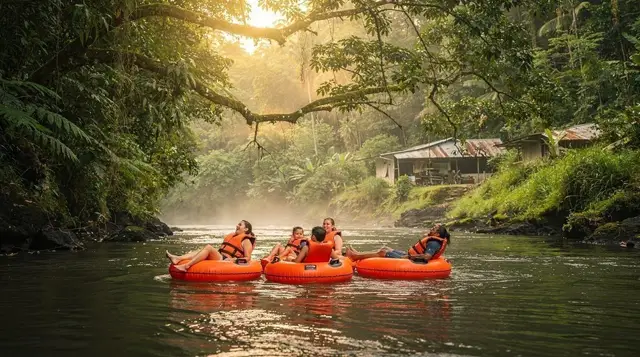
River tubing here is not a resort lazy-river. It is a real river, usually a stretch of the Balsa River a short drive from town, run one person per inflatable tube with a small team of guides positioned along the group. The water moves — sometimes just a lazy current through jungle, sometimes a series of small drops and eddies that bump the tube around — and the whole point is that it needs almost no technique to enjoy. You sit, you float, you occasionally paddle with your hands to line up for a rapid, and the guides do the steering work of keeping the group together and reading the river ahead.
It sits in an odd spot in the things-to-do/tubing-river-floats/ category: gentler than whitewater rafting, livelier than the Peñas Blancas safari float, which trades current for wildlife-watching from a slow-moving raft. If you have not decided which of the three fits your group, our tubing versus rafting versus safari float comparison walks through the differences in one place — this page stays focused on tubing itself.
Who this is actually for
Tubing near La Fortuna earns its “family-friendly” label honestly, more so than most activities that claim it. There is no paddling command to learn, no synchronized strokes, no need to read water before you commit to a line. A guide in front picks the route, guides on the sides catch anyone who drifts wide, and a sweep guide closes the group from behind. That structure is what makes it workable for a wider range of ages and fitness levels than rafting.
That said, “easier than rafting” is not the same as “risk-free.” The current on a Class I-II stretch is still current: tubes flip, people slip off rocks getting in and out, and a guide’s instructions matter in the moment a tube catches an eddy the wrong way. Every reputable operator issues a helmet and a life jacket and makes both mandatory for the whole float, not just the rapid sections. Treat that gear as required equipment, not a formality for the photos.
Who tends to enjoy it most
- Families with kids old enough to meet the operator’s minimum age and weight limits
- Travellers who want river time without committing to a full whitewater trip
- Groups with mixed fitness or swimming ability, since the tube does most of the work
- Anyone who tried — or is nervous about — rafting and wants a gentler introduction to the same rivers
Who might prefer rafting instead
- Travellers who specifically want sustained rapids and a team paddling experience
- Strong swimmers looking for more physical engagement with the water
- Groups who have already done a tubing trip elsewhere and want more intensity this time
What a typical tubing trip looks like, start to finish
Most river tubing near La Fortuna runs as a half-day, though the water time itself is shorter than that suggests.
- Pickup and transfer. Vans collect guests from La Fortuna hotels, usually mid-morning. The drive to the put-in point is typically 20 to 40 minutes depending on which stretch of river the operator uses that day.
- Safety briefing and gear fitting. Helmets and life jackets get fitted before anyone touches the water. Guides cover hand signals, how to position your body in the tube (feet up and pointed downstream, never feet-first standing in moving water), and what to do if you flip. This briefing is short but it is the part that actually matters — listen to it.
- The float itself. Typically 1 to 1.5 hours on the water, alternating calm stretches where you can look up at the jungle canopy with livelier sections where the current picks up and small rapids bounce the group along. Guides call out timing to line up tubes before each drop.
- Break and snack. Many trips build in a stop at a calm pool, sometimes with fresh fruit or a light snack, before finishing the float or heading back.
- Return transfer. Back to hotels by early-to-mid afternoon on a half-day format.
Total time away from your hotel usually runs 3 to 4 hours door to door, with 60 to 90 minutes of that actually spent floating.
Booking options and roughly what they cost
this river tubing adventure on the Arenal side is the most direct option if you want tubing and nothing else bundled in. For a version that adds a snack stop, this La Fortuna tubing trip with fresh fruit included covers the same style of float with a short break built in — useful with kids who run out of steam mid-trip.
If you are still weighing tubing against the calmer alternative, this Peñas Blancas safari float combined with the hanging bridges and lunch gives you a full day built around the gentler, wildlife-focused version instead — worth comparing before you commit either way.
| Activity | Typical price (USD, per person) | Water time | Physical intensity |
|---|---|---|---|
| River tubing | 45–75 | 60–90 min | Low to moderate |
| Safari float (Peñas Blancas) | 45–70 | 90–120 min | Low |
| Whitewater rafting, Class II-III | 75–110 | 120–150 min | Moderate to high |
Prices shift with operator, group size, and whether transport or food is bundled in — treat these as ballpark figures, not quotes, and always check what a specific listing includes before booking.
Safety, honestly
This is the part worth reading slowly, because tubing’s easygoing reputation makes people skip it.
- A helmet and life jacket are mandatory, not optional. Any operator letting guests skip either should be avoided. Rocks are a real hazard on shallower stretches, and the life jacket is what keeps you oriented and afloat if a tube flips.
- Flips happen. Not often, and rarely dramatically, but tubes do roll over rocks or in eddies. The briefing covers what to do — feet downstream, arms in, wait for a guide or grab the tube — and it is worth actually listening rather than treating it as boilerplate.
- River levels change with rain, and this region gets rain most of the year, more so from May through November. Operators check flow before each trip and will delay, reroute, or cancel if a river is running too high, which happens more often in the wetter months. That is a safety decision, not a scheduling inconvenience — do not push an operator to run a trip they have called off.
- Footwear matters. Secured sandals with an ankle strap, not flip-flops, which come off in the current and turn into one more thing a guide has to retrieve.
- This is not the place for pre-existing back or neck issues to be downplayed. Tell the operator in advance; most can advise honestly on whether a given day’s water conditions are suitable.
For the harder-hitting version of these same rules — because whitewater rafting shares the same rivers and many of the same risks at a higher intensity — see rafting safety and what to bring.
What to wear and bring
- Swimsuit under quick-dry clothing (leggings or board shorts hold up better on rocky entries than loose fabric)
- Secured water sandals or old sneakers with an ankle strap — never flip-flops
- A dry bag if you want a phone or camera along; most operators do not supply waterproof cases
- Sunscreen, applied before you leave the hotel, since a midday float leaves arms and shoulders exposed for over an hour
- A full change of clothes and a towel left in the vehicle for the ride back
- Cash for tips — guides on river trips typically receive 5 to 10 USD per person for a half-day, separate from any service charge already on a tour invoice
Leave valuables — passports, jewellery, anything not waterproof and not essential — at the hotel. Operators are not responsible for items lost in the river.
Tubing with kids
Because tubing needs no paddling skill, it tends to be the river activity families reach for before rafting. Minimum age and weight requirements vary by operator — typically somewhere around 5 to 8 years old and 25 kg — so confirm before booking rather than assuming a young child qualifies. Kids in the recommended age range generally do well on the calmer stretches; the small rapids read as fun rather than frightening when a guide is close by and the group moves as a unit.
For a broader look at pacing an itinerary with children in this region, see family tubing options and the wider La Fortuna with kids guide, which covers which activities suit which ages across the whole area, not just on the water.
Combining tubing with the rest of your day
Tubing’s short water time — an hour or so — makes it easy to pair with something else without turning the day into a marathon. Groups commonly combine a tubing morning with:
- A relaxed afternoon at La Fortuna town centre
- A visit to the Mistico Hanging Bridges
- An evening soak, since river guides confirm that muscles used to brace in a tube tend to appreciate the heat afterward
If you are building out a longer stay, how many days in La Fortuna and our adventure-focused itinerary both slot tubing in alongside the area’s other river and volcano activities without over-scheduling any single day.
Tubing versus the alternatives, briefly
This page deliberately does not re-run the full comparison — that lives in tubing versus rafting versus safari float — but the short version, for anyone deciding right now:
- Choose tubing if you want river time with minimal skill required, a shorter water session, and a format that works well with kids or mixed-ability groups.
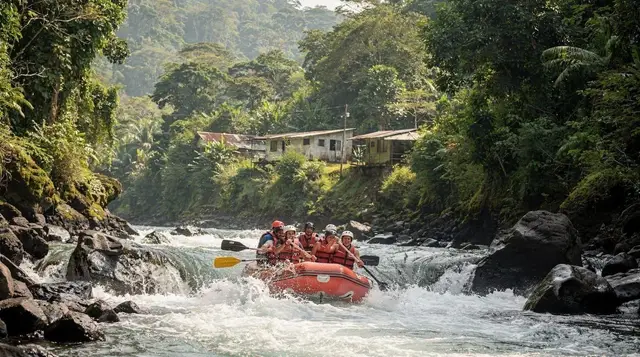
- Choose rafting if you want sustained rapids, a team paddling experience, and more physical engagement — see the rafting near La Fortuna guide and the Balsa River rafting guide for what that actually involves, including this Class II-III whitewater rafting trip on the Arenal side.
- Choose the safari float if wildlife-watching matters more than current, and you would rather drift past sloths and birds than bounce through small rapids.
None of the three is objectively better — they are different rivers wearing similar gear.
Frequently asked questions about river tubing near La Fortuna
Is river tubing near La Fortuna safe for beginners?
Yes, most operators run it as a beginner-friendly activity on Class I-II water with guides positioned throughout the group. Helmets and life jackets are compulsory, not optional, and a short safety briefing covers how to sit in the tube, how to handle a flip, and how to signal a guide.
How is tubing different from rafting on the same rivers?
Tubing uses individual inflatable tubes with no paddling technique required, while rafting uses a shared inflatable boat that the group paddles together through bigger rapids under a guide’s commands. Tubing is calmer and easier to join with limited fitness; rafting delivers more sustained whitewater. See our tubing versus rafting versus safari float comparison for the full breakdown.
What is the minimum age for river tubing near La Fortuna?
Most operators set a minimum age of 5 to 8 years old and a minimum weight around 25 kg, with the exact threshold varying by company and by the river section used that day. Confirm the age policy when booking if you are travelling with young children.
Do I need swimming experience to go tubing?
Basic comfort in water is expected, but the life jacket keeps you afloat even if you flip out of the tube, and guides are trained to reach anyone who falls behind. You do not need to be a strong swimmer, but non-swimmers should tell the guide before starting.
What should I wear and bring for river tubing?
Wear a swimsuit under quick-dry clothes, secure sandals with an ankle strap (never flip-flops), and leave valuables at the hotel. Bring a change of clothes and a dry bag if you want a phone or camera on the water, since most tubing companies do not provide waterproof cases.
Can I go tubing during the green season?
Yes, and many guides prefer it, since rain keeps water levels consistent for a livelier float. Operators monitor river flow daily and will cancel or reroute a trip if a river runs too high or too fast after heavy rain, so build a flexible day around it in the wetter months.
How does tubing compare to the Peñas Blancas safari float?
The Peñas Blancas float is a slower, flatter version aimed at wildlife spotting from a raft rather than an individual tube, with almost no rapids. Tubing on the Balsa River has more current and small drops, so it feels more like a ride and less like a nature cruise.
Tubing and river floats on GetYourGuide
Verified deep-linked GetYourGuide tours. Book through these links and we earn a small commission at no cost to you.
GetYourGuide does not provide a product photo for this activity — the image shows the meeting point, photographed by us.