A small mountain town with a very specific claim to fame
Zarcero is not, on paper, much of a destination. It’s a farming town of a few thousand people, up in the cool highlands of Alfaro Ruiz canton, known regionally for cheese and for the peach preserves sold from roadside stalls.
What actually pulls travellers off the road is the small park in front of the town’s church: a topiary garden where dozens of cypress bushes (Cupressus lusitanica, a fast-growing local variety) have been sculpted since the 1960s into arches, spirals, and figures — an elephant, an oxcart, a bullfighter, a couple dancing, a helicopter, a monkey riding a motorbike. It’s whimsical in a way that nothing else in this part of the country is, and it photographs extremely well against the whitewashed twin-towered church behind it.
The gardener behind it, Evangelista Blanco, started shaping the hedges in 1964 and kept at it for decades; the tradition has been maintained by the municipality since. None of this is a secret — Zarcero shows up in most guidebooks to Costa Rica precisely because it sits on Route 141, the mountain road that a large share of travellers already drive between La Fortuna and San José. The town earns its place on an itinerary not because it’s a must-see in its own right, but because it’s already on the way.
That’s the honest framing for this page, and it’s worth being direct about it up front: Zarcero is a stopover, not a base. It belongs to this site’s northern lowlands coverage because it sits along the inland route connecting La Fortuna to the Central Valley — closer in spirit to a rest stop on a long drive than to an excursion from Arenal. If you’re weighing a full day trip from La Fortuna, this isn’t it; the better use of Zarcero is as a planned break on a travel day, ideally with a coffee and twenty minutes of wandering the topiaries before getting back in the car.
Where Zarcero actually sits
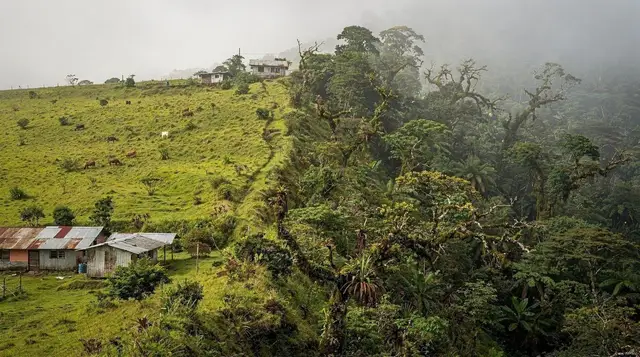
Zarcero sits at around 1,736 m in the mountains of Alajuela province, considerably higher and cooler than La Fortuna’s roughly 250 m in the plains below. The climb up from the lowlands is part of the experience: forest and pasture give way to cloud-brushed hills, dairy cattle, and a noticeably crisper feel to the air. Route 141 winds up from Ciudad Quesada through this highland corridor before dropping back down toward Alajuela and San José.
A word on Ciudad Quesada, since the two towns are often mentioned together: Ciudad Quesada (also called San Carlos, after the canton) is the larger regional hub about 45 minutes from La Fortuna, with its own services, its own attractions, and its own page on this site. It is not covered here — this page is about Zarcero specifically, a smaller and quieter stop another 30–40 minutes further along the same road toward the capital. Conflating the two is an easy mistake for a first-time visitor scanning a map, but they serve different purposes on a trip: Ciudad Quesada as a functional stop close to La Fortuna, Zarcero as a scenic break further along, closer to the Central Valley.
The topiary park, in practice
The park (Parque Francisco Alvarado, though almost nobody calls it that) sits directly in front of the Iglesia San Rafael, the town’s church, in the compact grid of streets that makes up central Zarcero. It’s free, unfenced, open at all hours, and small enough to see properly in twenty to thirty minutes. There’s no ticket booth, no set route, and no guide required — you walk the paths between the sculpted hedges, read the small identifying signs where they exist, and take photos.
A few practical notes that make the visit smoother:
- Morning light is better. The topiaries face different directions, and the low sun in the first hours after opening lights the greenery more evenly than the flatter light of midday.
- Weekends bring more foot traffic, including local families and church visitors around Sunday services. A weekday morning is quieter.
- The church itself is worth a look. Its painted, patterned interior is a small surprise after the restrained exterior — a five-minute stop if it’s open.
- Parking is on-street around the park; it fills up on weekends and around holidays, less so on an ordinary weekday morning.
- There’s very little shade midday, and at this elevation the sun is sharp even when the air feels cool. A hat helps more than you’d expect.
There isn’t a “wrong” time of year to see it — the hedges are maintained year-round — but the wet season’s afternoon cloud and rain (common from May to November across this part of the country) tend to flatten photos and shorten the comfortable window for wandering outside. If your route puts you through Zarcero on a wet-season afternoon, expect grey skies rather than the postcard version.
What else is around town
Beyond the park itself, Zarcero’s appeal is low-key and mostly food-related:
- Cheese and dairy products. The highland pastures around Zarcero support a real dairy tradition, and roadside stands and small shops sell local cheese, worth a stop even if the topiaries weren’t here.
- Peach and blackberry preserves. Cooler-climate fruit that doesn’t grow in the lowlands around La Fortuna shows up here in jams and sweets sold from small stalls.
- The central market area, a block or two from the park, for a simple lunch at a soda (a casual local restaurant) rather than a tourist-facing menu.
- Views back down toward the lowlands on clear mornings, from the higher streets at the edge of town.
None of this adds up to a full day. Realistically, most visitors spend an hour to two hours in Zarcero: enough time for the park, a coffee, maybe a cheese purchase, and a short walk, before continuing the drive.
How Zarcero fits into a La Fortuna trip
This is the part worth being blunt about, because it’s the mistake this page exists to prevent: Zarcero is not an excursion from La Fortuna. It doesn’t belong on a list of day trips alongside Río Celeste or Caño Negro — those are genuine destinations with hours of activity once you arrive. Zarcero is a waypoint on the road to somewhere else, and the “somewhere else” is usually San José, the Central Valley, or a flight home through SJO.
The two situations where Zarcero actually makes sense on an itinerary:
- You’re driving from La Fortuna to San José (or the reverse, arriving via SJO), and you’d rather break up the roughly three-hour drive than do it in one push. Zarcero sits close to the midpoint and gives you a reason to stop that isn’t just a gas station.
- You’re renting a car and taking the inland route rather than flying between regions, and you’re the kind of traveller who enjoys small, odd stops along a drive as much as headline attractions.
If neither applies — if you’re staying in La Fortuna for your whole visit and doing day trips from Arenal — there’s little reason to route yourself out here specifically. The travel time alone (well over an hour each way) eats most of a morning for a park you can see properly in half that time.
| Coming from La Fortuna | Zarcero makes sense if… |
|---|---|
| Driving to San José / flying out of SJO | You want a break partway through the ~3h drive |
| Driving to the Central Valley for a Manuel Antonio or Caribbean leg | It’s already on your route via Route 141 |
| Doing day trips from La Fortuna only | Skip it — the drive time doesn’t pay off for a same-day return |
| Flying in via SJO and heading straight to La Fortuna | Same logic, in reverse: a good first stop after landing |
Before you leave the La Fortuna area
If Zarcero is your last stop before the highlands and San José, it’s worth using your final morning near Arenal well rather than rushing straight to the road. A short activity before checkout keeps the day from feeling like pure transit. Two options that fit a half-day window near La Fortuna:
If you haven’t yet had a soak in the geothermal-heated water the region is known for, a morning ticket is easy to fit in before a midday departure — the Baldi Hot Springs admission ticket and the Los Lagos hot springs day pass both work as a few-hour visit rather than a full day, which suits a departure morning better than the larger resort complexes.
Travellers who’d rather move than soak, and still have a morning free, sometimes fit in a shorter walk on the 1968 lava trail before driving out — the Arenal Volcano 1968 Trail hike runs a few hours and ends near enough to town to leave time for the road afterward.
Once you’re on Route 141 heading toward the highlands, the drive itself passes through Ciudad Quesada and climbs into cooler country before Zarcero. From there it’s a further descent through Alajuela toward San José or SJO, depending on where the trip goes next. Some travellers also detour toward Poás Volcano on the same general leg, since it sits in the same highland belt not far off the route — though that adds real time and its own advance-booking requirements, worth checking separately.
If your route instead runs through the wider northern lowlands — toward Juan Castro Blanco National Park or the wetlands near Laguna del Hule — Zarcero sits at the edge of that same general corridor, though it’s a distinct stop from either.
Renting a car vs. transfers for this leg
Whether Zarcero is easy to include depends heavily on how you’re moving between regions. With a rental car, it’s a natural, unplanned stop — you simply pull off Route 141 for an hour. Our guide to renting a car for La Fortuna covers what to expect on this kind of mountain driving, including the one-lane bridges and mist that show up on the climb.
Without a car, working Zarcero into a trip is harder. Most shuttle and shared-transfer services between La Fortuna and San José run direct, without a stop here, and public buses along this route don’t build in sightseeing time. If you’re relying on transfers rather than a rental, it’s usually more realistic to treat Zarcero as something you glimpse from the road rather than a planned stop — see our notes on getting from SJO to La Fortuna for what the direct routing actually looks like, and plan a private or self-driven leg specifically if the topiary park matters to you.
Two more resources worth a look before this leg of the trip: our rundown of common La Fortuna travel mistakes, which covers a few routing errors beyond this one, and the San José stopover guide for what to do with time on the other end of the drive.
If a rental car is part of the plan for more than just this leg, the La Fortuna with a rental car itinerary and the wider San José–La Fortuna–Monteverde–Manuel Antonio loop both show where a stop like Zarcero can slot in without derailing the schedule. For general trip pacing questions, our travel tips section and the broader planning category cover related logistics.
Zarcero FAQs: Topiary Gardens and the Route to San José
What is Zarcero known for?
Zarcero is known for the topiary garden in its central park, where cypress hedges have been trimmed into animal and object shapes — an elephant, an oxcart, a couple dancing — since the 1960s, set against the town’s twin-towered church. It’s also a small dairy-farming town known locally for cheese and highland-fruit preserves.
Is Zarcero part of La Fortuna’s day-trip area?
No. Zarcero sits well over an hour from La Fortuna on the road toward San José and the Central Valley, in a different direction and elevation band from the volcano-area attractions clustered around Arenal. It’s best treated as a stop on a travel day between regions, not a day trip from your La Fortuna base.
How long should I spend in Zarcero?
An hour to two hours is enough for most visitors: time to walk the topiary park, look inside the church, and grab a coffee or some local cheese before continuing the drive. It isn’t a destination to build a full day around, and there’s no compelling reason to stay overnight.
Is the topiary park free?
Yes. The park is open, unfenced, and free to enter at any time. There’s no admission fee and no scheduled tour — you walk the paths at your own pace.
Is Zarcero the same as Ciudad Quesada?
No, and they’re easy to mix up. Ciudad Quesada (also called San Carlos) is the larger town closer to La Fortuna, about 45 minutes away, with its own attractions and its own guide on this site. Zarcero is smaller, further along Route 141 toward San José, and known specifically for the topiary park rather than being a regional hub.
What’s the best time of day to visit the topiary garden?
Morning, ideally on a weekday. The light is softer and more even for photos, the streets and parking are quieter, and — especially in the wet season from May to November — afternoons are more likely to bring rain or heavy cloud that flattens the visit.
Can I visit Zarcero without a rental car?
It’s difficult. Most shuttles and shared transfers between La Fortuna and San José run directly, without stopping here, and public buses on this route aren’t set up for sightseeing breaks. A rental car or a private transfer arranged specifically to include a stop is the realistic way to see it properly.
Does Zarcero have hotels worth booking?
Not really, for most travellers. Zarcero has some basic local lodging, but nothing that competes with staying near La Fortuna, Monteverde, or San José for a night. Treat it as a stop measured in hours, not a place to build an overnight into your route.