What to Eat in La Fortuna
What should I eat in La Fortuna?
Start with gallo pinto at breakfast, eat a casado at a soda for lunch or dinner — rice, beans, salad, plantain, and a choice of meat or fish — and snack on tropical fruit like pineapple, mango, and cas from roadside stands. Sodas are open to everyone, not just locals, and paying in colones there avoids the poor exchange rate dollars usually get.
The Three Dishes You’ll Actually Eat in La Fortuna
Costa Rican food doesn’t get much attention next to its neighbors’ cuisines, and La Fortuna won’t change your mind with anything showy. What it offers instead is a small, consistent set of dishes done well and sold cheap: rice and beans in the morning, a full plate at midday, and whatever fruit is ripe that week from a roadside stand. Once you know the pattern — gallo pinto, casado, fresco natural — ordering anywhere in town stops being a guessing game.
This guide covers what’s on the plate, where the value actually is, and the one habit that saves real money on every meal you eat here: paying in colones instead of dollars. For street-by-street recommendations in town, the La Fortuna town centre restaurants guide covers specific addresses by neighborhood — this page stays with the food itself.
Gallo Pinto: How the Day Starts
Gallo pinto — literally “spotted rooster,” a nod to the speckled look of rice mixed through black beans — is the closest thing Costa Rica has to a national dish, and it’s the default breakfast in La Fortuna as much as anywhere else in the country. The beans are cooked the day before, then the rice is fried through them the next morning with onion, sweet pepper, and cilantro, usually finished with a dash of Salsa Lizano — a tangy, vegetable-based sauce that’s on every table and sold in nearly every supermarket if you want to bring a bottle home.
A full gallo pinto breakfast typically comes with two eggs (scrambled or fried, your choice), a slice of local cheese, and a piece of fried or sweet plantain, sometimes with natilla, a soured cream closer to crème fraîche than sour cream. Coffee is included or a dollar or two extra. Expect to pay somewhere around 4 to 7 USD for the full plate at a soda in town, more at a hotel restaurant catering to tourists.
Gallo pinto is technically a breakfast dish, but plenty of sodas will make it any time of day if you ask — it reheats well and locals eat it as a side with dinner too. Don’t be shy about ordering it at 4pm; nobody will blink.
The Casado: A Full Plate, One Price
If gallo pinto owns breakfast, the casado owns everything after. The name means “married man,” on the idea that it’s the kind of balanced, no-nonsense plate a wife would pack — a phrase that’s aged the way you’d expect but the dish has stuck around regardless. A casado is built the same way at every soda in the country: rice, black beans, a simple cabbage-and-tomato salad, fried or sweet plantain, and a choice of protein.
| Protein choice | What you get | Typical price (soda, La Fortuna) |
|---|---|---|
| Chicken (pollo) | Grilled or fried chicken, usually thigh or breast | 6-9 USD |
| Beef (carne) | Thin grilled or stewed beef | 7-10 USD |
| Pork (cerdo) | Grilled pork chop or chicharrón | 7-10 USD |
| Fish (pescado) | Whole fried tilapia or a fillet | 8-12 USD |
| Vegetarian | Extra vegetables, egg, or fried cheese in place of meat | 5-8 USD |
That price includes everything on the plate — there’s no upselling of sides the way a Western restaurant menu is built. A casado at a soda usually costs less than a single burger at a restaurant aimed at tour groups, and it’s a genuinely larger, more balanced meal. If you’re trying to keep costs down across a longer trip, casados at sodas are the most reliable lever you have — see the La Fortuna on a budget guide and the matching budget itinerary for how that adds up over a week.
What a Soda Actually Is — and Who It’s For
The word “soda” trips up a lot of first-time visitors, since in English it means a soft drink. In Costa Rica it means a small, usually family-run restaurant serving home-style food at home-style prices — closer to a diner or a canteen than anything fancier. A soda might be a few plastic tables under a tin roof, a counter with a handwritten menu, or a proper dining room with a fan and a TV playing fútbol in the corner.
Here’s the piece worth being clear about: sodas are not a locals-only space that tourists are somehow trespassing into. They are ordinary public restaurants, open to anyone who walks in, and in a town as tourism-dependent as La Fortuna, plenty of soda owners are used to visitors and happy to have them. Treating a soda as some kind of authentic-experience novelty misses the point a little — it’s simply where the food is good and the price is fair, for everyone, which is exactly why it’s also the smartest place to eat if you’re watching your budget. Nobody in La Fortuna will think it’s strange that you walked in.
Sodas cluster around La Fortuna’s town centre — near the church, along the main strip toward the bus terminal, and scattered on the roads out toward Tabacón and El Castillo. The town centre guide has the layout if you’re getting oriented, and the restaurants guide breaks specific places down by which part of town they’re in.
Paying in Colones vs Dollars: The Real Difference at the Table
Costa Rica runs on a dual-currency system for tourism. Tours, hotels, and mid-range restaurants quote and often prefer US dollars. Sodas are the opposite: most price their menus in colones, and while many will still accept a dollar bill out of practicality, the exchange rate applied at the till is rarely in your favor. A soda owner making change for a 20 USD bill on a 4,000 colón meal isn’t running a currency desk — they’re converting at a round, convenient number that tends to round in their favor, not yours.
The fix is simple and doesn’t require much colón cash on hand: withdraw a modest amount from an ATM (Banco Nacional and BAC Credomatic machines in town both dispense colones, sometimes with a choice of currency — always choose colones and decline the ATM’s own conversion rate) and use it specifically for sodas, taxis, and small purchases. Save dollars for tours, park entrances, and anything already quoted in USD.
| Payment method at a soda | What typically happens |
|---|---|
| Colones in cash | You pay the menu price, no conversion loss |
| US dollars in cash | Change given in colones at an informal, usually unfavorable rate |
| Large USD bills (50s, 100s) | Frequently refused outright — sodas rarely carry that much change |
| Card | Accepted at some sodas in town, rarely at smaller roadside ones |
This isn’t a huge sum on any single meal — a percentage point or two of a five-dollar plate — but it adds up over a week of three meals a day, and it’s one of the easiest habits to build on day one. For the wider picture of what a trip here actually costs once meals, tours, and transport are all added up, the blog post on what a week in La Fortuna really costs breaks it down line by line, and the note on tipping in Costa Rica covers the related question of what’s already built into the bill.
One thing that is already built in, everywhere: by law, restaurant bills in Costa Rica carry a mandatory 10 percent service charge and 13 percent sales tax, both added automatically to the total (often shown as “imp. serv.” on the receipt). That service charge functions as the tip for restaurant staff — you’re not expected to leave anything extra on top of it at a soda, unlike guided tours, where a separate gratuity is the norm.
Tropical Fruit You’ll Actually See on a Plate
Fruit in La Fortuna is not a novelty item — it’s a daily habit, sold from carts and small stands around town and served as a matter of course alongside breakfast. What’s available shifts with the season, but a few things are close to constant:
- Pineapple (piña) — grown throughout the northern lowlands, available year-round, and noticeably sweeter than what most visitors are used to at home.
- Papaya — another year-round staple, usually served in wedges at breakfast or blended into a fresco (fruit drink, either with water — en agua — or milk — en leche).
- Banana and plantain (banano/plátano) — the banana is the sweet snacking fruit; the plantain, its starchier cousin, is what actually shows up fried or boiled on your casado plate.
- Mango — at its best from roughly March through June, sold ripe and cheap from roadside stands during that window.
- Cas — a small, tart, pale-green fruit related to guava, almost never eaten raw but blended into one of the most distinctly Costa Rican juices you’ll find; sharp and refreshing rather than sweet.
- Maracuyá (passion fruit) and carambola (starfruit) — both turn up in juices and desserts, more occasionally as fresh fruit on a plate.
A fresco natural — fresh fruit blended with water or milk, no added syrup at a decent soda — is one of the best-value drinks in town, usually cheaper than a bottled soft drink and considerably better. If a menu lists “natural” or “en agua/en leche” next to a fruit name, that’s what it means.
Coffee, Chocolate, and What Else to Drink
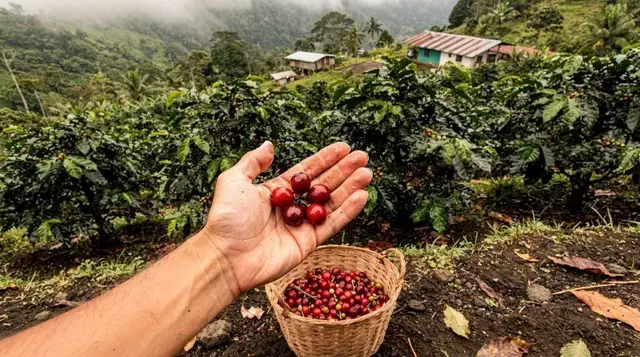
Costa Rican coffee has a real reputation, and the irony most visitors run into is that the best of it is grown for export — a decent local café con leche in town is good, not necessarily exceptional, unless you seek out a place that roasts and brews specialty beans specifically. If coffee and cacao interest you beyond the cup, the region around La Fortuna runs proper tastings and farm tours; the coffee and chocolate tours guide and the more hands-on chocolate and cacao workshops guide cover what those actually involve, from bean to bar.
Beyond coffee, agua dulce — water sweetened with unrefined cane sugar (tapa dulce), sometimes served hot with a cinnamon stick — is a traditional drink worth trying once, and horchata (here usually rice- and cinnamon-based, distinct from the Mexican version) shows up on some soda menus. Beer options lean toward Imperial, the national lager, present on essentially every menu in town.
If you’d rather learn the cooking than just eat the results, a hands-on class is a genuinely good use of a rainy afternoon in La Fortuna — the kind of day when the volcano’s socked in and an outdoor tour isn’t the plan anyway. A Costa Rican cooking class with a tasting menu walks through several dishes in one sitting, while the three-hour cooking class that ends with dinner goes deeper into technique before you sit down to eat what you made. Either one will teach you to make a proper gallo pinto and casado at home, which is more than a meal out will do.
Vegetarian, Vegan, and Dietary Notes
Vegetarians eat reasonably well in La Fortuna without much extra effort: gallo pinto, rice, beans, plantain, salad, and a casado built around eggs, extra vegetables, or fried cheese instead of meat are all standard, familiar requests at any soda. Ask for a “casado sin carne” (casado without meat) and most places will adjust without fuss.
Vegan travelers need to ask a bit more directly, since beans are sometimes cooked with a bit of lard for flavor and natilla or cheese may be added to a plate by default — a quick “¿tiene manteca?” (does it have lard) when ordering beans, or asking for the plate “sin queso, sin natilla,” heads off most surprises. It’s rarely a problem once you ask; it’s just not the default assumption the way it might be at a restaurant built around dietary labels.
Gluten-free travelers are generally well served, since rice, beans, plantain, and grilled meat or fish form the backbone of most meals with no bread or pasta required — just double-check sauces if you have a serious allergy rather than a preference.
A Sample Day of Eating in La Fortuna
For a rough sense of what a full day looks like on the ground:
| Meal | What | Where |
|---|---|---|
| Breakfast | Gallo pinto with eggs, cheese, and coffee | A soda near the town centre |
| Mid-morning | Fresh pineapple or mango from a stand | Roadside, walking through town |
| Lunch | Casado with fish or chicken | A soda, paid in colones |
| Afternoon | Fresco natural (fruit juice) | Same soda or a second stop |
| Dinner | Casado again, or a tasting menu if you’ve booked a cooking class | Soda, or a class venue |
If your itinerary includes a tour with a meal built in, that’s worth factoring into the day’s food plan rather than treated as a bonus — the safari float and hanging bridges tour with lunch included is a good example, since it covers a full midday meal alongside the activity and can replace a separate stop at a soda that day.
Families traveling with kids sometimes prefer a more hands-on food experience over a straight meal — the sloth-spotting tour that includes hands-on tortilla making pairs wildlife watching with an activity kids can actually participate in, which tends to land better than a formal dinner. For more on planning meals and activities around children’s attention spans generally, the La Fortuna with kids guide has broader advice beyond food specifically.
Getting the Basics Right Before You Arrive
None of this requires much preparation — you don’t need reservations at a soda, and menus are usually simple enough to point at even with no Spanish. A little vocabulary helps all the same: “casado” for the set lunch plate, “para llevar” if you want it to go, and “la cuenta” when you’re ready to pay. If you’re new to the area more broadly, the first-time in La Fortuna guide and the common mistakes to avoid cover the wider set of things worth knowing before you land, food included.
For a sense of how food fits into a longer stay, how many days in La Fortuna is worth a look if you’re still building your itinerary, and the things to do in La Fortuna hub and the food and drink category page round up everything else on the eating and drinking side of a trip here.
Eating in La Fortuna: Common Questions
What is a soda in Costa Rica?
A soda is a small, family-run restaurant serving home-style Costa Rican food at low prices — the local equivalent of a diner. The word has nothing to do with soft drinks. In La Fortuna, sodas are the most common place to eat and generally the best value in town.
Is gallo pinto eaten all day or just at breakfast?
Gallo pinto is technically a breakfast dish — rice and beans cooked together with onion, pepper, and cilantro — usually served with eggs, cheese, and fried plantain. Most sodas in La Fortuna serve it all morning, and some serve it any time of day if you ask.
What’s included in a casado?
A casado is a set plate built around rice and beans, with a small salad, fried or sweet plantain, and a choice of protein — chicken, beef, pork, fish, or a vegetarian option. It’s the standard lunch and dinner order at a soda and normally costs less than a single dish at a tourist-oriented restaurant.
Should I pay in dollars or colones at a soda?
Colones. Sodas that accept dollars almost always convert at a rate worse than the bank rate, and small ones may not have exact change at all. Carrying a few thousand colones for meals is the single easiest way to avoid overpaying in La Fortuna.
Are sodas only for locals, or can tourists eat there too?
Sodas are open to anyone and welcome tourists — they are not a locals-only space you need an invitation to enter. They’re simply where Ticos eat because the food is good and the price is fair, and visitors are free to sit down and order the same way.
What fruits are in season around La Fortuna?
Pineapple, banana, and papaya are available year-round. Mango peaks from around March to June, and cas — a tart local guava relative used mostly in juice — shows up most of the year. Roadside stands and the weekend farmers market are the best places to find what’s actually in season.
Is Costa Rican food spicy?
No. Costa Rican cooking leans mild — the flavor comes from sofrito, cilantro, and slow-cooked beans rather than chile heat. If you want spice, a bottle of Salsa Lizano or a small dish of chile picante is usually available on the table to add yourself.
Are there vegetarian options at sodas?
Yes. Gallo pinto, rice and beans, plantain, salad, and vegetable-based casados are standard at most sodas, and it’s normal to ask for a casado without meat. Strict vegan requests need more explanation, since beans are sometimes cooked with lard, but plenty of soda owners will accommodate it if asked.
Food and drink tours on GetYourGuide
Verified deep-linked GetYourGuide tours. Book through these links and we earn a small commission at no cost to you.
GetYourGuide does not provide a product photo for this activity — the image shows the meeting point, photographed by us.