Coffee, Chocolate and Sugar Cane Tours in La Fortuna
What is a coffee and chocolate tour in La Fortuna, exactly?
It's a two to three hour walk through a small family-run demonstration farm near La Fortuna, showing how coffee, cacao and sugar cane are traditionally grown and processed, ending with a roasting and tasting session. It is not a visit to a working commercial plantation, since the region around Arenal doesn't grow coffee or cacao at industrial scale.
A small farm, not a plantation you fly a drone over
Every visitor who books a “coffee and chocolate tour” near La Fortuna imagines something like the plantations they’ve seen in documentaries: rows of trees running to the horizon, trucks hauling sacks, a processing plant the size of a warehouse. That is not what you get here, and it’s worth saying plainly before you book: what’s on offer around La Fortuna is a small, family-run demonstration farm, usually a few hectares at most, planted and organised specifically to walk visitors through the traditional steps of growing coffee, cacao and sugar cane by hand.
That’s not a downgrade. It’s a different, and in some ways more honest, kind of experience. You get a guide who often grew up on the property, or whose family has run it for two or three generations, walking you past a handful of coffee bushes, a stand of cacao trees, and a patch of sugar cane, explaining each plant at the pace of a conversation rather than a factory tour. You crack open a cacao pod yourself, chew the sweet white pulp around the beans, watch someone roast coffee over a wood fire in a hand-turned drum, and press sugar cane through an old-fashioned mill. It’s tactile, it’s slow, and it’s built for an audience — which is exactly what it should be described as.
Why La Fortuna isn’t coffee or cacao country
Costa Rica genuinely is known for good coffee, and Costa Rican chocolate has a growing reputation too. But neither of those reputations is built on the plains around Arenal. The country’s serious coffee regions — Tarrazú, the Central Valley highlands around San José, the Naranjo and Alajuela slopes — sit at higher elevation and further south, with the volcanic, well-drained soil and cooler nights that arabica coffee prefers. Commercial cacao, historically, grew mainly on the Caribbean side of the country, in the humid lowlands near Limón and Sarapiquí, and even there it’s a modest industry by world standards next to producers like Ivory Coast or Ecuador.
La Fortuna sits at around 250 metres of altitude in the northern lowlands, warm and wet nearly year-round, which is good for growing a few coffee bushes and cacao trees as a garden crop, and good for tourism, but it was never a commercial coffee or cacao belt. The farms that run these tours grow just enough of each plant to demonstrate the full cycle to a group of eight or ten visitors a few times a day. If a guide tells you this is “the coffee region of Costa Rica,” that’s a sales pitch, not geography — and it’s worth knowing so you arrive with the right expectations rather than a slightly deflated ones.
What actually happens on the tour
The exact order varies by farm, but the shape is consistent enough to describe honestly.
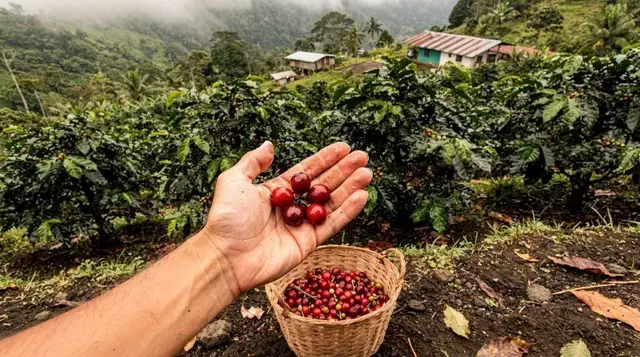
You’ll usually start with a short walk through the growing area — coffee bushes at different stages, a handful of cacao trees often still carrying pods in yellow, orange and deep red, and a stand of sugar cane. The guide explains how coffee cherries are picked (only the ripe red ones, by hand, several passes per season) and how that differs completely from mechanised harvesting elsewhere.
Next comes the hands-on section, and it’s the best part of the visit. You crack open a cacao pod, taste the pulp, and watch or help with roasting the beans over an open flame, then grinding them by hand into a dark, bitter paste that gets mixed with sugar and sometimes cinnamon into drinking chocolate or simple bars. Coffee gets the same treatment: roasting in a hand-cranked drum, grinding, and a small tasting of the finished cup, often alongside an explanation of how it’s graded and exported when it is grown commercially elsewhere in the country. Sugar cane usually gets pressed through an old two-roller mill, and the fresh juice — guarapo — is handed round to drink on the spot.
Most tours end with a seated tasting: coffee, hot chocolate, sometimes a coffee-honey combination, and a chance to buy bags of roasted beans or bars of chocolate directly from the farm.
The tours available, compared
| Tour | Length | What it adds | Best for |
|---|---|---|---|
| Coffee, honey and chocolate tour | ~2–2.5 h | Adds a beekeeping and honey-tasting stop to the coffee/cacao walk | Travellers who want the full small-farm story in one stop |
| Coffee and chocolate farm tour | ~2–3 h | Focused, unhurried version of the classic farm walk and tasting | First-timers, rainy afternoons, anyone short on time |
| Sloth tours with tortilla making | ~3–3.5 h | Combines a short wildlife walk with hands-on tortilla-making, often alongside the farm elements | Families, and anyone who wants wildlife and culture in one booking |
this coffee, honey and chocolate tour is the broadest of the three, useful if you’d rather cover coffee, cacao and honey production in a single well-paced outing instead of booking separately. If you only want the classic version — coffee, cacao, sugar cane, done properly and without padding — this coffee and chocolate farm tour is the more focused option.
And if you’d like to pair the farm elements with a short wildlife walk and a hands-on cooking demonstration, this sloth-watching and tortilla-making tour folds both into one morning or afternoon.
Who this suits, and who should skip it
This is one of the best things to do around La Fortuna if you’re travelling with young children or with a grandparent who has no interest in ziplines, hanging bridges or a 500-step descent to a waterfall. It’s also a strong choice for a rainy afternoon, since most of the processing area is under a roof and the walking portion is short. See our guide to planning around La Fortuna’s afternoon rain if that’s a factor in your schedule.
It’s a weaker fit if you’re chasing adrenaline, or if you’ve specifically budgeted a day for a “plantation visit” in the agricultural-tourism sense — a working export farm with acres of trees and industrial processing equipment. That experience exists in Costa Rica, but it’s in Tarrazú or the Caribbean lowlands, not here. Coffee obsessives who want to see a full wet mill and drying patio in operation will find the demonstration scale here charming but limited.
What to bring and what to expect
Dress is casual — closed shoes are sensible since you’ll be on farm paths that can be muddy after rain, but nothing technical is needed. Bring a light rain jacket in green season, since these tours run rain or shine and the covered areas don’t cover every step of the walk. A few dollars in small bills is worth carrying if you plan to buy coffee or chocolate at the end, since not every small farm has a card machine that works reliably.
Most tours include hotel pickup and drop-off from La Fortuna town centre and the surrounding hotel zone, and many combine transport with a second stop, so check what’s included before booking rather than assuming.
Where this fits in a wider itinerary
For most visitors, a coffee-chocolate tour is a half-day filler rather than the centrepiece of a trip to Arenal — which is exactly its strength. It pairs naturally with a spa afternoon, a relaxed morning in town, or as the calmer half of a day that also includes a hanging bridges walk or a soak in the hot springs.
If you’re mapping out your first days here, our guide to combo tours in La Fortuna and our pick for the best single combo tour both cover how to pair it sensibly. Families planning a lighter day should also look at our La Fortuna with kids guide, and if you’re still deciding how many days to spend in the area at all, start with how many days in La Fortuna.
If you’re on a tight budget, this is also one of the more affordable half-day activities compared with adventure tours — see our La Fortuna on a budget guide for how it stacks up against hot springs and zipline pricing. And if food is part of what draws you to a farm visit, pair it with our roundup of what to eat in La Fortuna and the town centre restaurants guide for where to eat afterwards. For a deeper look specifically at the cacao side of things, our chocolate and cacao workshops guide goes further into bean-to-bar detail than this overview does.
First-time visitors weighing this against the area’s bigger-ticket attractions should also check our first-timer’s guide to La Fortuna, and anyone planning day by day can slot this into either our one-day itinerary or two-day itinerary as the low-key second activity of the day. The full list of coffee, chocolate and related tours is also browsable on the coffee and chocolate activities page.
Coffee and chocolate tours in La Fortuna: FAQ
Is Costa Rica a major coffee or cacao producing country?
Costa Rica is a well-regarded coffee producer, but its coffee belt is centred on the Central Valley, Tarrazú and the Pacific highlands, not the northern lowlands around La Fortuna. Cacao is grown mostly on the Caribbean side. Around Arenal, coffee and cacao are grown on a small, mostly demonstration scale for these tours rather than for export.
Will I see a real working plantation?
No. These tours run on small family farms of a few hectares, planted specifically to show visitors the traditional process from plant to cup or bar. If you want to see commercial-scale coffee production, that’s the Central Valley or Tarrazú, several hours away, not La Fortuna.
How long does a coffee and chocolate tour take?
Most run two to three hours, including the walk through the growing area, a hands-on roasting and grinding demonstration, and a tasting. Combined tours that add a sloth walk, tortilla-making or a second farm can run three and a half to four hours.
Is this a good activity on a rainy afternoon?
Yes. Most of the tour happens under a covered processing area or a shaded farm trail, so light rain doesn’t cancel it. It’s one of the more rain-proof things to do around La Fortuna, alongside indoor spa treatments and the town centre restaurants.
Is it suitable for young children or people with limited mobility?
Generally yes. The walking is short and on mostly flat, well-maintained paths, and the tasting portion is seated. It’s a common choice for families with small children or grandparents who want to skip the ziplines and hanging bridges without skipping a day out.
How much does a coffee and chocolate tour cost?
Budget roughly 45 to 75 USD per adult for a standalone tour, with children usually discounted. Combined tours that add wildlife spotting, a sloth walk or tortilla-making cost more, typically 60 to 95 USD, since they run longer and include more stops.
Do I need to book in advance?
It’s worth booking a day or two ahead in high season (December to April) since group sizes are kept small on purpose. In green season there’s usually more flexibility, though heavy rain can occasionally shift a start time.
Can I buy coffee or chocolate to take home?
Yes, almost every farm sells its own roasted beans, chocolate bars and sometimes honey or sugar cane products at the end of the tour. It’s a fair way to support a small operation directly, and the prices are usually reasonable compared with souvenir shops in town.
Coffee and chocolate tours on GetYourGuide
Verified deep-linked GetYourGuide tours. Book through these links and we earn a small commission at no cost to you.
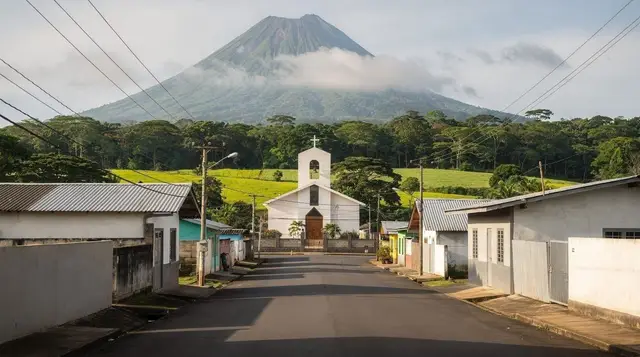
GetYourGuide does not provide a product photo for this activity — the image shows the meeting point, photographed by us.