Curi-Cancha and Selvatura: Monteverde's Wildlife Reserves
What is the difference between Curi-Cancha Reserve and Selvatura Park?
Curi-Cancha is a small, privately owned cloud forest reserve near Santa Elena known for consistent wildlife sightings, including quetzals in season, and it charges its own entry fee with a daily visitor quota. Selvatura Park sits in a different, more developed patch of forest and bundles hanging bridges with a butterfly garden and a hummingbird garden as separate paid attractions.
Two Reserves, One Forest Belt, Two Different Trips
Monteverde and Santa Elena sit inside a cluster of cloud forest reserves that get lumped together in a lot of trip planning, and it causes real confusion once you’re actually booking tickets. If you’ve already read our general comparison of Monteverde’s cloud forest reserves, you know the shortlist usually comes down to four or five names. This page goes deep on two of them specifically — Curi-Cancha Reserve and Selvatura Park — because they solve different problems and get confused with each other more than any other pair in the group.
Curi-Cancha is a small, privately managed reserve prized for its wildlife density: it’s the name serious birders in Monteverde mention first. Selvatura is a larger, more built-out attraction park in a separate patch of forest, better known for its hanging bridges and its butterfly garden than for guided nature walks.
Neither is “the” Monteverde reserve — that title, if it belongs to anyone, goes to the original Monteverde Cloud Forest Reserve or the community-run Santa Elena Reserve, both covered separately. This page exists so you don’t have to guess which of Curi-Cancha or Selvatura fits what you actually want out of a day in the forest.
Curi-Cancha Reserve: What You’re Actually Paying For
Get this out of the way first, because it’s the single most common misunderstanding about Curi-Cancha: it is not a free or open-access trail. It has no dramatic entrance gate, no resort signage, and no zip line towers visible from the road, so travellers sometimes assume it’s a public forest path you can wander into. It isn’t.
Curi-Cancha is a privately owned reserve with a paid entry fee and a capped daily visitor quota, exactly like Santa Elena Reserve or Selvatura Park down the road. The reserve limits how many people are on its trails at once specifically to protect the wildlife-watching experience that makes it worth visiting — which is also the reason it tends to sell out its best time slots.
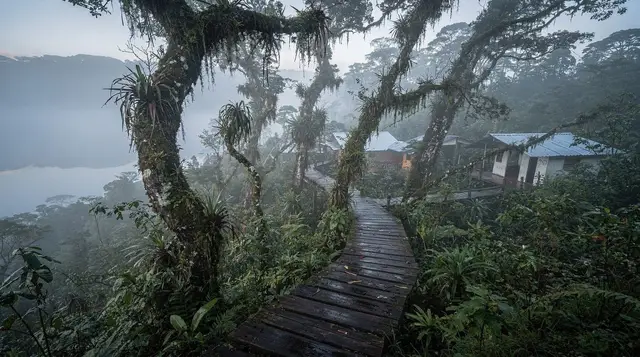
What you’re paying for is trail access plus, usually, a specialist guide. Curi-Cancha’s paths are shorter and more open than the deep, damp forest at the original Monteverde reserve — the trails cut through a mix of secondary forest, pasture edge, and old-growth patches, which sounds like a downside until you understand why it matters for wildlife: edge habitat and mixed terrain draw a wider range of species than dense unbroken canopy, and Curi-Cancha’s guides know exactly which patch to check for what.
a Curi-Cancha entry ticket bundled straight into the booking avoids the separate step of arranging tickets on arrival, which matters more here than at most reserves because of the daily cap.
Why Curi-Cancha Is Better for Reliable Wildlife
Curi-Cancha’s reputation isn’t hype. Three things push its sighting rates above a typical forest walk:
- Resident bird territories are known and tracked. Guides who work the reserve daily know where specific quetzals, motmots, and toucanets tend to be at a given hour, rather than searching blind.
- The habitat mix favours visibility. Edge and secondary forest let more light in than deep primary canopy, and animals are easier to spot against a lower, more varied tree line.
- Group sizes stay small because of the quota. Fewer people on the trail at once means less noise, which means animals that would otherwise retreat from a large tour group stay put.
Quetzals are the headline species, and Curi-Cancha earns its name-drop status here — but the window matters. Resident quetzals feed on wild avocado trees along the trails mainly from February through July; outside that window sightings drop off sharply, and no guide can promise one on any given day. This is a different bird from the ones people ask about near La Fortuna: quetzals are a Monteverde species, not a La Fortuna one, and Curi-Cancha is one of the more consistent places in the region to actually find one.
Beyond quetzals, expect a realistic shot at motmots, toucanets, trogons, various hummingbirds, coatis, and — with real luck — a sloth or an agouti. For a broader sense of what’s realistic to see across the wider area and how to improve your odds, see birdwatching in Monteverde and the surrounding forest.
A dedicated sunrise walk pushes the odds further in your favour, since the first two hours after opening are consistently the most active window for both birds and mammals across the whole reserve system:
a sunrise birdwatching walk timed to Curi-Cancha’s first entry slotFor travellers with more flexible schedules or a preference for fewer people on the trail, Curi-Cancha also runs after-dark walks — a different set of species entirely, since frogs, insects, kinkajous, and sleeping birds become the focus once the sun drops:
a guided night walk through Curi-Cancha’s trailsBooking Curi-Cancha: Entry, Guides, and Quotas
| Self-guided entry | Guided walk | |
|---|---|---|
| Typical price | Lower, entry fee only | Higher, entry plus guide |
| Wildlife sighting rate | Lower — you’re on your own | Notably higher |
| Group size | N/A | Usually small, capped |
| Best for | Confident independent birders on a budget | Almost everyone else |
The reserve’s daily quota is the detail most itineraries miss. Curi-Cancha does not sell unlimited day tickets; once a day’s capacity is booked, that’s it, and the earliest, most productive slots go first. If Curi-Cancha is a firm priority for your trip, book it ahead rather than planning to arrange it once you’re in Santa Elena — this is one of the few reserves in the area where showing up and hoping for a spot is a genuinely risky plan.
a standard guided hike through Curi-Cancha is the version most first-time visitors book, and it covers the reserve’s core trail loop with a naturalist guide at a pace built for spotting wildlife rather than covering ground quickly.
Travelling with children changes the calculus slightly — a shorter, slower-paced version aimed at families keeps kids engaged without a punishing multi-hour hike:
a family-paced nature walk through Curi-Cancha
Selvatura Park: Hanging Bridges and a Butterfly Garden Together
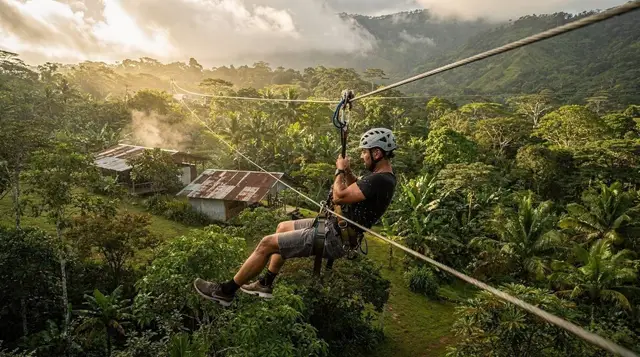
Selvatura sits in a separate section of forest from Curi-Cancha, and it operates on a completely different model: it’s an attractions park rather than a wildlife-focused reserve. Its biggest draw is a network of suspended hanging bridges through the canopy, similar in concept to Mistico Hanging Bridges near La Fortuna but set inside Monteverde’s cooler, mistier forest. Selvatura also runs a zip line canopy tour, and — the part most relevant to this page — a butterfly garden and a hummingbird garden housed in enclosed structures on the same property.
The practical difference from Curi-Cancha comes down to what you’re optimising for. Selvatura’s butterfly and hummingbird gardens guarantee sightings, because the animals are inside enclosures built specifically to display them at close range. That’s a real advantage if you have limited time or travelling companions who want certainty rather than a wildlife-spotting gamble. It’s also, by definition, not wild wildlife-watching — if what you actually want is the thrill of finding an animal in its own habitat, Selvatura’s gardens won’t scratch that itch the way Curi-Cancha’s forest trails will.
Selvatura sells its attractions à la carte, which trips people up on pricing. Hanging bridges, zip line, butterfly garden, hummingbird garden, and the reptile and insect exhibits are each priced separately, though combo tickets covering two or more are commonly available and usually cheaper than paying for each on its own. Budget more time than you’d expect if you want to see more than one — walking between sections, waiting at busy bridge crossings, and lingering in the butterfly garden all add up faster than a quick glance at the site map suggests.
For a direct look at how Selvatura’s bridges compare to Mistico and the other hanging bridge parks in the region, see hanging bridge parks compared — that guide goes deep on bridge counts, canopy height, and crowd levels across all three main options.
Curi-Cancha or Selvatura — Or Both?
| Curi-Cancha Reserve | Selvatura Park | |
|---|---|---|
| Best for | Wildlife, birdwatching, quiet guided walks | Hanging bridges, butterfly and hummingbird gardens |
| Structure | Guided nature walk on forest trails | Separate paid attractions on one property |
| Wildlife | Wild, spotted by guides — not guaranteed | Butterflies and hummingbirds in enclosures, guaranteed sightings |
| Typical visit length | 2 to 3 hours | Half a day if doing more than one attraction |
| Daily quota | Yes — capped entries, book ahead | No hard cap on most attractions |
| Skip if | You want guaranteed close-up sightings, not a hunt | You want a quiet wildlife-focused walk over attractions |
Plenty of Monteverde itineraries do both, on separate mornings, rather than trying to force them into one packed day. If you’re building out a longer stay, our Monteverde day trip guide from La Fortuna and the broader La Fortuna and Monteverde itinerary both account for this — cramming Curi-Cancha, Selvatura, and a third reserve into a single day trip from La Fortuna generally means rushing all three and enjoying none of them properly.
Travellers whose main goal for the whole trip is wildlife, rather than a mix of adventure activities, tend to lean harder toward Curi-Cancha and skip Selvatura’s attractions altogether; our wildlife-focused itinerary reflects that priority.
Practical Details: Getting There, What to Bring, and Timing
Both sites are reached from Santa Elena, the town that functions as Monteverde’s practical base — hotels, restaurants, and tour operators cluster there rather than in the smaller, more scattered Monteverde settlement itself. If you’re travelling up from La Fortuna, the jeep-boat-jeep crossing over Lake Arenal is worth reading before you commit to a driving route — it’s the detail that changes the most about how a Monteverde add-on actually feels.
- Footwear: closed shoes with grip. Curi-Cancha’s trails can be muddy and uneven; Selvatura’s bridges are metal-grated and can be slick with mist.
- Clothing layers: Monteverde sits at roughly 1,400 m and runs noticeably cooler and mistier than the lowlands around La Fortuna, even in dry season. A light rain jacket earns its space in the bag most days of the year.
- Binoculars: essential at Curi-Cancha, close to pointless at Selvatura’s enclosed gardens.
- Camera settings: the cloud forest’s low, diffuse light rewards a faster shutter and higher ISO over flash, which tends to spook wildlife and washes out butterfly wing colour alike.
- Booking lead time: Curi-Cancha’s capped quota rewards early booking more than almost anywhere else on this coast; Selvatura’s attractions are more flexible but still get crowded around midday tour bus arrivals.
Neither site is walkable from the other on foot within a reasonable time — plan a short drive or taxi transfer between them if doing both, and check with your accommodation in Santa Elena about arranged transport, since public options in this area are limited.
FAQ: Curi-Cancha Reserve and Selvatura Park
Is Curi-Cancha Reserve free to enter?
No. Curi-Cancha is a private reserve with a paid entry fee, and it caps the number of visitors allowed in at once. It is often mistaken for a public trail because it has no dramatic gate or resort branding, but access is metered and ticketed like any other reserve in the area.
Do I need a guide at Curi-Cancha?
Entry alone does not require a guide, but almost every experienced visitor books one. Curi-Cancha’s guides work the same trails daily and know where resident birds and mammals tend to be, which is the entire reason people choose Curi-Cancha over a free-roam walk elsewhere.
Can I see quetzals at Curi-Cancha?
Quetzal sightings are realistic here, especially from February to July when the birds are feeding on wild avocado trees along the reserve’s trails, but no reserve or guide can guarantee a wild sighting on any single visit.
What is included in a Selvatura Park ticket?
Selvatura sells its attractions separately: hanging bridges, zip line canopy tour, butterfly garden, hummingbird garden, reptile and amphibian exhibit, and an insect exhibit each carry their own fee, though combo tickets bundling two or more are common.
Are Curi-Cancha and Selvatura in the same place?
No. They sit in different parts of the Monteverde and Santa Elena forest belt, roughly a 10 to 15 minute drive apart, so visiting both on the same day means factoring in transfer time between them.
Which one is better for a first visit to Monteverde?
It depends on what you want. Curi-Cancha suits travellers prioritising wildlife and a quieter guided walk; Selvatura suits travellers who want hanging bridges and a hands-on butterfly and hummingbird stop in one visit. Many itineraries do one of each on separate days.
Is Curi-Cancha good for birdwatching without a guide?
Self-guided birdwatching is possible and some visitors do well with patience and a good app, but Curi-Cancha’s guides consistently outperform independent visitors because they track resident territories day to day — it is the main reason the reserve’s guided option costs more.
How early should I arrive at Curi-Cancha for wildlife?
Aim for the first entry slot of the day. Bird and mammal activity peaks in the first two hours after the reserve opens, and Curi-Cancha’s daily visitor quota means later slots can also simply be unavailable if you wait to book.
Cloud forest tours on GetYourGuide
Verified deep-linked GetYourGuide tours. Book through these links and we earn a small commission at no cost to you.
GetYourGuide does not provide a product photo for this activity — the image shows the meeting point, photographed by us.