Monteverde's Cloud Forest Reserves, Compared
What's the difference between the Monteverde Reserve, Santa Elena and Curi-Cancha?
The Monteverde Cloud Forest Reserve (1972, about 40 km2) is the oldest and busiest, with the widest trail network and the best odds of a suspension-bridge canopy view. Santa Elena Reserve, run by the local high school, sits higher, feels wetter and draws noticeably fewer visitors. Curi-Cancha is smaller and privately managed, prized for easy, flat trails and some of the most reliable wildlife sightings in the area.
Three reserves, three different mornings
Say “Monteverde cloud forest” and most people picture one place. There are actually three separate reserves within a short drive of Santa Elena village, each with its own owner, its own ticket booth and its own personality, and travellers routinely turn up at the wrong one expecting the trails or the crowds of another. The Monteverde Cloud Forest Reserve is the original, opened in 1972 and still the largest and busiest.
The Santa Elena Reserve is run by the local high school, sits higher on the continental divide, and feels noticeably wetter and quieter. Curi-Cancha is smaller, privately managed, and built around one thing: giving you the best realistic odds of actually seeing wildlife rather than just walking through beautiful forest.
None of them is a lesser version of the others. They’re genuinely different mornings out, and this page is here to help you pick the right one, or the right combination, rather than repeating the practical detail — opening hours, entrance fees, exact trail names — that lives on each reserve’s own guide. For that, see the full write-ups on the Monteverde Cloud Forest Reserve guide, the Santa Elena Reserve guide and the combined Curi-Cancha and Selvatura guide.
Monteverde Cloud Forest Reserve: the original, and still the busiest
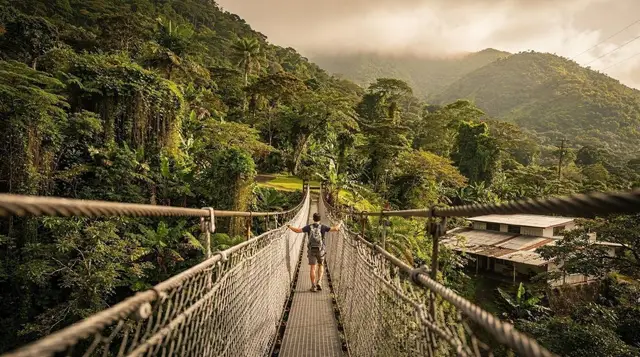
Founded in 1972 by the Tropical Science Center, the Monteverde reserve protects around 40 square kilometres straddling the continental divide, where Caribbean and Pacific weather systems collide and keep the forest permanently wrapped in mist. It has the most extensive marked trail network of the three, including a loop out to a suspension bridge with views back over the canopy on a clear morning, and it’s the reserve most guides and drivers default to when a visitor doesn’t specify otherwise.
That popularity is the trade-off. Tour buses from Santa Elena and day-trip groups arrive from mid-morning, and on a busy dry-season day the main trails can feel more like a queue than a forest walk. Arriving at opening time, or booking the first guided slot of the day, makes a real difference here in a way it doesn’t at the quieter reserves. A guided first-light walk through the Monteverde reserve is the single best way to beat both the crowds and the forest’s habit of hiding everything interesting in plain sight.
Santa Elena Reserve: higher, wetter, quieter
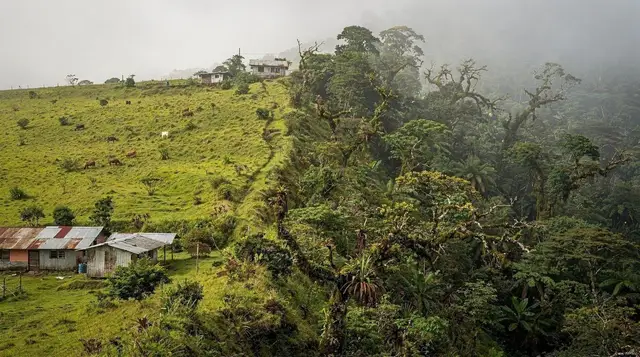
Santa Elena sits at a higher elevation than the main Monteverde reserve and catches more of the cloud cover, so the forest here is visibly mossier, the mud is deeper, and mist rolls through even on days when Monteverde proper is comparatively clear. It’s run as a community project by the Santa Elena high school, with profits funding local education rather than going to a private concession, which gives it a different feel on the ground: fewer facilities, fewer staff, and a noticeably smaller crowd on any given trail.
The trails themselves are a mix of easy loops and a longer route out to a lookout tower that, on a rare clear day, gives a view stretching toward the Arenal volcano’s cone on the horizon — not a view to plan a trip around, since the mist wins most mornings, but a pleasant surprise when it doesn’t. Santa Elena rewards travellers who’ve already done the busier reserve and want a second, quieter cloud forest walk without repeating the experience. A guided walk through Santa Elena’s higher trails is worth booking here specifically, since the forest is denser and a guide’s trained ear for alarm calls and rustling matters more than the map.
Curi-Cancha: small, private, built for wildlife
Curi-Cancha is the smallest of the three and the odd one out: it’s less a cross-section of primary cloud forest and more a working mix of forest, forest edge and old pasture, deliberately managed to concentrate wildlife where visitors can actually see it. Its trails are short and mostly flat, which sounds like a downside until you realise it means guides can move slowly, stop often, and actually find what they’re looking for instead of covering ground.
This is the reserve locals recommend when someone says they specifically want to see a resplendent quetzal, a sloth, or one of the forest’s smaller, easily-missed birds. It caps daily visitor numbers, which keeps both the trails and the wildlife calmer than at the main reserve. It’s usually visited as a guided outing rather than independently, since spotting is most of the point; a guided Curi-Cancha walk paired with a hanging bridges stop is a common and efficient way to combine wildlife-focused walking with a canopy-level view in a single outing.
Side-by-side: size, crowds, trails and access
| Reserve | Size / character | Crowds | Trails | Best for |
|---|---|---|---|---|
| Monteverde Cloud Forest Reserve | ~40 km2, the original 1972 reserve | Busiest, tour-bus traffic from mid-morning | Longest and most varied network, incl. a canopy suspension bridge | First-time visitors, widest cross-section of forest |
| Santa Elena Reserve | Smaller, higher, school-run | Quieter than Monteverde, still visited | Easy loops plus a longer lookout-tower route | A second, calmer walk; deeper mist and moss |
| Curi-Cancha | Smallest, private, forest-and-pasture mix | Capped daily numbers | Short, flat, easy walking | Reliable wildlife sightings, less hiking effort |
Ticket prices, exact opening hours and how to book each one are covered on the individual destinations pages and their linked guides — they change often enough that repeating figures here would go stale. What doesn’t change is the shape of the choice: Monteverde for range and history, Santa Elena for a quieter second visit, Curi-Cancha for wildlife odds over forest mileage.
Which one for wildlife, and which for the quetzal
All three reserves sit within the same cloud forest ecosystem and share much of the same wildlife list, but your realistic odds differ. Curi-Cancha’s shorter, flatter trails and guide-led pace consistently produce the best sighting rates, especially for the resplendent quetzal, which is present from roughly February to July and is a genuine draw for birders. Monteverde’s larger reserve covers more habitat types in one visit but its trails move faster and cover more ground, which can mean less time paused in front of an actual bird. Santa Elena splits the difference: quieter than Monteverde, less concentrated on spotting than Curi-Cancha.
If wildlife is the entire point of your Monteverde stop, read the dedicated birdwatching in Monteverde guide before choosing a reserve — it goes deeper into which trails, times of day and seasons actually matter, rather than treating “cloud forest” as one undifferentiated place.
Combining reserves: is it worth doubling up in one day
It’s tempting to treat all three as boxes to tick on one long day, but each reserve genuinely deserves two to three unhurried hours, and the drive or walk between them plus parking and ticket queues adds up faster than it looks on a map. Doubling up works best as Monteverde in the early morning followed by a shorter Santa Elena visit in the afternoon, once the mist has settled in and the crowds at the main reserve have thinned. Trying to add Curi-Cancha to the same day usually means rushing the part of the visit — slow, quiet wildlife-watching — that makes it worth going to in the first place.
Most travellers get more out of one reserve done properly than two done in a hurry. If you have more than a single day around Monteverde, it’s worth spreading the reserves across separate mornings rather than cramming — see how many days in La Fortuna style planning for how the numbers work if you’re basing yourself in La Fortuna and coming over for a Monteverde stretch.
Hanging bridges, canopy walks and night tours: where they fit
None of the three reserves compared here includes a hanging-bridge canopy walk as part of the base entrance ticket. Those live at separate attractions next door — the Monteverde Sky Walk and Selvatura Park — which combine suspension bridges with their own patches of forest and are usually booked and entered on their own ticket, sometimes bundled with a reserve visit by tour operators but never physically inside Monteverde, Santa Elena or Curi-Cancha. If a bridge walk is the priority, plan it as an addition to your reserve of choice, not an assumption that comes with any of them.
The reserves also close in the late afternoon, so none of them run the after-dark walks that Monteverde is equally known for. Night sightings — sleeping birds, tarantulas, tree frogs, the occasional kinkajou — happen on separate, purpose-run guided night walks outside reserve hours, typically on private trails set up specifically for evening groups.
Getting there, tickets and timing
All three reserves sit a short drive from Santa Elena village and are reachable by the shuttles, taxis and rental cars that serve Monteverde generally; if you’re coming from La Fortuna, the jeep-boat-jeep crossing versus driving the long way around is worth reading before you commit to a route. Whichever reserve you pick, arriving close to opening time pays off twice over: cooler, more active wildlife, and noticeably fewer people on the trail ahead of you. Tickets for the Monteverde reserve and Curi-Cancha are worth booking a day ahead in high season; Santa Elena is usually easier to arrange on short notice given its smaller visitor numbers.
For a broader sense of what a cloud forest day costs and how it fits against everything else on a La Fortuna and Monteverde itinerary, that’s covered separately — this page exists to settle the one question that trips up most first-time visitors: which reserve, not how to get there. For the full spread of what else counts as things to do built around the cloud forest in this area, the category page pulls together bridges, canopy tours and both guided and independent reserve visits in one place.
Monteverde cloud forest reserves: FAQs
Which reserve should a first-time visitor choose?
If you only have time for one, most first-timers do best at the Monteverde Cloud Forest Reserve: it has the most developed trail network, the clearest signage and the widest range of terrain in a single visit. If wildlife sightings matter more to you than forest scenery, choose Curi-Cancha instead.
Is Curi-Cancha really better for spotting a quetzal?
Curi-Cancha has a strong reputation for reliable sightings because its trails are shorter, flatter and run through a mix of forest and old pasture edge where guides know exactly where birds feed. No reserve can guarantee a quetzal, and the best months are February to July regardless of which one you pick.
Do I need a guide in the Monteverde reserves?
You can walk the main reserve and Santa Elena independently with a park map. A guide roughly triples what you’ll actually see and hear, since most cloud forest wildlife is camouflaged, quiet or overhead. Curi-Cancha is usually visited with a guide by default, since that is most of its appeal.
Can I visit two reserves in one day?
It’s possible but tight. Each reserve deserves two to three hours minimum, and driving or walking between them, plus parking and ticket queues, eats another hour. Most visitors do one reserve properly per day rather than rushing two.
Are the Monteverde reserves crowded?
The main Monteverde Reserve gets the most day-trippers and tour buses, especially mid-morning. Santa Elena is quieter. Curi-Cancha caps its daily visitor numbers, which is part of why its wildlife feels less disturbed.
Is Curi-Cancha part of the Monteverde Cloud Forest Reserve?
No. Curi-Cancha is a separate, privately owned reserve on the edge of the Monteverde community, distinct from both the original 1972 reserve and the school-run Santa Elena Reserve. The three have different owners, different ticket booths and different trail systems.
Which reserve has the hanging bridges and Sky Walk?
The suspension bridges and canopy walkways at Selvatura Park and the Monteverde Sky Walk are separate attractions next to, not inside, the three forest reserves. They’re often combined with a reserve visit on the same trip but are booked and entered separately.
What should I bring to any of the reserves?
A light rain jacket even in dry season, closed shoes with grip, and binoculars if you have them. The cloud forest is genuinely cool and often wet underfoot; cotton clothing stays damp all day.
Popular La Fortuna experiences on GetYourGuide
Verified deep-linked GetYourGuide tours. Book through these links and we earn a small commission at no cost to you.
GetYourGuide does not provide a product photo for this activity — the image shows the meeting point, photographed by us.