Monteverde Cloud Forest Reserve, Explained
What makes the Monteverde Cloud Forest Reserve different from Santa Elena?
The Monteverde Cloud Forest Reserve is the original 1972 reserve, covering about 40 square kilometres and managed by the Tropical Science Center, with its own entrance, trail network and daily visitor quota. Santa Elena Reserve, a few kilometres away, is a separate reserve run by the local high school with its own gate and tickets — the two are not interchangeable, and a ticket to one does not admit you to the other.
Inside Costa Rica’s Original Cloud Forest
Long before Costa Rica’s cloud forests became a fixture on every itinerary, there was one reserve: the Monteverde Cloud Forest Reserve, opened in 1972 by the Tropical Science Center on land that Quaker settlers and early conservationists had already begun protecting decades earlier. It covers roughly 40 square kilometres straddling the Continental Divide, where warm, moisture-laden air off the Caribbean slope condenses into the near-permanent mist that gives the forest its name. It is the reserve most people picture when they say “Monteverde,” and it is still the benchmark against which every other cloud forest experience in the country gets measured.
This guide covers what is actually inside this specific reserve — its trails, its internal suspension bridges, its entry system, and the wildlife you might realistically see — without repeating the broader comparison of Monteverde’s several reserves, which lives in a separate guide to the region’s cloud forest options. If you are still deciding between reserves, start there; if you have already chosen this one, read on.
The One Confusion Worth Clearing Up First
The single most common mistake visitors make is assuming that “Monteverde Cloud Forest Reserve” and “Santa Elena Reserve” are the same place, or that one ticket covers both. They do not, and it does not. This reserve is managed by the Tropical Science Center and sits closer to the village of Monteverde proper; Santa Elena Reserve, covered in its own dedicated guide, is run independently by the local public high school and sits on a separate access road nearer Santa Elena town.
The two reserves protect adjoining forest and look similar in photos, but they have different gates, different ticket offices, different trail maps, and no shared admission. If your driver or tour voucher says one name and you show up expecting the other, you will be turned away and have to backtrack — it happens often enough that reserve staff on both sides field the question daily.
What’s Actually Inside the Reserve
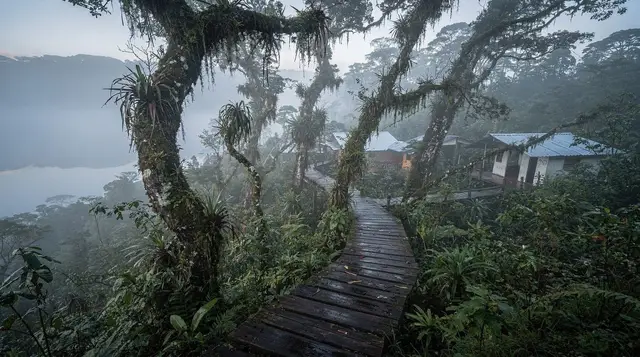
The reserve’s interior trail network is smaller and denser than its 40 square kilometres might suggest, because only a fraction of the protected area is open to visitors — the rest is left undisturbed as core habitat. The main loop threads through primary cloud forest: buttressed trees draped in bromeliads and mosses, a near-constant drip of condensation from the canopy, and a soundscape dominated by unseen birds rather than open views. Several trail junctions let you shorten or extend the walk depending on your time and fitness.
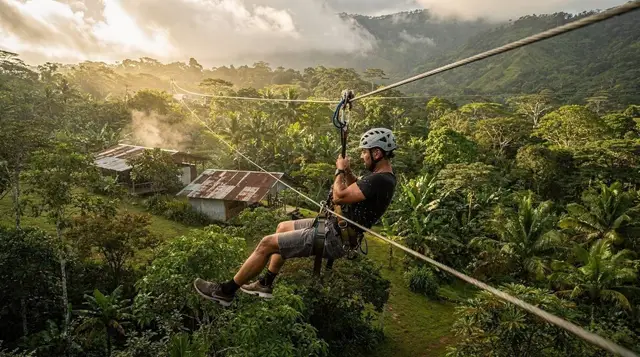
A short network of suspension bridges crosses ravines and a stream gully within the reserve itself, giving a canopy-level vantage point without leaving the historic reserve boundary — a different experience from the larger, purpose-built bridge parks nearby, such as Selvatura Park or the Monteverde Sky Walk, both of which sell their own separate tickets and sit outside this reserve’s land. If bridges are the main draw for you, it is worth knowing that this reserve’s bridges are a secondary feature of a forest walk, not the headline attraction they are elsewhere.
The most photographed spot in the reserve is La Ventana (“the window”), a lookout on the Continental Divide where, on a clear day, wind funnels up from the Caribbean slope hard enough to lean into. It is also usually the coldest, windiest and mistiest point on the loop, so it rewards a jacket more than it rewards patience for a view — on a socked-in day there may be nothing to see but grey. Closer to the entrance, shorter loops pass through swampier, lower-canopy sections where hummingbirds and understory birds tend to be easier to spot than deep in the primary forest.
Trail Times and Difficulty
| Section | Approx. distance | Typical time | Notes |
|---|---|---|---|
| Main entrance loop | 1.5–2 km | 45–60 min | Flattest, most accessible section |
| Interior primary forest trails | 2–3 km | 1–1.5 hrs | Roots, mud, some short climbs |
| Suspension bridge stretch | under 1 km | 20–30 min | Gentle grade, can queue in high season |
| Out-and-back to La Ventana | 3–4 km round trip | 1.5–2 hrs added | Exposed, windy, often misty |
None of the trails are technically difficult, but they are almost never dry — expect mud, wet roots and slick boardwalk sections on any given day, even in the dry season, simply because the forest generates its own moisture. Closed, grippy shoes matter more here than almost anywhere else covered on this site.
Entry, Quotas and Booking
The reserve limits how many visitors it admits at any one time, both to protect the trail surface and to keep the experience from turning into a queue through primary forest. In practice this means:
- High season (December–April, and Easter week especially): morning entry slots can sell out, particularly the earliest ones, which also happen to have the best wildlife activity before midday heat and later crowds settle in.
- Green season (May–November): pressure eases considerably, though weekends still draw more visitors than weekdays.
- Guided tours typically include a reserved entry as part of the booking, which removes the guesswork of showing up and hoping for a spot.
If you are set on a specific morning — for a birding trip timed around dawn activity, for instance — booking a guided visit ahead of time is the more reliable route into the reserve than arriving independently and buying at the gate.
a small-group guided hike through the reserve’s main trail network is the straightforward way to combine a secured entry slot with a guide who knows where the wildlife has been active. For a slower pace with more time to stop, look and photograph, a private guided walk through the reserve sets its own schedule rather than a group’s.
Wildlife: What’s Realistic to Expect
Cloud forest wildlife rewards patience and, frankly, a trained set of eyes more than most other habitats covered on this site. The animals here are adapted to being hard to see — muted colours, stillness, and a canopy that hides as much as it reveals. A few things worth knowing before you go:
- Resplendent quetzals are the reserve’s signature bird, and this is genuinely one of the better places in the country to see one — but only in season. February through July, during nesting, is by far the best window; outside those months, sightings drop off sharply. Fuller context on timing and other target species is covered in the regional birdwatching guide.
- Mammals — kinkajous, coatis, and occasionally an agouti or two-toed sloth — are more often heard or glimpsed than clearly seen, especially by day. If wildlife is your main goal rather than the forest itself, a guided visit built around spotting scopes and known feeding trees, such as a canopy-focused wildlife walk with a naturalist guide, will consistently outperform an independent walk.
- Night activity is a genuinely different experience from the daytime reserve — a different set of frogs, insects and nocturnal mammals becomes active once the light drops, and the reserve’s interior feels considerably wilder after dark. a guided night walk back inside the reserve is worth considering as a second visit rather than a substitute for the daytime one — the two show you different forests.
Do not expect guaranteed sightings of anything. Cloud forest is a habitat that rewards a second or third visit more than most; treat one walk as a sample of the forest, not a checklist to complete.
Combining Bridges and Forest in One Visit
If you want both the historic reserve’s forest trails and a longer, more elaborate bridge circuit in a single outing, a combined itinerary — reserve trails plus the internal bridge stretch — is offered as its own guided product: a guided walk that combines the reserve’s forest trails with its suspension bridges. This stays inside the historic reserve rather than adding a separate ticket to one of the larger bridge parks, which keeps the day simpler if bridges are a nice-to-have rather than the main event.
Practical Details
- Altitude and temperature: around 1,400 metres, with daytime temperatures typically in the low-to-mid teens Celsius and frequently cooler at La Ventana. Bring layers even if you’re travelling up from the warmer lowlands around La Fortuna.
- Rain gear: near-constant condensation means “dry season” is a relative term here. A light waterproof jacket earns its space in your bag on every visit, any month.
- Footwear: closed shoes with real tread. Trails are rarely dry, and roots and boardwalk sections get slick.
- Photography: light levels under the canopy are low even at midday; a fast lens or a willingness to raise ISO helps more than a tripod, which slows down group tours.
- What’s not included: transport to the reserve, food, and rental gear (rubber boots can sometimes be hired near the entrance in the wettest months) are typically separate from tour or entry pricing — confirm what’s included before booking.
Getting There from La Fortuna
There is no direct road that makes this a short trip — Monteverde sits on the other side of Lake Arenal from La Fortuna, and the two most common ways to bridge that gap are covered in detail in the jeep-boat-jeep versus driving guide.
In short: the boat crossing over Lake Arenal takes about three hours door to door and is usually the faster, cheaper option; driving the long way round takes three and a half to four hours over a partly unpaved road. Either way, most visitors treat Monteverde as an overnight stop or a stand-alone base within a longer La Fortuna and Monteverde itinerary rather than a single long day trip, given how much driving or boating is involved just to arrive.
Once you’re based in Santa Elena or Monteverde village, the reserve entrance is a short taxi or shuttle ride away — most accommodation can arrange transport, and some guided tours include hotel pickup as part of the booking.
Reserve or Reserves? Deciding What to See
If you only have time for one cloud forest visit, this reserve is the historically significant, generally quieter choice compared with the larger bridge-park operations nearby, though Curi-Cancha Reserve and Santa Elena both have their own strengths, laid out in the combined reserve comparison guide and the Curi-Cancha and Selvatura guide.
Broader things to do in Monteverde and the things to do near Curi-Cancha Reserve round out how this reserve fits into a wider Monteverde visit, and the cloud forest activity category lists every cloud-forest-specific option across the region if you’re still comparing.
a guided walk built specifically around this reserve is a reasonable default if you want one well-organised visit without further research — most guided options here cover the same core trail network with only modest differences in group size, pace and add-ons like the bridges or a night extension.
Frequently Asked Questions About the Monteverde Cloud Forest Reserve
Is the Monteverde Cloud Forest Reserve the same as Santa Elena Reserve?
No. They are two separately administered reserves a short drive apart, each with its own entrance, ticket office and trail system. The Monteverde Cloud Forest Reserve is the older, 1972 reserve run by the Tropical Science Center; Santa Elena Reserve opened in 1992 and is run by the local high school. A ticket to one does not get you into the other.
Do I need to book a ticket in advance?
Yes, especially from December to April and around Easter week. The reserve caps how many visitors it lets in at once to protect the trails, and the morning slots — when wildlife is most active — sell out first in high season. Booking a guided visit also secures your entry, since guides typically hold reservations.
How long should I plan for a visit?
Budget two to three hours for the main loop on your own, or three to four hours with a naturalist guide, who will stop often to look and listen. Add extra time if you also want to walk out to La Ventana viewpoint on the Continental Divide, which is further from the entrance than most of the interior trails.
Will I see a resplendent quetzal?
There is no guarantee, but your odds are best from February to July, during the quetzal’s breeding season, when males are more visible defending nest cavities near fruiting avocado trees. A guide who knows where birds have been active that week improves your chances far more than walking the trails alone.
Is the reserve cold, and what should I wear?
At around 1,400 metres, the reserve stays cool and often damp, with daytime temperatures typically in the mid-teens Celsius and frequent mist. Bring a light rain jacket, a warm layer, and closed shoes with grip — sandals are a bad idea on wet boardwalks and root-covered trail sections.
Can I visit without a guide?
Self-guided entry is allowed and the trails are clearly marked, but most first-time visitors see very little wildlife on their own — cloud forest animals are quiet, camouflaged and often high in the canopy. A guide with a spotting scope typically turns up far more birds, mammals and reptiles in the same two hours.
How do I get to the reserve from La Fortuna?
Most visitors either drive the mountain road, which takes three and a half to four hours, or take the jeep-boat-jeep transfer across Lake Arenal, which takes about three hours and is usually cheaper than a private driver. The reserve itself is a short taxi or shuttle ride from Santa Elena village, where most Monteverde accommodation is based.
Cloud forest tours on GetYourGuide
Verified deep-linked GetYourGuide tours. Book through these links and we earn a small commission at no cost to you.
GetYourGuide does not provide a product photo for this activity — the image shows the meeting point, photographed by us.