A Smaller Reserve Built for Watching, Not Just Walking
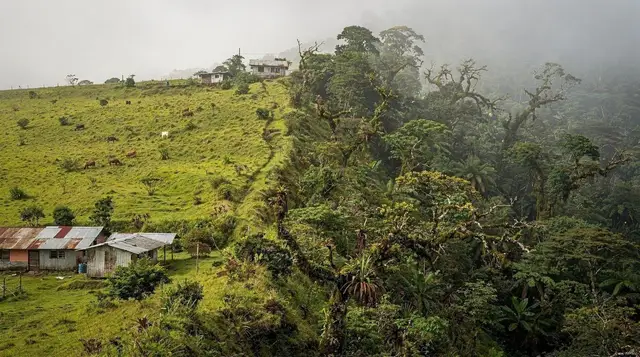
Most visitors arrive in Monteverde planning to walk the famous Monteverde Cloud Forest Reserve, and many never hear about Curi-Cancha until a guide mentions it. That’s a mistake if birdwatching is the actual goal. Curi-Cancha is a private reserve of a few hundred hectares bordering Santa Elena, stitched together from former dairy pasture that’s been left to regenerate alongside older primary forest.
Because part of the land is younger, secondary growth rather than unbroken high canopy, the trails run through more open understory, forest edges, and a couple of small ponds. Birds that stay hidden in a dense, tall cloud forest canopy are simply easier to see here, at eye level, in better light.
This isn’t a subjective preference — it’s a structural difference. The Monteverde Cloud Forest Reserve and the Santa Elena Reserve protect older, taller, thicker forest, which is exactly why they matter ecologically, but it also means birds spend more time thirty or forty metres overhead, backlit and half-obscured by leaves. Curi-Cancha trades some of that primary-forest grandeur for visibility. If you want a photograph of a bird rather than a rustle in the canopy, that trade is usually worth making.
Trails: Short, Open, and Built for Sightings
Curi-Cancha’s trail network is compact — most routes run under 5 km combined, and several loops can be walked in under an hour. The paths are mostly flat to gently rolling, with none of the long staircases or steep switchbacks you’ll find on some Monteverde routes. That makes it a genuinely relaxed morning rather than a hike, which matters if you’re combining it with something more strenuous like a visit to Selvatura Park or the Monteverde Sky Walk the same day.
Two features set the trails apart:
- Forest edges and pastureland remnants, where light reaches the ground and undergrowth attracts fruit-eating and nectar-feeding birds that avoid the darker interior forest.
- Small ponds, a rarity in this part of the cloud forest belt, which draw in herons, motmots, and the occasional hummingbird bathing at the water’s edge.
Entry to Curi-Cancha is capped at a limited number of visitors per time slot, which is part of why it never feels as busy as the main Monteverde reserve trailhead can on a peak morning.
Birds You Can Actually See Here
Curi-Cancha’s regularly reported species list is long, and it’s genuinely one of the better spots in the area for a productive two-hour walk. Expect to see or hear some combination of:
- Motmots — turquoise-browed and blue-crowned motmots are frequent along the forest-edge trails.
- Hummingbirds — multiple species work the flowering shrubs near the ponds and trailhead gardens, often at close range.
- Toucans and toucanets — keel-billed toucans and emerald toucanets are regularly spotted from the more open sections.
- Trogons — several trogon species beyond the quetzal turn up here, often more reliably than the quetzal itself.
- Songbirds and tanagers — the mixed pasture-and-forest edge habitat pulls in a wide variety of smaller, easily overlooked species that a guide will pick out by call before you’d ever spot them by eye.
A guided walk with a local naturalist consistently produces two to three times the sightings of walking alone, mostly because guides are working from call recognition, not just sight — see our birdwatching in Monteverde guide for what that difference looks like in practice. If you want that guided experience specifically in the cloud forest, a guided wildlife walk through the Monteverde cloud forest canopy is built around exactly this kind of slow, call-led spotting.
The Quetzal Question
Curi-Cancha has a reputation as “the quetzal reserve,” and it’s not entirely undeserved — the mix of open trails and fruiting avocado trees does make sightings easier to manage logistically. But treating it as the only place to see a resplendent quetzal is the single most common misconception about this reserve, and it sets visitors up for disappointment on the wrong months.
Season matters more than reserve choice. Quetzals move through the Monteverde area following the fruiting of wild avocado trees, and they’re most visible and most vocal during nesting season, roughly February to July. Outside that window, sightings anywhere in the area — Curi-Cancha included — drop sharply, no matter how good the guide or how early the start.
A visitor arriving in October and asking which reserve guarantees a quetzal is asking the wrong question; the right one is whether it’s the right month at all. If your trip dates fall outside February–July, it’s worth resetting expectations before you go, not after a disappointing walk — our piece on why quetzals aren’t in La Fortuna covers the same seasonal logic that applies here.
Within season, Curi-Cancha’s open trails do make an eventual sighting easier to actually see once a guide locates a bird by call, which is the real advantage — not exclusivity.
Curi-Cancha vs Monteverde Cloud Forest Reserve vs Santa Elena Reserve
All three reserves sit within a short drive of each other, and comparing them directly is more useful than picking blind.
| Reserve | Trail character | Best for | Typical visit length |
|---|---|---|---|
| Curi-Cancha | Short, open, gently rolling; forest edge and ponds | Birdwatching, easier sightings, relaxed pace | 2-4 hours |
| Monteverde Cloud Forest Reserve | Taller primary forest, longer routes, some steeper sections | First-time cloud forest immersion, biodiversity depth | 3-5 hours |
| Santa Elena Reserve | Higher elevation, denser mist, quieter trails | Atmosphere, fewer crowds, cooler conditions | 2-4 hours |
None of the three is objectively “the best” — they answer different questions. For a full side-by-side including entry fees and access logistics, see our Monteverde cloud forest reserves compared guide and the dedicated Curi-Cancha and Selvatura guide if you’re planning to combine a reserve morning with a canopy adventure the same day.
Visiting Practicalities
Curi-Cancha is privately managed, with its own entry fee and its own visitor cap — it isn’t part of the Monteverde or Santa Elena reserve systems, so tickets for one don’t apply to the other.
| Item | Typical cost (USD) |
|---|---|
| Self-guided entry | 25-30 |
| Guided walk (2-3 hours, shared group) | 45-65 including entry |
| Private guide | 70-100+ including entry |
| Early bird slot (recommended) | Same price, better sightings |
Prices are ordering-of-magnitude figures and shift with season and operator. Entry is timed and capped, so arriving without a reservation in high season (December–April, and around the February–July quetzal window) risks being turned away or waiting for a later slot.
Practical notes:
- Go early. Birds are most active in the first two hours after dawn, before the day’s mist burns off and before other groups arrive.
- Bring binoculars. Even at Curi-Cancha’s more open sightlines, most birds are still 10-20 metres off.
- A guide changes the outcome more than the reserve does. A skilled local guide working by ear will consistently outperform an unguided walk in any of the three reserves.
- Dress for cool, damp conditions. Monteverde sits around 1,400 m; mornings are noticeably cooler and wetter than La Fortuna.
Getting to Curi-Cancha from La Fortuna
Curi-Cancha sits just outside Santa Elena, so getting there means getting to Monteverde first — and that’s the bigger logistical decision of the day.
- Jeep-boat-jeep: a minibus to the shore of Lake Arenal, a boat crossing, then a minibus into Santa Elena — about 3 hours and the standard choice for most travelers. See our jeep-boat-jeep vs driving comparison for the full breakdown.
- Driving: roughly 3h30 to 4h for about 130 km, much of it on unpaved road (Route 702); a 4x4 is genuinely useful in green season.
- Day trip vs overnight: Curi-Cancha alone doesn’t justify the round trip from La Fortuna in a single day — most visitors either stay a night or two in Monteverde or combine it with the reserve and a canopy tour. Our Monteverde day trip from La Fortuna guide and the La Fortuna and Monteverde itinerary both lay out realistic timing.
If you’re weighing whether Monteverde deserves the extra travel time at all against staying closer to the volcano, our La Fortuna vs Monteverde comparison addresses that directly.
Pairing Curi-Cancha With the Rest of the Day
Because the trails are short, Curi-Cancha pairs naturally with a second activity the same morning or afternoon. A common combination is an early birdwatching walk followed by a canopy adventure once the light flattens out and bird activity slows. Two options in the immediate area:
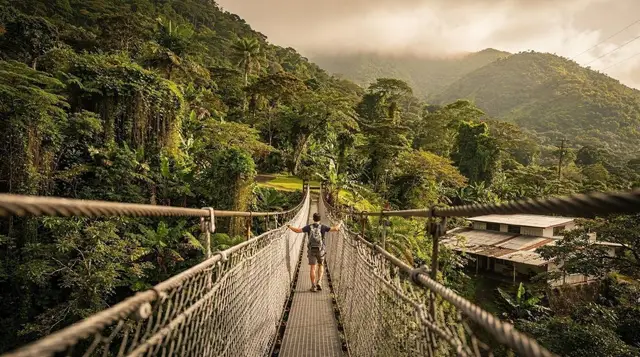
- A walk across the Selvatura Park hanging bridges, which crosses canopy-level bridges through a separate patch of cloud forest nearby.
- The Monteverde Skywalk hanging bridges adventure, another bridge-and-canopy circuit close to Santa Elena.
If you’d rather have a private, unhurried guided walk instead of a shared-group one, a private guided walk in the Santa Elena cloud forest is worth booking directly, especially outside quetzal season when patient, guide-led spotting matters more than which trail you’re on.
What to Bring
- Binoculars (non-negotiable if birdwatching is the goal)
- A light rain layer — Monteverde’s mist rolls in fast, any month
- Closed shoes with grip; trails are often damp even when it isn’t actively raining
- A telephoto lens if photographing birds is a priority; wide-angle gear does little here
- Cash in USD for entry and guide tips; card acceptance is inconsistent at smaller reserve gates
Frequently Asked Questions About Curi-Cancha Reserve
Is Curi-Cancha better than the Monteverde Cloud Forest Reserve?
Not better — different. Curi-Cancha’s shorter, more open trails make birds easier to spot, while the main Monteverde reserve offers taller, denser primary forest and a longer, more immersive hike. Many visitors do both if time allows.
Will I definitely see a resplendent quetzal at Curi-Cancha?
No reserve guarantees a quetzal. Sightings depend far more on season — roughly February to July — than on which reserve you choose. Curi-Cancha’s open trails make an already-located bird easier to view, but a guide finding it by call matters more than the location.
How long should I plan for a visit to Curi-Cancha?
Most visitors need 2 to 4 hours, ideally starting at dawn when bird activity peaks. It’s a shorter, more relaxed visit than the main Monteverde or Santa Elena reserves.
Do I need a guide at Curi-Cancha?
You don’t need one to enter, but a guide dramatically increases what you’ll actually see, since most reliable sightings start with a call identification, not a visual spot. For serious birdwatching, book one.
Is Curi-Cancha included in the Monteverde or Santa Elena reserve ticket?
No. Curi-Cancha is a separate, privately managed reserve with its own entry fee and visitor cap — a ticket to one reserve does not grant access to the others.
What’s the best time of day to visit Curi-Cancha?
Early morning, in the first two hours after sunrise, before mist thickens and other groups arrive. Bird activity and light quality both drop off noticeably by mid-morning.
Can I combine Curi-Cancha with a hanging bridges tour the same day?
Yes, and it’s a common pairing — an early birdwatching walk at Curi-Cancha followed by a canopy bridge circuit at Selvatura Park or the Monteverde Skywalk once bird activity slows in the late morning.
Is Curi-Cancha suitable for kids or less experienced walkers?
Yes. The trails are short, mostly flat, and easier underfoot than the main Monteverde reserve, making it a reasonable choice for families or anyone who’d rather not tackle steeper, longer routes.