Most people who say “we’re going to Monteverde” actually mean they’re staying in Santa Elena. It’s the village where the buses stop, where the hostels and hotels cluster, and where you’ll compare three tour desks before booking a night walk. Monteverde itself — the historic settlement a few kilometres up the hill — is quieter, smaller, and covered on its own page. This one is about the village you’ll actually wake up in.
Two Villages, Not One
Santa Elena and Monteverde get flattened into a single name constantly, in guidebooks and in casual conversation alike, and it causes real confusion when you’re booking a hotel or figuring out which reserve entrance is closer. They are separate villages, a short drive apart, each with its own centre, its own hotels, and its own road out to the cloud forest reserves.
Santa Elena is the bigger and more commercial of the two. It has the region’s largest concentration of restaurants, hostels, mid-range hotels, supermarkets, ATMs, laundromats and tour operators. If you arrive without a plan, Santa Elena is where you’ll sort one out — most agencies here sell entries and tours for every reserve in the area, not just the one nearest their door.
Monteverde proper is smaller, older and quieter. It grew out of a Quaker settlement founded in 1951 and sits closer to the original Monteverde Cloud Forest Reserve entrance. There’s no real nightlife there and far fewer places to eat. Plenty of visitors never set foot in it and have a perfectly good trip.
The practical upshot: when you book a hotel, check which village it’s actually in — “Monteverde area” listings on booking sites often sit in Santa Elena or along the road between the two. And when a tour operator tells you their reserve is “right in Monteverde,” ask which one, because Santa Elena has its own separate reserve entrance too.
Where Santa Elena Sits
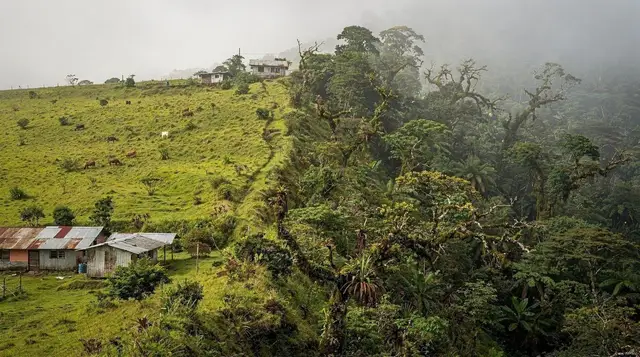
Santa Elena sits at roughly 1,300–1,400 m elevation on the Pacific side of Costa Rica’s Continental Divide, in the Tilarán mountain range. That elevation is why the air here feels different from La Fortuna’s tropical warmth — cooler, often windy, frequently wrapped in cloud even when the plains below are sunny. Bring a fleece or light jacket regardless of season; evenings can be genuinely chilly.
The village grew around tourism to the cloud forest reserves rather than around agriculture, which is part of why it feels more purpose-built than Monteverde’s older core. Its short main street holds most of what a visitor needs within a five-minute walk: restaurants, a supermarket or two, a handful of banks and ATMs, souvenir shops, and tour desks representing most of the activities in the region.
Getting There from La Fortuna
This is the single biggest logistics decision of a combined La Fortuna–Monteverde trip, and Santa Elena is the endpoint either way.
By road, the drive covers roughly 130 km and takes 3.5–4 hours, partly because a meaningful stretch of the route is unpaved. A 4x4 helps from May to November, when the dirt sections turn to mud, though it’s manageable in a standard car during dry season if you go slowly. Expect narrow, winding mountain roads and a number of one-lane bridges where the vehicle already on the bridge has the right of way.
By jeep-boat-jeep, you’re driven from your La Fortuna hotel to the shore of Lake Arenal, cross by boat to the Lake Arenal crossing point on the far side, then transfer to a second vehicle for the final stretch into Santa Elena. The whole journey takes about 3 hours — genuinely faster than driving — and typically costs less than a private road transfer. It’s the route most independent travellers choose, and most hotels or agencies in La Fortuna can book it.
For the full comparison of both options, including price ranges and which suits families versus solo travellers, see our jeep-boat-jeep versus driving breakdown. And if you’re still deciding whether the detour to this side of the country is worth it at all against staying closer to La Fortuna, our La Fortuna vs Monteverde comparison covers what each destination actually offers.
What Santa Elena Village Is Actually For
Santa Elena isn’t an attraction in itself so much as the operations base for everything around it. Here’s what that means in practice:
Accommodation and food. The village holds the widest range of lodging in the area, from hostel dorms to boutique hotels, and the highest concentration of restaurants — sodas serving casado plates for a few dollars, pizzerias, coffee shops running on locally grown beans, and a handful of higher-end spots aimed at visitors on their one big dinner out.
Tour booking. Multiple agencies along the same two or three blocks sell entries and guided tours for Santa Elena Reserve, Monteverde Cloud Forest Reserve, Selvatura Park and Curi-Cancha Reserve, plus night walks, ziplines and coffee tours. Because they compete for the same walk-in customers, it’s worth comparing two or three before booking anything same-day.
Night walk departures. Most guided night walks in the area — the best way to spot sloths, kinkajous, sleeping birds and (carefully, at a distance) snakes — start from operators based in Santa Elena, since the village sits closest to the forest edge after dark. It’s a genuinely different experience from a daytime reserve visit, and worth doing separately rather than skipping.
a small-group night walk departing from Santa Elena is a reliable way to book this without hunting through tour-desk options on arrival.
Reserve access point. The road out to Santa Elena Reserve — a community-managed reserve run by the local high school, distinct from the older Monteverde reserve — starts from the village and covers about 5–6 km of unpaved road. It’s the closer of the two major reserves to where most visitors actually sleep.
For what’s inside that reserve — trail layout, wildlife you’re likely to see, how it compares to the Monteverde reserve itself — that belongs to its own page; see the Santa Elena Reserve guide rather than this one.
Reserves and Parks Reachable from the Village
None of the following are “in” Santa Elena exactly, but all of them are reached from it, and that’s the village’s real function.
| Site | Distance from Santa Elena | What it’s known for |
|---|---|---|
| Santa Elena Reserve | ~6 km | Higher elevation, fewer crowds, community-run |
| Monteverde Cloud Forest Reserve | ~7 km | The original 1972 reserve, near Monteverde village |
| Selvatura Park | ~5 km | Hanging bridges, hummingbird garden, butterfly house |
| Curi-Cancha Reserve | ~5 km | Best birdwatching odds, including quetzals in season |
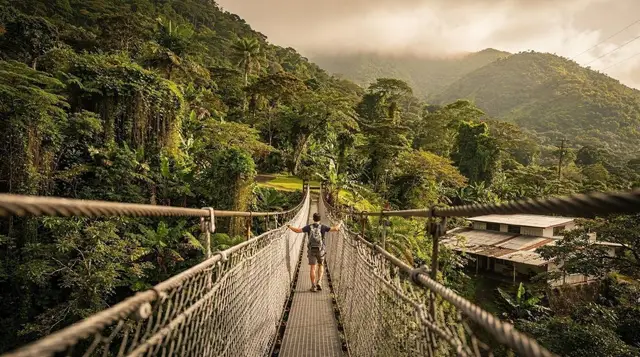
A private tour that covers the suspension bridges at either Monteverde or Santa Elena is a straightforward way to see the canopy without arranging your own transport to whichever entrance you choose. If Selvatura’s own bridge network is the target, the Selvatura hanging bridges hike covers that park specifically, and it’s priced and ticketed separately from its butterfly and hummingbird exhibits.
For a private guide inside the cloud forest itself — useful for spotting camouflaged wildlife you’d otherwise walk straight past — a private guided walk through the Santa Elena reserve pairs a naturalist with the trail system.
If you’re trying to decide which reserve deserves your one reserve visit, our reserve comparison guide lays out trail length, crowd levels and wildlife odds side by side, and the Curi-Cancha and Selvatura guide covers the two most bird-focused options in more detail.
Santa Elena vs Monteverde Village: Quick Reference
| Santa Elena | Monteverde village | |
|---|---|---|
| Size | Larger, more built up | Smaller, quieter |
| Restaurants & bars | Widest choice in the area | Limited, low-key |
| Accommodation | Hostels through boutique hotels | Fewer options, often pricier |
| Closest reserve | Santa Elena Reserve (~6 km) | Monteverde Cloud Forest Reserve (~1–2 km) |
| Feel | Busy tourist hub | Historic, residential |
| Good base for | First-timers, budget travellers, night owls | Travellers who want quiet, close reserve access |
Neither is “wrong” — the two sit close enough together that most tours and reserve visits are reachable from either. The difference is mainly in evenings: what you’ll eat, how far you’ll drive after dark for a night walk, and how much you’ll pay for a room.
What a Day in Santa Elena Costs
Prices below are in USD, since that’s how tours, reserve entries and most hotels here quote. Ranges are rough guides, not fixed rates.
| Category | Budget | Mid-range | Higher-end |
|---|---|---|---|
| Bed (per night) | $12–20 (hostel dorm) | $50–90 (hotel room) | $130+ (boutique lodge) |
| Meals (per day) | $10–15 (sodas) | $25–40 (mixed) | $50+ (restaurants) |
| One reserve entry | $12–25 | — | — |
| Guided night walk | $25–35 | — | — |
| Private full-day guide | — | $60–90 per person | $100+ |
A realistic solo budget-traveller day, covering a hostel bed, soda meals and one reserve entry, lands around $40–50. A couple doing a guided reserve visit, a night walk and a proper dinner is closer to $100–120 each. For a fuller breakdown across a whole trip rather than a single day, our budget planning guide covers both this side of the trip and the La Fortuna leg together.
Getting Around Without a Car
If you’re not driving, Santa Elena is manageable on foot for the village core, and most hotels arrange shuttles to the reserves for a few dollars each way. Shared shuttle vans (colectivos) run set routes between the village and the main reserve entrances on a rough schedule, cheaper than a private taxi but slower and less flexible. Taxis are available around the village centre and at the bus terminal, and are the simplest option if you’re short on time or it’s raining hard, which happens often at this elevation.
Renting a car for just the Santa Elena leg of a trip is rarely worth it unless you’re also planning to drive yourself to and from La Fortuna — the reserves are close enough that shuttles and taxis cover the distance without much added cost. Anyone weighing up a rental for the wider trip should read our car rental guide before committing, since the road conditions in and out of this area are the main factor.
When to Visit
Santa Elena’s high elevation means it’s cooler and mistier than La Fortuna in every season, and that mist is genuinely part of the cloud forest experience rather than a flaw to plan around. December through April brings the driest, easiest road conditions and the clearest trail walking, which is also when the village is busiest and reserve entries are most likely to require advance booking. May through November is quieter, greener, and the road in is more likely to be muddy in a standard car — a 4x4 or the boat crossing removes that concern.
Quetzals, one of the most sought-after birds in the region, are seen more reliably from February to July, mostly in the cloud forest itself rather than in the village. Wildlife-focused visitors should time a reserve visit or guided walk, not just the village stay, around that window; our Monteverde birdwatching guide covers the specifics.
Where This Leaves You
Santa Elena is the practical heart of a Monteverde-area visit: the place to sleep, eat, book tours and set out from after dark, while the actual cloud forest experience happens at the reserves a short drive beyond it. Treat it as your base, not your destination, and pair it with whichever reserve, bridge park or night walk matches what you came here for.
If you’re planning the wider trip rather than just this stop, our La Fortuna and Monteverde itinerary lays out how many nights to give each side, and everything bookable from Santa Elena lists every tour and activity that departs from this village specifically.
Santa Elena Questions Travelers Actually Ask
Is Santa Elena the same place as Monteverde?
No. They are two distinct villages a short drive apart. Santa Elena is the larger, busier base with most restaurants, hotels, hostels and tour desks. Monteverde is the older, quieter settlement, historically tied to the Quaker community that founded it in 1951 and closer to the original cloud forest reserve entrance.
How do I get from La Fortuna to Santa Elena?
Two options: drive the mountain road, which takes 3.5–4 hours over partly unpaved terrain, or take the jeep-boat-jeep transfer, which crosses Lake Arenal by boat and takes about 3 hours while costing less than a private road transfer.
Where do I buy tickets for Santa Elena Reserve or Selvatura?
Both sell tickets directly at their entrances and online in advance. Santa Elena Reserve is community-run and can sell out on busy dry-season mornings; Selvatura is privately run and rarely sells out, but its bridges and reserve trails are priced separately from its other attractions.
Is Santa Elena walkable without a car?
The village centre itself is small and walkable, but the reserves are 4–6 km outside town on unpaved roads. Most hotels run shuttle services, local taxis (colectivos) cover the route on a schedule, and some visitors walk or cycle the road to Santa Elena Reserve in dry season.
What’s the weather like in Santa Elena?
Cool and often misty, since the village sits near 1,300–1,400 m elevation on the Continental Divide. Bring a light jacket even in dry season, and expect wind and drizzle at the reserve entrances regardless of what the village looks like.
Should I stay in Santa Elena or Monteverde village?
Santa Elena for choice — more restaurants, more budget options, more tour operators competing on price. Monteverde for quiet and slightly shorter access to the original reserve. Many travellers base in Santa Elena and simply drive or shuttle the few minutes to Monteverde’s reserve entrance.
Is Santa Elena expensive?
It runs a wide range. A backpacker can manage on $40–50 a day with a hostel bed and soda meals; a couple booking a reserve entry, a guided night walk and a mid-range hotel should budget closer to $100–120 per person per day.