What I Actually Saw From the Observatory Lodge
I booked three nights at the Arenal Observatory Lodge for one reason, and it wasn’t the birdwatching, the trails, or the fact that it used to be a Smithsonian research station. It was the photo on the booking site: a room with a wall of glass, and the cone of Arenal filling the whole frame, bare rock and grass all the way to a sharp grey summit against blue sky. I wanted that photo to be mine. I got it once.
Why this lodge exists
The Observatory Lodge is built where it is because it’s the closest legal accommodation to the volcano — inside what used to be a private reserve, on the old lava flow paths from the 1968 and 1992 eruptions, on the Peninsula side of Arenal Volcano National Park. Scientists lived here to watch the volcano erupt. That’s not marketing language; through the 1980s and 90s, when Arenal was throwing lava and ash almost nightly, this was one of the closest points from which you could observe it and still sleep somewhere with a roof.
The volcano hasn’t erupted since 2010. No lava, no glow, no rumbling — I wrote about that separately, because it’s the single most-repeated wrong assumption I hear about this destination, and this isn’t the trip report to relitigate it. What the lodge sells now isn’t the eruption. It’s the angle. From the standard rooms, and especially from the Smithsonian and Observatory rooms up the hill, you are looking almost straight at the cone with nothing between you and it but a couple of kilometres of national park.
When it’s clear, that’s a genuinely rare thing to wake up to. I’m not walking that back. I’m just telling you what “when it’s clear” meant for me.
The three mornings
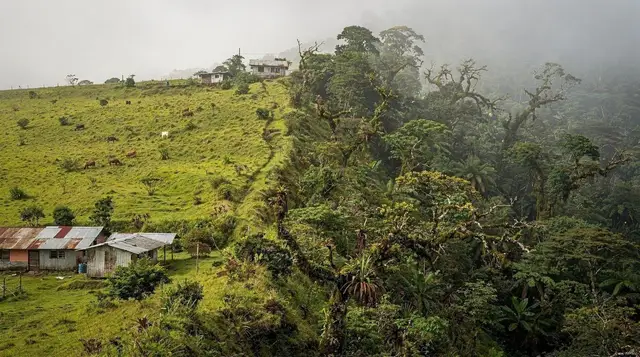
Morning one. I got in the afternoon before, checked into a room with the view I’d paid extra for, and went to sleep telling myself I’d wake at 5:30 for first light. I did. The cone was gone — not hazy, gone, replaced by a flat grey wall of cloud that started maybe two-thirds of the way up the mountain and didn’t move for the two hours I sat on the balcony with coffee. By 8am it had thickened into actual rain. I could see the lower slopes, the tree line, the old 1968 flow scarring the green. No summit.
Morning two. Same routine. At 5:45 there was a gap — maybe four minutes — where the cloud pulled back enough to show the upper third of the cone, backlit, no detail, gone again before I’d finished fumbling with my phone. That counts as “saw the volcano” in the loosest possible sense. It does not count as the photo.
Morning three. This was the one. Clear from top to bottom by 6am, no cloud at all until around 9:30, full cone, full crater rim, the whole thing. I sat through breakfast on the terrace just watching it, because I knew from the two mornings before that I might not get this again on this trip. I took the photo. It’s a good photo. It’s real. It’s also one morning out of three.
That’s not a complaint about the lodge. It’s a description of what “best view of the volcano” actually delivers on a random three-night stay in a rainforest.
What decides this, and what doesn’t
The Observatory Lodge sits on the Peninsula side, which does get less cloud on average than the town side of La Fortuna — the mountain itself blocks some of the moisture coming off the Caribbean side before it reaches that slope. That’s a real, measurable advantage. It is not the same as a guarantee.
What actually decides whether you see the cone on a given morning is the weather system moving through that day, and nothing a booking site controls. La Fortuna sits on the windward side of the country, which means cloud and rain are the default state of the sky here, not the exception, in every month of the year. The volcano’s own summit generates its own local cloud on top of that — moist air rising up the slope condenses near the top even on days that are clear everywhere else. I’ve stood at the base on a bright, cloudless afternoon and watched a cap of cloud sitting on the crater like it had been placed there.
Your best odds, wherever you’re staying, are early morning — before the day heats up and pushes more moisture upward — and during the December-to-April dry season, when it happens more often but still isn’t promised. May through November, expect fewer clear mornings, not none.
None of this means the lodge isn’t worth it. If seeing the volcano matters to you at all, being a five-minute walk from an unobstructed line of sight, instead of driving out from town and hoping, meaningfully improves your odds over the length of a stay. Three mornings gave me three chances instead of one. That’s the honest case for it — better odds, not a guarantee — and it’s also the only case I’d actually make.
What I’d tell someone booking this
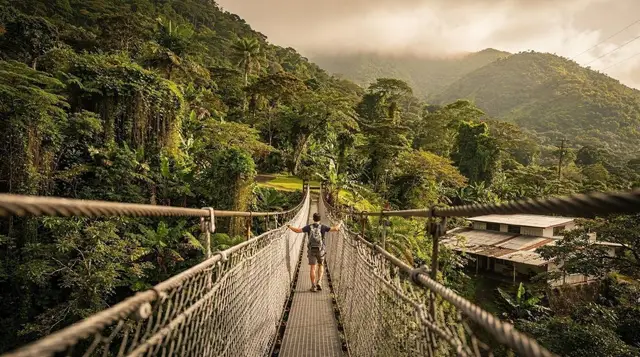
Book more than one night if the view is the reason you’re going. One morning is a coin flip; three mornings gives the odds room to work in your favour, the way they eventually did for me. Don’t schedule your one shot at the hanging bridges or the La Fortuna waterfall for your only sunrise here, because if that’s the morning it clears, you’ll be somewhere else.
I’d also say: look at the lodge’s own trail network while you wait out the cloud. The reserve has trails through old lava fields and forest that are worth walking regardless of what the summit is doing, and I used the socked-in mornings for exactly that instead of standing on the balcony being disappointed. For where this lodge sits against the other places to stay near the volcano — price, distance, what you actually get for it — that’s a full comparison on its own, not something I’m going to compress into the end of a trip report.
FAQ: staying at the Arenal Observatory Lodge
Does the Arenal Observatory Lodge guarantee a view of the volcano?
No accommodation can guarantee that. The lodge sits closer to the cone than almost anywhere else you can sleep, on the Peninsula side that tends to see somewhat less cloud, which improves your odds over a stay. Whether you actually see the summit on a given morning is decided by the day’s weather, not by your room.
How many nights should I book if I want to see the volcano?
Two or three nights meaningfully improves your chances over one. In my case, one out of three mornings was clear. A single night is closer to a coin flip.
What time of day is the volcano most likely to be visible?
Early morning, generally before 8 or 9am, before the day’s heat pushes more moisture up the slope. The cone can still be capped in cloud even on an otherwise clear day.
Is the dry season a guarantee of clear views?
No. December to April sees clear mornings more often than the rest of the year, but La Fortuna is on the windward side of the country and gets rain and cloud year-round. Even dry-season mornings can be socked in.
Can I still see lava from the Observatory Lodge?
No. Arenal has been in a resting phase since October 2010, with no visible lava or incandescent flows. What you’re hoping to see today is the cone itself, not an eruption.
Is the Observatory Lodge worth it if I only care about the volcano view?
It raises your odds compared to staying in town, but it isn’t a substitute for luck with the weather. If the view is your main reason for going, treat the lodge as better chances, not a sure thing, and use any cloudy mornings for the reserve’s own trails.
Where should I stay if I want to compare other options near the volcano?
That comparison — price, distance from the park entrance, and what each property actually offers — belongs on its own dedicated page rather than folded into a single trip report.
tours.Field notes
Verified deep-linked GetYourGuide tours. Book through these links and we earn a small commission at no cost to you.
GetYourGuide does not provide a product photo for this activity — the image shows the meeting point, photographed by us.